Under the brucella canis test dog import Australia requirement, only dogs that are not desexed need testing. The blood sample must be drawn within 45 days of export by a government approved vet in an approved country, using RSAT, TAT or IFAT only, and it must come back negative. Desexed dogs skip it entirely.
Introduction: the test many owners never needed
The brucella canis test dog import Australia rules turn on one thing only — whether the dog is desexed. Owners of desexed dogs never meet this test at all. Owners of entire dogs inherit strict timing, a short list of accepted methods, and a behavioural rule attached.
Of all the blood tests Australia asks for, this is the one that surprises people. Rabies testing is expected. Nobody expects a reproductive disease test.
Brucellosis matters because it has no reliable cure. Infected dogs can carry Brucella canis for years, relapse after treatment, and pass it to people. A country without established infection has one practical defence: keep it out at the border.
This guide covers who tests, which methods are accepted, where the sample sits in the final 45 days, and what happens when it goes wrong. Our Malaysia to Australia pet transport service runs this panel every month. The video below explains the disease in plain terms.
What the brucella canis test dog import australia rule says
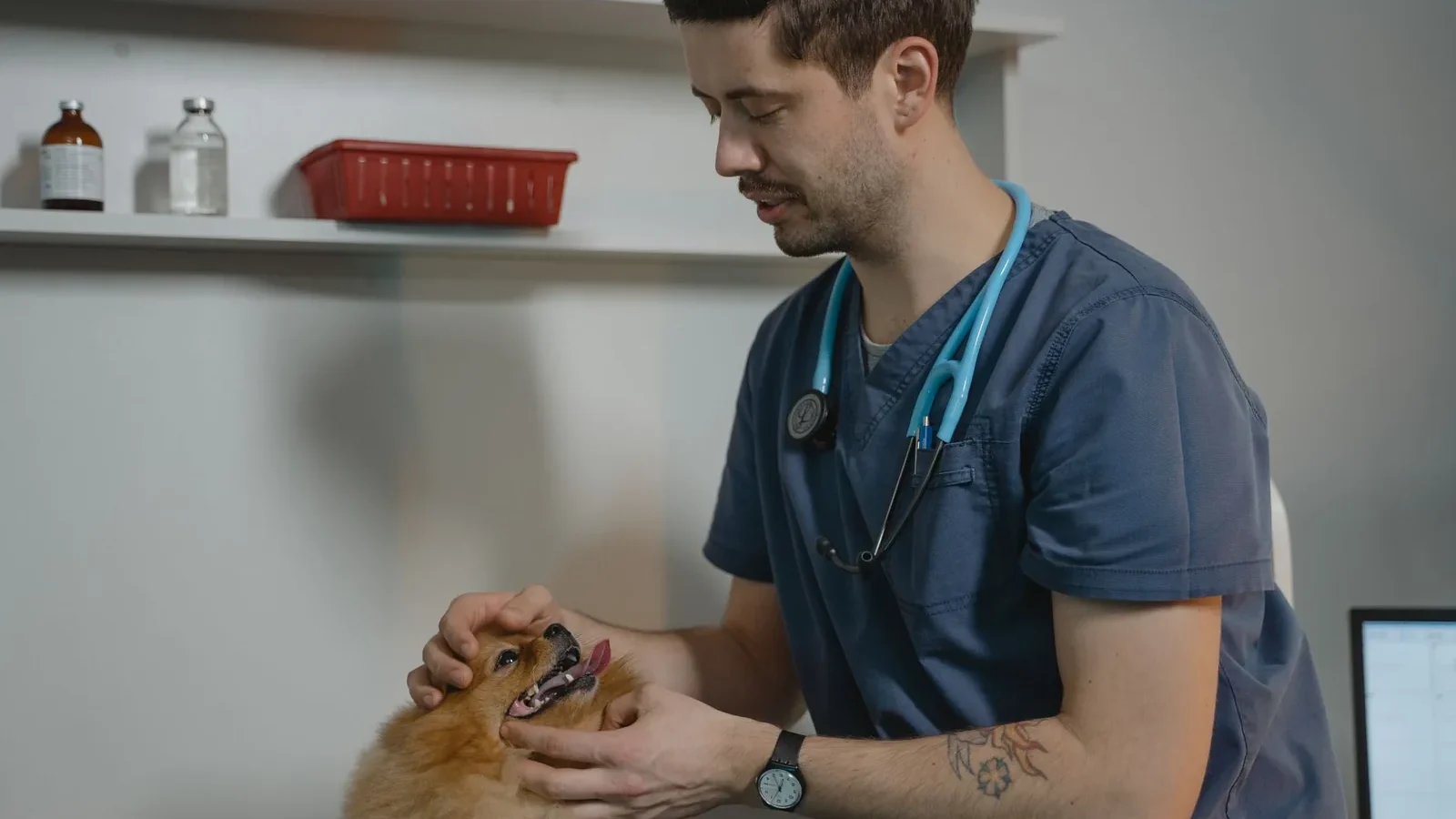
A government approved veterinarian scans the microchip, draws blood, and sends it to an approved laboratory. The sample must be collected within 45 days of the export date and the result must be negative. A positive or unresolved result means the dog does not fly.
Australia’s Group 3 step-by-step guide for dogs sets out the brucella canis test dog import Australia conditions in four parts, and each part is a separate way to fail:
- Who draws the blood. A government approved veterinarian, working in an approved country, who scans and verifies the microchip at the same visit.
- When. Within 45 days of the date of export, counting the day of collection as day zero.
- Which test. One of three named serological methods. Nothing else is accepted.
- What result. Negative. There is no borderline category and no appeal.
The same requirement appears in the Group 2 guide for dogs, so staging your pet in a lower-risk country such as Singapore does not remove it. Group 2 removes the rabies titre test, not this one.
Which dogs are exempt, and why desexing is a paperwork decision
Desexed dogs are exempt. Australia defines that narrowly — surgical ovariohysterectomy for females, bilateral surgical castration or gonadectomy for males. Chemical or partial procedures do not qualify, and evidence of the surgery may be requested by either government.
Read that definition slowly, because it is stricter than the word “desexed” usually implies in Malaysia. A vasectomy is not a bilateral castration. An implant is not surgery. If the surgical record does not describe one of the two named procedures, plan for the test.
Worth knowing what the exemption is and is not. It is a border risk judgement, not a biological all-clear. Cornell’s canine brucellosis overview notes that spayed and neutered dogs can still be infected and shed the bacteria — desexing reduces the reproductive route of spread rather than removing infection. Australia accepts that residual risk because the reproductive route is the one that matters at population level.
For a family already weighing the surgery, the timing point is simple. Doing it early in the staging period removes a test, a laboratory dependency and a mating rule from the final six weeks. Doing it late achieves nothing, because the exemption rests on the completed procedure.
Not sure which corridor rules apply to your dog?
Australia is one of ten destinations we run out of KLIA, and each has its own testing panel. Compare our international pet transport routes →
Which brucella canis testing dogs methods Australia accepts
Three methods only — RSAT, TAT and IFAT, in their standard versions. Australia names six variants it will not accept, including the AGID and the multiplex assay. A negative result from a rejected method has no value at the Australian border.
This is where an experienced pet export agent earns its fee, because the trap is not obvious. Most laboratories offer whichever brucellosis panel their market prefers, and several of the modern combination panels sit on Australia’s rejected list. The table below is the full position.
Brucella Canis Test Methods Australia Accepts
| Test method | Short name | Australia’s position | Note |
|---|---|---|---|
| Rapid slide agglutination test | RSAT | Accepted | Standard version only |
| Tube agglutination test | TAT | Accepted | Also accepted when a lab reports it as SAT |
| Indirect fluorescent antibody test | IFAT | Accepted | Standard version only |
| 2-mercaptoethanol RSAT | 2ME-RSAT | Not accepted | Common confirmatory variant |
| 2-mercaptoethanol TAT | 2ME-TAT | Not accepted | Common confirmatory variant |
| Agar gel immunodiffusion | AGID / AGID II | Not accepted | Widely offered elsewhere |
| Canine Brucella Multiplex Assay | Multiplex | Not accepted | Bundles several methods together |
| Slide agglutination / AGID II combination | Combination | Not accepted | Marketed as a single panel |
Source: DAFF Group 3 dog import conditions, 2025. Licence.
One live example shows how easily this goes wrong. Cornell reports that the long-standing commercial RSAT kit has been discontinued, and that its own laboratory now offers a multiplex assay combining RSAT, AGID and 2ME-RSAT instead. Bundled that way, the panel sits on Australia’s rejected list. An owner staging in North America who simply asks for “the brucellosis test” can be handed a rejected result by a first-rate laboratory.
A negative result on the wrong test method is not a partial pass. It is a blank page.
What else is on the Australia dog blood test import panel?
Brucella canis rarely travels alone. The Australia dog blood test import panel for a Group 3 dog also carries the rabies titre test, a Leishmania infantum test, and a Leptospira canicola test for any dog not vaccinated against it. Only Brucella depends on desexing.
The grid below reads by dog, not by rule, which is how families actually plan. Find your dog’s profile on the left and the whole panel appears in one row.
Blood Tests by Dog Profile, Group 3
| Dog profile | Rabies titre | Brucella canis | Leishmania infantum | Extra condition |
|---|---|---|---|---|
| Entire male | Required | Required | Required | No mating from sampling to export |
| Entire female | Required | Required | Required | Mating stand-down; 30-day pregnancy limit |
| Desexed male | Required | Exempt | Required | Evidence of castration may be requested |
| Desexed female | Required | Exempt | Required | Evidence of the spay may be requested |
Source: DAFF Group 3 dog import conditions, 2025. Licence.
Every dog in that grid also needs a Leptospira canicola answer — either a valid vaccination or a negative microscopic agglutination test. Vaccinating is usually the easier path, since it removes one more laboratory result from the final six weeks.
How does the RNAT test Australia dog timing differ from Brucella?
They run on opposite clocks. The RNAT test (Australia writes it as the RNATT) must be sampled between twelve months and 180 days before export. Brucella canis must be sampled within 45 days of export. One is the earliest test; the other is among the last.
Confusing the two is the most common planning error we see. The rabies titre opens the process and starts the 180-day residency period; the Brucella sample closes it. They can never be drawn at the same visit for the same export date.
Pre-Export Requirements by Days Out
| Requirement | 365–180 days out | 45 days out | 30 days out | 5 days out |
|---|---|---|---|---|
| RNATT blood sample at laboratory | Sampling window | — | — | Must still be valid |
| Brucella canis sample (entire dogs) | — | Window opens | Result due | Report endorsed |
| Leishmania infantum sample | — | Window opens | Result due | Report endorsed |
| Leptospira canicola test, if unvaccinated | — | Window opens | Result due | Report endorsed |
| Internal parasite treatment | — | First dose earliest | 14-day gap runs | Second dose due |
| Clinical exam and endorsed certificate | — | — | — | Both due |
Modelled from DAFF Group 3 dog import conditions, 2025. Licence.
Note the squeeze in the last column. Every laboratory report, Brucella included, must be signed and stamped by an official government veterinarian within five days of departure — after the final examination. Our guide to why Malaysia to Australia pet moves take months maps that whole calendar backwards.
The mating rule that catches breeders
Brucella canis is the only Australian pre-export test that regulates the dog’s behaviour. No mating or artificial insemination within 14 days before the sample, and none at all between sampling and export — pregnant or not.
Add the 45-day sampling window and the 30-day pregnancy ceiling and a very narrow corridor appears for any dog mated close to departure. Australia sets out the sequence itself.
How to sequence a mating around the Brucella canis test
These four steps assume a dog that has been mated or inseminated shortly before the planned export date.
- Mate only within 30 days of export. A pregnancy that begins earlier will pass the 30-day ceiling before the flight, and Australia does not accept dogs more than 30 days pregnant.
- Wait 14 days after the last mating. The Brucella canis blood sample cannot be collected inside that stand-down period.
- Do not mate again after sampling. From collection until export the dog must not be mated or inseminated, regardless of whether she is already pregnant.
- Keep the sample inside the 45-day window. The collection date must still fall within 45 days of the export date, which is what makes the corridor so tight.
Run those together and the practical window is only a few days wide. It is workable, but it leaves no room for a repeat sample, a courier delay or a public holiday at the endorsing office.
Want this panel scheduled against your flight date?
Send us your dog’s desexing status and departure window, and we will build the 45-day grid backwards from it. See what a managed relocation includes →
What a failed or late Brucella test really costs
Most Brucella problems cost days rather than months, because the sample can usually be repeated inside the same 45-day window. The exception is a genuine positive, which stops the export outright and turns a relocation into a veterinary decision.
The chart below models the recovery time for each failure mode, using the department’s own stated windows. It is illustrative, not measured.
Recovery Time by Brucella Failure Mode
| Failure mode | Relative impact | Days added |
|---|---|---|
| Positive result | Export blocked | |
| Mating inside the 14-day stand-down | 14+ | |
| Non-accepted test method used | 7 to 14 | |
| Sample drawn outside the 45-day window | 7 to 12 | |
| Report not endorsed before departure | 2 to 5 |
Illustrative modelling from DAFF Group 3 import conditions, 2025. Licence.
A positive result sits in a different category from the rest of that list. Brucellosis has no reliable cure, relapses are common, and desexing after the fact does not clear the infection. At that point the conversation moves from logistics to veterinary advice, and Australia’s guidance is explicitly to seek it locally rather than from the department.
Why the sample cannot be drawn in Malaysia
Australia requires every pre-export veterinary procedure to be carried out by a government approved veterinarian in an approved country. Malaysia is not on that list, so a Brucella sample drawn in Kuala Lumpur cannot be used, however good the laboratory.
This catches Malaysian owners more often than any other detail on this page. The instinct is sensible — get the bloods done at home with a vet you trust, then travel. It does not work here.
Because Australia does not currently accept dogs sent directly from Malaysia, the dog must first become legally resident in an approved country, and the testing panel happens there. Our guide to Australia’s pet import suspension for Malaysia explains that restriction in full.
What this means for planning:
- Malaysian vet work is preparation, not certification. Microchipping, rabies vaccination history and general health care all help, but the certifying steps happen in the staging country.
- Choose the staging country partly on laboratory access. A country where an approved laboratory runs RSAT, TAT or IFAT routinely is easier than one where the sample has to be shipped onward.
- Singapore is the usual first hop. Many families move the dog by road first. Our guide to driving your dog to Singapore via the Causeway covers what that leg involves.
Conclusion
Brucella canis testing is a small requirement with sharp edges. Confirm the desexing status, name the test method in writing, draw the sample early in the 45-day window, and it becomes a routine appointment rather than a risk.
The families who struggle with this test are rarely the ones with a sick dog. They are the ones who assumed a blood test is a blood test — that any laboratory, any date inside the last month, any brucellosis panel would do.
Three details decide it: whether the exemption applies, which method the laboratory runs, and where the sample sits against the flight. Get those right and the rest is admin. Our international pet relocation team in Malaysia books this panel as part of the export sequence, so nothing lands in the final week that could have been settled in the first.
Frequently Asked Questions
1. Does my desexed dog need a Brucella canis test for Australia?
No. Australia exempts desexed dogs, defined as females that have had a surgical ovariohysterectomy and males that have had a bilateral surgical castration or gonadectomy. Evidence of the procedure may be requested by the competent authority in the export country or by the Australian department, so keep the surgical record with your import documents.
2. Can the Brucella canis blood sample be taken in Malaysia?
No. All pre-export veterinary procedures must be completed by a government approved veterinarian in an approved country, and Malaysia is not on Australia’s approved list. The sample has to be drawn in the staging country where your dog is completing its residency period, not before it leaves Malaysia.
3. Which Brucella canis test does Australia accept?
Only the standard versions of three tests: the rapid slide agglutination test (RSAT), the tube agglutination test (TAT, sometimes reported as SAT), and the indirect fluorescent antibody test (IFAT). Australia specifically rejects 2ME-RSAT, 2ME-TAT, AGID and AGID II, the Canine Brucella Multiplex Assay, and slide agglutination combination panels.
4. How close to the flight can the sample be taken?
The sample must be collected within 45 days of the export date, counting the collection day as day zero. In practice you want the result back well before the final five days, because the laboratory report must be signed and stamped by an official government veterinarian after the pre-export clinical examination.
5. What happens if the result is positive?
The dog cannot be exported. Australia requires a negative result and does not offer a retest pathway for a genuine positive. Canine brucellosis has no reliable cure and relapses are common, so the next step is veterinary advice locally. The Australian department does not give treatment guidance.
Moving to Australia with an entire dog?
Send us your dog’s desexing status, microchip number and target departure month. We will map the Brucella window, the rabies clock and every endorsement deadline against your flight, then send one written quote.