Pet travel cabin vs cargo vs excess baggage is a contract decision, not a comfort decision. The three channels differ in who holds the booking, whose name is on the paperwork, and who may collect the animal at the other end. The destination's import rules usually decide which channel you may use — not you, and not the airline counter.
Introduction: the channel is a contract, not a comfort setting
Most owners ask which option is kinder. The more useful question is which one the destination will accept, because the three channels are three different contracts — and only one may be legal for your route.
The question almost always arrives the same way. Can she sit with me? If not, is cargo cruel? Fair questions from someone who has never handed an animal over at a counter.
They are also the wrong first questions. Cabin, checked baggage and manifest cargo are three separate commercial arrangements, and the differences that matter sit in the paperwork. My Pet Mover books all three across our international pet transport routes, and the destination’s rules usually settle the channel before we discuss the animal.
First, a short explainer from a working pet shipper on what the cabin and cargo split means in practice.
Not sure which channel your route allows?
We check the destination’s rules before quoting, so the channel on your quote is one the border will actually accept. See how our export service works →
How pets fly on planes: the three channels in plain terms
How pets fly on planes comes down to three channels. In the cabin, under the seat, on your ticket. In the hold as excess baggage, still on your ticket. Or in the hold on its own air waybill as manifest cargo, with you nowhere on the aircraft.
All three put the animal on a commercial flight. What changes is the document the airline works from, and that document decides almost everything else.
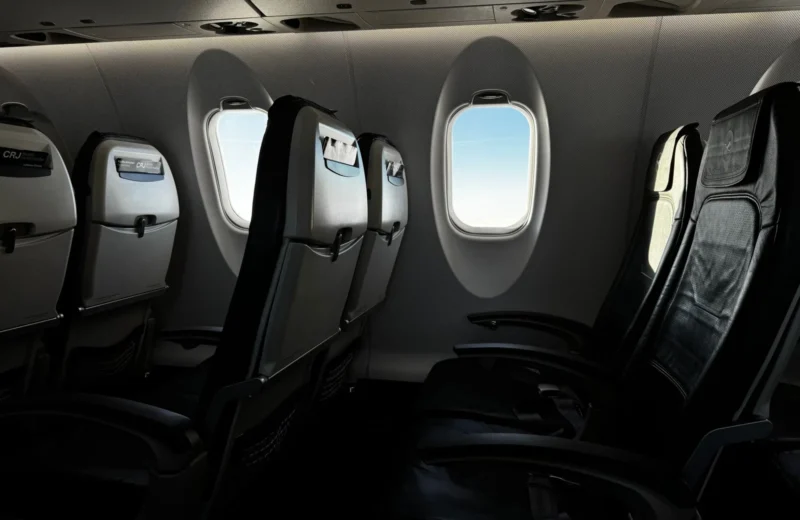
- Cabin. Carried as hand baggage in a carrier that fits under the seat. IATA’s guidance is blunt that only small dogs and cats can go in the cabin, and some airlines refuse them entirely.
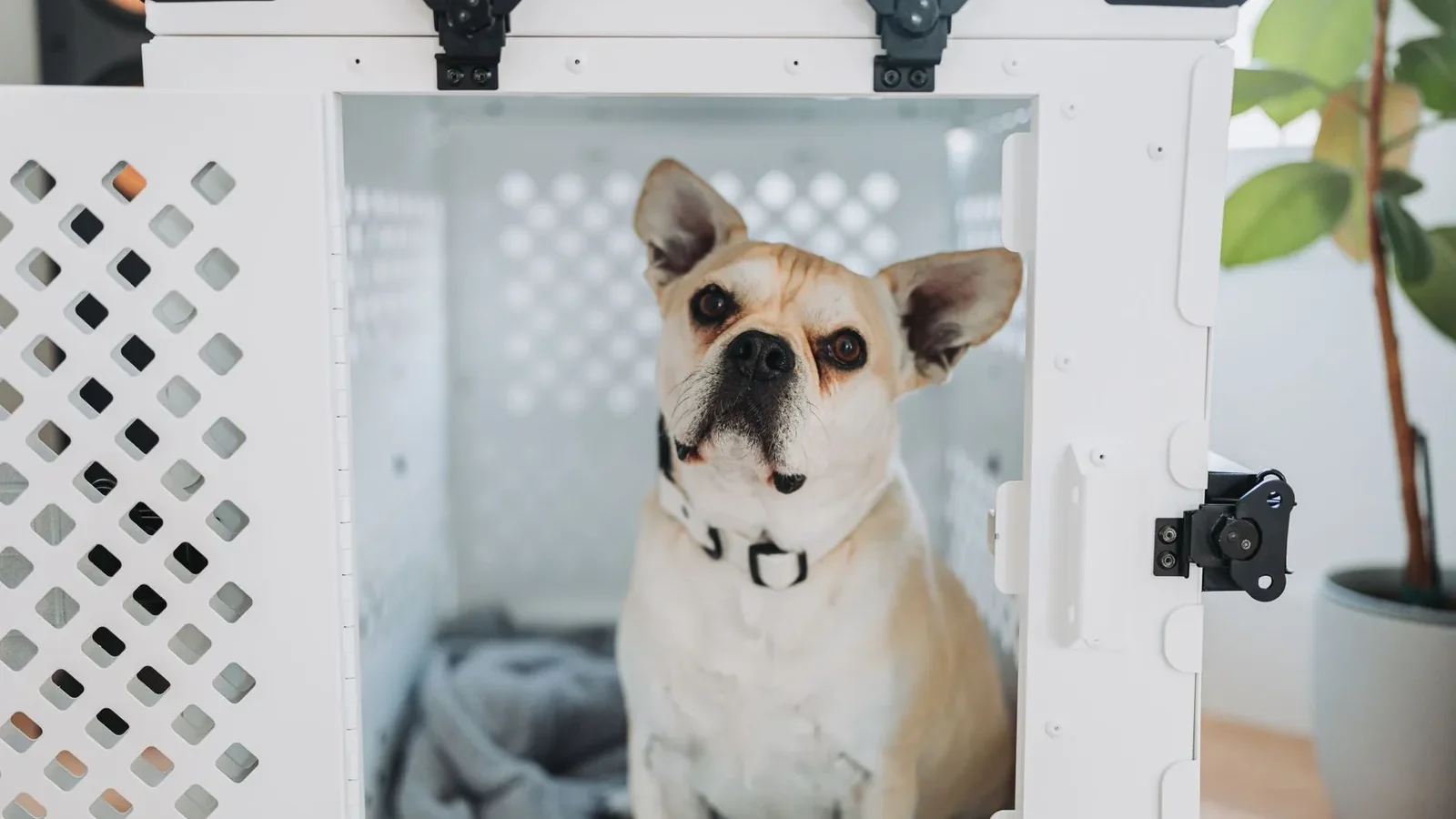
- Checked or excess baggage. The crate is accepted at the passenger counter and loaded into a heated, ventilated hold on your flight. You remain the contracting party.
- Manifest cargo. Booked through the airline’s freight arm, tendered at a cargo terminal, and carried under an air waybill naming a shipper and a consignee.
That last one is underestimated. A cargo booking is a freight contract for a live shipment, and it exists whether you fly that day or not at all — which is why regulators trust it for a permanent move out of the Malaysian export corridor.
Pet travel cabin vs cargo: what actually changes
In pet travel cabin vs cargo terms, the cabin buys proximity and loses flexibility. Cargo buys traceability, dedicated live-animal handling and a booking that survives a change to your own flight. Size decides it first, the destination decides it last.
Owners rank the options by how far the animal sits from them. Airlines and border agencies rank them by traceability, and those two rankings rarely agree.
The cabin looks gentle and often is, for a 4kg cat on a five-hour sector. It is also the most fragile booking on the file. Airlines cap animals per cabin, the carrier must fit a fixed footprint, and one aircraft swap can remove the allowance. Sizing the box is the first hard constraint, which is why measuring your dog correctly against IATA’s container rules settles the channel question faster than any comfort argument.
Cargo inverts those weaknesses. The shipment has a waybill number, a named consignee, and a terminal that handles live animals as a category rather than as an unusual bag.
The cabin is the only channel where a last-minute aircraft change can leave you at the counter with no legal way to carry your own animal.
Which channel does what?
Side by side, the three channels differ on four things: the contract document, whether the animal is tied to your seat, what tracking exists mid-journey, and who may take delivery. Price follows those four rather than driving them.
Three Pet Flight Channels Compared
| Channel | Contract document | Tied to your seat | Mid-journey tracking | Who may collect |
|---|---|---|---|---|
| Cabin | Your passenger ticket | Yes | None needed | You, at the arrival station |
| Checked baggage | Baggage receipt on your ticket | Yes | Baggage tag only | You, or your appointed agent |
| Manifest cargo | Air waybill | No | Waybill status per leg | Named consignee only |
Source: My Pet Mover, compiled from IATA and AVS guidance, 2026. Licence.
The last column catches families out. On a cargo booking the animal is released to the consignee named on the waybill and nobody else, so that name must belong to someone actually in the country on arrival day. Where budget decides instead, the channel shows up on the quote — our pet relocation pricing page sets out what moves between them.
Checked baggage pet flight rules and where they stop
Checked baggage pet flight bookings sit in the middle: hold travel, on your ticket. Cheaper and simpler than cargo, and they stop working the moment a route, a destination or a connection refuses to treat a live animal as luggage.
Excess baggage is the channel Malaysian families use most for short regional sectors. One counter, one itinerary, one set of tags. But the limits show up in three predictable places:
- Route exclusions. Carriers often accept pets as baggage across most of their network but require freight on specific long-haul or biosecurity-sensitive sectors.
- Connections. A baggage-checked animal depends on every downline airline accepting the same arrangement. One that does not ends the plan.
- Destination law. Some regulators will not clear a pet that arrived as accompanied baggage, whatever the departure airport allowed.
Australia is the clearest example of the third. Its Department of Agriculture, Fisheries and Forestry publishes strict import conditions for cats and dogs, with the permit carrying the definitive terms, and traceable manifest cargo is what satisfies them.
Land moves behave differently again. The rules for driving a dog to Singapore across the Causeway turn on checkpoint appointments, not baggage allowances.
Already holding a flight date?
Send us the route and we will tell you which channels are open on it before you commit to tickets. Check your destination route →
What each channel must still produce
A cabin booking does not shorten the document file. Import licences, rigid crates, captain’s declarations and appointed agents attach to the animal, not the channel — so the cheapest channel still carries the same paperwork.
Singapore is the most useful worked example, because its rules are published channel by channel. Its Animal and Veterinary Service requires a rigid, IATA-compliant crate even for animals travelling in-cabin or as excess baggage, because the animal is still moved to the quarantine station after landing.
Paperwork Each Channel Still Needs
| Requirement | Cabin | Checked baggage | Manifest cargo |
|---|---|---|---|
| Rigid IATA-compliant crate | For transfer | Required | Required |
| Import licence shown at check-in | Yes | Yes | Held with waybill |
| Airline-endorsed captain’s declaration | Varies | Varies | Varies |
| Air waybill | No | No | Yes |
| Appointed agent clears on arrival | Usually | Usually | Yes |
Source: My Pet Mover, compiled from AVS and IATA published conditions, 2026. Licence.
Read down the cabin column and the point lands: choosing the cabin removes the freight booking and almost nothing else. Treat the Malaysia to Singapore pet transport requirements as a document exercise, not a distance one.
Manifest cargo pet bookings and the air waybill
A manifest cargo pet booking runs on an air waybill naming a shipper and a consignee. That document gives the shipment per-leg status, dedicated live-animal handling, and a receiver at destination who need not be a passenger.
The air waybill is what people are really buying. It converts the animal from an item attached to a passenger into a shipment with its own identity in the airline’s system.
Three practical consequences follow:
- Your travel and the pet’s travel separate cleanly. You can fly a week earlier, settle the housing, and have the animal follow.
- The animal is handled as live cargo, not as an odd bag. Freight terminals accept, hold and load animals under their own procedure.
- Someone must be there to receive it. IATA advises checking that the freight facility is open so the consignee can claim the animal, which is why weekday arrivals are preferred.
A fourth consequence catches DIY movers. IATA also records that some airlines will not accept animals handled by anyone other than an approved shipper. That is a stated condition of carriage, and one reason corridors such as Malaysia to Australia pet transport are agent-handled almost without exception.
How far ahead each channel has to start
Cabin bookings feel late-decidable and are not. Permits, serology waits and crate acclimatisation run on the destination’s calendar, so all three channels lock months out — cargo simply admits it earlier.
Modelled Open Tasks by Week, per Channel
| Channel | 16 wks | 12 wks | 8 wks | 4 wks | 1 wk |
|---|---|---|---|---|---|
| Cabin |
7 |
6 |
4 |
3 |
1 |
| Checked baggage |
8 |
7 |
5 |
3 |
1 |
| Manifest cargo |
10 |
8 |
5 |
3 |
1 |
Modelled on published permit lead times and My Pet Mover file practice, 2026. Licence.
The lines converge because the long poles belong to the government, not the airline. New Zealand’s Ministry for Primary Industries asks importers to apply for a permit at least 30 working days ahead and recommends using a pet transporter. That clock runs the same whichever channel you book, which is why bringing a pet into Malaysia also starts with the permit rather than the flight.
Why the channel never changes where your pet is cleared
A cabin animal is still an imported animal. Border inspection happens at the country’s designated animal station, usually inside the freight complex, so a cabin booking buys the flight together and nothing after the aircraft door.
This is the most misunderstood point in the comparison, so it is worth being concrete.
In Singapore, dogs and cats arriving by air are inspected at the Changi Animal and Plant Quarantine Station, inside the Changi Airfreight Centre — whether the animal came off the aircraft in your arms or off a cargo pallet. Since April 2026 an AVS-recognised pet agent must handle clearance there, so self-clearing is not an option even for a cabin cat.
Malaysia works the same way in principle. Arriving animals are handled at the designated quarantine station, not at the baggage carousel, as set out in our guide to pet quarantine at KLIA.
Buying a cabin ticket does not buy you a walk out of the terminal with your dog. It buys you the flight together, and one shorter transfer at the other end.
Want the arrival day mapped out first?
We plan clearance, collection and quarantine before we book anything, so nobody is improvising at the freight terminal. Compare what a full-service move includes →
How many hands the crate passes through
Cargo involves more custody transfers than the cabin, and each is documented. Cabin travel involves fewer transfers, none of them logged. More handovers is not automatically worse — untracked handovers are.
Modelled Custody Handovers per Channel
| Channel | Handovers | Total | Documented |
|---|---|---|---|
| Cabin | 3 | 1 | |
| Checked baggage | 5 | 2 | |
| Manifest cargo | 7 | 6 |
Illustrative model of a single-connection route, My Pet Mover, 2026. Licence.
The right-hand column is the argument. A cargo shipment changes hands more often, but almost every transfer leaves a record against the waybill, which is what lets an agent find an animal during a delay. A baggage-checked crate that misses a connection is simply a lost bag.
That asymmetry is why multi-sector routings end up on freight bookings. The more legs, the more a documented chain of custody is worth, and the more the rest of the export process from Malaysia depends on it.
How to pick the channel for a move out of Malaysia
Work from the destination inward. Confirm what the arrival country accepts, then what the airline accepts on that routing, then what your animal’s size and breed allow. Preference comes last, because by then there is usually one channel left.
How to choose a pet flight channel from Malaysia
Run these in order. Doing them out of order is how people end up rebooking flights they have already paid for.
- Read the destination’s import conditions first. Some countries accept only manifest cargo, and that cannot be appealed at check-in.
- Check the routing, not just the airline. Carriers often allow baggage across most of their network while requiring freight on selected sectors.
- Measure the animal and size the crate. IATA sets internal dimensions from the animal’s own measurements, with snub-nosed breeds needing 10% more.
- Confirm who receives the animal. On a cargo booking this is the named consignee, and they must be present on arrival day.
- Only then choose what is left. If two channels survive, pick on cost and connection risk.
One habit helps whatever the channel. IATA advises checking in late for a cabin animal and early for one going into the hold, so it can settle somewhere quiet and dim.
Conclusion: book the channel your route allows
Choose on eligibility and traceability, not sentiment. The cabin is a narrow allowance for small animals on permissive routes. Cargo is built for live shipments, and on many corridors it is the only channel a border will clear.
None of this makes the cabin wrong. For a small cat on a short regional sector into a country that permits it, the cabin is often the sensible booking, and we make it regularly.
What does not survive contact with reality is treating the channel as a preference. Paperwork, crate standard and arrival station are set by the destination. The channel is the vehicle that satisfies them, and picking it early keeps the rest of the file calm.
Ready to move your pet the right way?
Tell us your destination, your dates and your animal’s size. We will confirm which channels your route allows, size the crate, handle the permits and give you a clear quote with no guesswork.
Frequently Asked Questions
1. Is the cabin always safer than the hold for my pet?
Not always. IATA notes that cats and dogs often travel well in the hold because it is quieter and darker, and that live animals are loaded into heated, ventilated compartments. Size, breed and destination rules matter more than the compartment itself.
2. Can I book excess baggage and switch to cargo later?
Sometimes, but not reliably. A switch means a new booking with the airline’s freight arm, a new air waybill and often a different acceptance cut-off. If the destination requires cargo, book it that way from the start.
3. Does my pet need an IATA crate if it flies in the cabin?
Often yes. Singapore’s Animal and Veterinary Service requires a rigid IATA-compliant crate even for in-cabin and excess baggage arrivals, because the animal still has to be transferred to the quarantine station after landing. Soft carriers are not accepted.
4. Can my pet fly as cargo if I am not travelling at all?
Yes. That is the main advantage of a manifest cargo booking. The shipment travels on its own air waybill with a named shipper and consignee, so your itinerary is irrelevant — provided someone authorised can receive the animal on arrival.
5. Which channel costs the most?
Cargo is usually the highest line item, because it carries freight handling, terminal fees and agent clearance. Cabin is usually the lowest. The gap narrows once permits, crate and clearance are added, since those apply to every channel.