Introduction: the price is set months before the flight
Owners ask what the flight costs. On this route the flight is one line among many, and rarely the one that decides the total. Japan’s entry conditions run for six months or more, and almost every cost sits inside that window rather than on departure day.
Most people start planning a move to Japan by pricing the airline. It feels like the big number, so it feels like the place to start.
Then the vet mentions a blood test. Then someone mentions a six-month wait. Then it turns out the blood sample cannot be tested in Malaysia at all.
This guide walks through what actually sits in the bill, in the order the money leaves your account. It follows the route we run every month at My Pet Mover, described in full on our Malaysia to Japan pet transport page. The video below explains how air freight is priced, which is the part owners misread most often.
What the cost to move a pet from Malaysia to Japan covers
A Malaysia to Japan pet move has five spending groups: veterinary preparation, laboratory testing abroad, Malaysian export paperwork, the crate, and the air freight itself. Only the last two are usually quoted upfront, which is why early estimates come in low.
Split the bill by group rather than by supplier and the shape becomes obvious. Some groups you control, some the calendar controls, and some Japan controls outright.
- Veterinary preparation. Microchip, two rabies vaccinations at least 30 days apart, boosters if the wait runs long, and the pre-export clinical inspection.
- Laboratory testing abroad. Blood draw in Malaysia, courier to a laboratory Japan designates, and the antibody test itself.
- Malaysian export paperwork. The veterinary health certificate from the Department of Veterinary Services and the export permit from MAQIS.
- The crate. An IATA-compliant container sized to your own animal, not to the breed name.
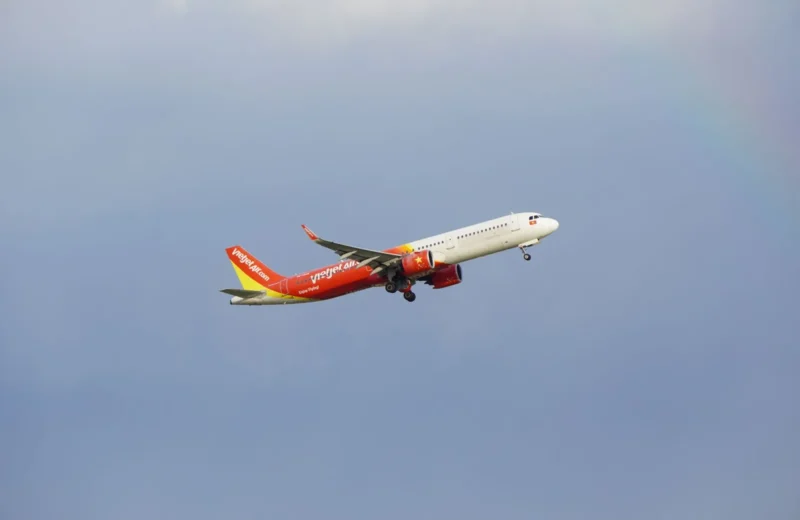
- Air freight and handling. Chargeable weight, airline handling, and collection at the Japanese end.
Owners comparing quotes for the cost to fly a dog overseas often find the freight line similar between agents. The difference sits in whether the other four groups were priced at all.
Want the whole bill in one document?
We quote every group above on one page, so nothing surfaces halfway through the wait. See how our pet relocation pricing works →
Why Japan’s 180-day wait is a budget line, not a delay
Japan requires pets from non-designated regions to arrive at least 180 days after the blood sample was drawn. Malaysia is not on Japan’s designated list, so the wait applies. Six months of boarding, boosters or a delayed household move all carry a price.
Japan’s Animal Quarantine Service sets the sequence: microchip first, then two rabies vaccinations, then a blood sample, then the wait. The official guide for non-designated regions states the animal must arrive 180 days or more after the sampling date, with the sampling date counted as day zero.
Most people read that as a scheduling problem. It is also a spending problem, because the wait pulls other costs along with it.
- Boarding or a second household. Families who move ahead of the pet pay to keep it somewhere for months.
- Booster vaccinations. The rabies cover must stay effective right through to arrival, so a long wait can mean an extra dose.
- Repeat testing. A titre under 0.5 IU/ml means testing again, and the courier and laboratory charges repeat with it.
We cover the mechanics of the clock in when Japan’s 180-day pet wait actually starts and the testing side in Japan’s titer test and the long wait it triggers.
The blood test costs more from Malaysia, and here is why
Japan only accepts rabies antibody results from laboratories it designates, and none of them are in Malaysia. The sample must be couriered abroad under temperature control, which adds shipping, documentation and turnaround time that owners in designated-lab countries never pay.
This is the line most Malaysian owners never see coming. General export advice often says a rabies antibody test is not needed to send a pet out of Malaysia, which is true for many destinations and wrong for Japan.
Japan publishes its list of designated blood testing laboratories. The Asian entries are in Japan, South Korea and Taiwan. Malaysia has no entry, so the serum travels.
Three practical consequences follow, and each one carries a charge:
- International courier under temperature control. Serum is a biological shipment with its own packaging and paperwork, not an ordinary parcel.
- Extra certification for dog samples. Japan requires an inspection certificate from the exporting country’s government agency when dog serum is sent to a laboratory in Japan. Cat samples are exempt.
- Turnaround risk. A sample delayed or damaged in transit is a repeat draw, a repeat courier and a repeat test, and the 180 days restart from the new sampling date.
None of this is negotiable, but it is plannable. Booking the draw with the courier already arranged is the difference between one test and two.
Where the money actually goes on this route
Air freight is the largest single line on a Malaysia to Japan pet move, but it is a minority of the total. Preparation before departure, taken together, typically outweighs the flight itself on the files we handle.
The shares below come from our own Malaysia to Japan casework and are shown as proportions of the total, since the ringgit figures move with crate size, season and carrier.
Share of Total Spend by Cost Group, Malaysia to Japan
| Cost group | Typical share of total |
|---|---|
| Air freight and airline handling |
38% |
| Laboratory test plus international courier |
21% |
| Veterinary preparation and boosters |
17% |
| IATA crate and travel kit |
13% |
| Export paperwork and government charges |
7% |
| Ground transport and arrival collection |
4% |
Source: My Pet Mover casework pattern, Malaysia to Japan relocations, 2024 to 2026. Shares are typical proportions and vary with animal size and season.
Read the top two rows together. Freight leads, but the laboratory group sits close behind it, and that group barely appears in a normal airline conversation.
How much crate size changes the total
Airlines charge on chargeable weight, which is driven by the crate’s outside dimensions rather than the animal’s real weight. A cat and a retriever follow the same rules and the same paperwork, but the freight-driven part of the bill moves sharply between them.
The model below holds the fixed lines steady and scales the size-driven ones, indexed so a small cat move equals 100.
Indexed Cost by Animal Size, Fixed Lines Versus Size-Driven Lines
| Animal and crate | Fixed lines | Size-driven lines | Total index |
|---|---|---|---|
| Cat, small crate | 55 | 45 | 100 |
| Medium dog, mid-size crate | 55 | 95 | 150 |
| Large dog, tall crate | 55 | 170 | 225 |
Illustrative model based on My Pet Mover quoting practice, indexed to a small cat move at 100. Fixed lines cover testing, courier, permits and vet work; size-driven lines cover crate, freight and handling.
The fixed block does not move. A cat owner and a retriever owner pay the same for the test, the courier and the permits. That is why a small-animal move feels expensive next to its own flight, while a large-animal move feels dominated by it.
Getting the container right matters twice over: once for the airline’s measurement, once for Japan’s inspection. Our guide to measuring your dog for an IATA crate covers the arithmetic, and flying a dog from KL to Tokyo covers how carriers apply it.
Not sure which crate size your quote assumed?
Send us four measurements and we size the container before anything is booked. See how our pet export service works →
The Malaysian side: DVS certificate and MAQIS permit
Leaving Malaysia needs two documents: a veterinary health certificate endorsed by the Department of Veterinary Services, and an export permit from MAQIS. Both are modest in cost and unforgiving on timing, since Japan wants the clinical inspection done within ten days of boarding.
The government charges themselves are the smallest group in the whole bill. Their influence is on the schedule, not the total.
The Department of Veterinary Services import and export section handles the health certificate, and MAQIS issues the export permit through the electronic permit system. Applications are commonly lodged about a week before departure to allow for processing.
Japan then expects its own paperwork to line up with that. The pre-export clinical inspection must fall within ten days of boarding, and the government-endorsed certificate must carry the microchip number, both vaccination dates, the sampling date and the antibody result.
Two related steps often get compressed and should not be. The notification to Japan must be filed well ahead, as covered in Japan’s 40-day advance notification rule. Signing responsibilities are set out separately in who signs Form A and Form C in Malaysia.
When each cost falls due across the six months
Spending on this route is front-loaded and back-loaded, with a long quiet middle. The first two months carry the veterinary and laboratory work, months three to six carry almost nothing, and the final six weeks carry the crate, the freight and the permits.
Owners often budget as though the money leaves in one lump near departure. The timeline below shows why that assumption causes trouble.
When Spending Falls Due, Counted From the First Vaccination
| Period | What you pay for | Share of spend |
|---|---|---|
| Month 0 to 1 | Microchip, two rabies vaccinations | 10% |
| Month 1 to 2 | Blood draw, courier abroad, antibody test | 21% |
| Month 2 to 6 | The 180-day wait, boosters if due | 6% |
| Final 6 weeks | Crate, cargo booking, notification filing | 18% |
| Final 10 days | Inspection, DVS certificate, MAQIS permit | 7% |
| Departure and arrival | Air freight, handling, collection in Japan | 38% |
Source: My Pet Mover casework pattern, Malaysia to Japan relocations, 2024 to 2026. Periods are typical; the wait may run longer than 180 days.
The quiet middle is where plans get abandoned. Nothing is happening, so nothing feels urgent, and then the final six weeks arrive with most of the remaining bill attached.
What pushes a Malaysia to Japan budget over
Overruns on this route come from repeated steps, not from expensive ones. A vaccination given before the microchip, a crate bought too small, or a titre below the threshold all force something to be done twice.
The ranking below counts what caused extra spending on files we prepared, relative to the most common cause.
What Caused Extra Spending, Ranked by Frequency
| Cause of extra spending | Relative frequency |
|---|---|
| Crate replaced after proper measurement |
100 |
| Booster needed because the wait ran long |
68 |
| Vaccination invalid, sequence restarted |
52 |
| Repeat blood test after a low titre |
37 |
| Flight rebooked around capacity or embargo |
29 |
| Boarding extended while paperwork caught up |
22 |
Source: My Pet Mover casework pattern, Malaysia to Japan relocations, 2024 to 2026. Bars show frequency relative to the most common cause.
Every entry above is preventable with information the owner could have had on day one. None of them are surprises about Japan. They are sequencing errors made at home.
Starting the six-month sequence this year?
We set the vaccination and sampling dates first, so the wait finishes when you need it to. Plan a Malaysia to Japan move with us →
How to read a quote for this route
Compare quotes on what they exclude, not on the headline number. On this route the honest questions are whether the courier to the laboratory is included, which crate size was assumed, and who pays if the sequence has to restart.
Two quotes can differ by thousands and both be reasonable. The gap is almost always scope.
- Is the laboratory courier priced in? If it is not mentioned at all, the quote assumes you arrange it.
- Which crate size was assumed? Ask for the container dimensions the price was built on.
- Does the freight line include handling at both ends? Collection in Japan is a separate service.
- What happens if the titre comes back low? A repeat test and a new 180-day count is the single largest risk on the route.
- Is boarding during the wait included? For families moving ahead of the pet, this can rival the freight.
The same discipline applies in reverse. Owners bringing an animal the other way should read how to apply for a MAQIS import permit for a pet from Japan, since the Malaysian entry side has its own document chain.
Conclusion: buy the calendar, not the flight
The cost to move a pet from Malaysia to Japan is mostly decided in the first fortnight, when the microchip goes in and the vaccination dates are set. Everything after that either follows the plan cheaply or repeats it expensively.
Families who finish this route comfortably tend to do the same unglamorous things. They microchip before vaccinating. They book the courier when they book the blood draw. They measure the animal before buying a container.
Families who overspend rarely made an expensive choice. They made an ordinary one slightly out of order, and Japan’s sequence does not allow that.
Requirements do change, so confirm your own case with the Animal Quarantine Service branch covering your arrival airport, and with Malaysia’s veterinary authorities, before committing to dates.
Frequently Asked Questions
1. What is the biggest single cost when moving a pet to Japan?
Air freight is the largest single line, but it is under half the total. The laboratory test and its international courier, plus the veterinary preparation around them, together outweigh the flight on most Malaysia to Japan files.
2. Why can’t the rabies blood test be done in Malaysia?
Japan only accepts results from laboratories it designates, and its published list has no Malaysian entry. The serum must be couriered to a designated laboratory abroad, which adds shipping and documentation to the test price.
3. Does the 180-day wait cost anything by itself?
Not directly, but it usually does indirectly. Boarding, an extra booster to keep the vaccination effective, and a delayed household move are the three costs that most often attach themselves to the waiting period.
4. Is it cheaper to move a cat than a dog?
Yes, though less than owners expect. The testing, courier, permits and vet work cost the same for both. Only the crate, freight and handling scale with size, so a cat move is cheaper but not proportionally so.
5. How early should I start budgeting for this move?
Around eight months before the intended arrival. That leaves room for the two vaccinations, the blood sample, the full 180-day wait after sampling, and the final six weeks of crate, cargo and paperwork.
Planning a move to Japan with your pet?
Tell us your animal’s size and the month you need to arrive. We map the vaccination and sampling dates backwards from that arrival, price every group on one page, and handle the certificate, the permit and the cargo booking.