Budget RM 9,000 to RM 42,000 to move a pet from Malaysia to Germany, depending almost entirely on crate size. Roughly four fifths of that is spent before your pet reaches KLIA. The airline invoice is the single largest line, but it is never the majority of the file, and the spending does not stop when the plane lands.
Introduction: a quote that is mostly not a plane ticket
Owners planning a move to Germany usually price the flight first and everything else second. That is backwards. On this route the freight charge is the biggest single line, yet seven or eight other lines together outweigh it, and several of them fall due in euros after arrival.
Most families who ask us about Frankfurt or Munich have already found a figure online and want to know whether it is real. The figure is usually the air freight alone, which is why the full quote comes as a shock.
This page does the opposite. It starts with the whole file, breaks it into the lines that actually appear on a My Pet Mover invoice, and shows when each one is paid. If you want the rules and the calendar rather than the ringgit, our companion guide to Malaysia to Germany pet relocation covers those in full.
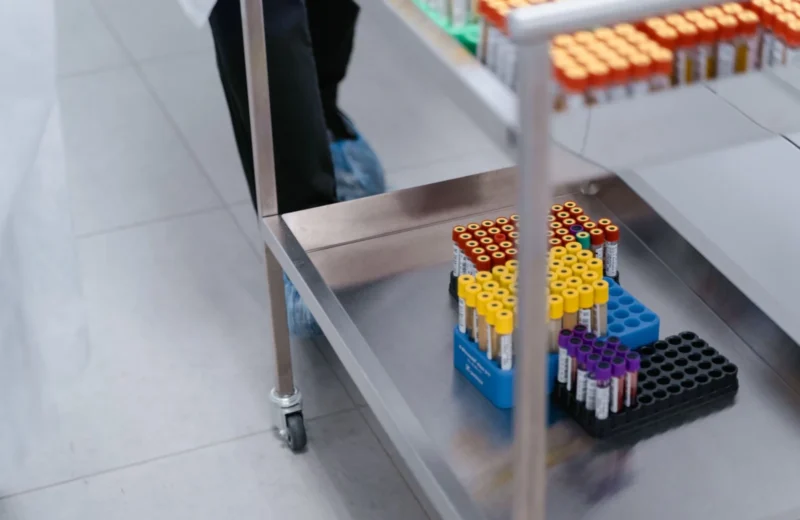
A short look inside the facility where German-side charges are raised, before the numbers.
What is the cost to move a pet to Germany?
The cost to move a pet to Germany runs about RM 9,000 to RM 13,000 for a cat and RM 17,000 to RM 24,000 for a medium dog. A giant dog in a size 500 crate reaches roughly RM 42,000. Crate volume, not body weight, sets the band.
Air freight is billed on volumetric weight, so the box decides the price. A 19kg dog that needs a size 400 crate costs more to move than a 24kg dog that fits a 300. Measure before you budget.
Germany Cost Bands by Pet Size
| Pet size | Malaysian side (RM) | German side (RM) | All-in band (RM) | Crate |
|---|---|---|---|---|
| Cat | 7,200–10,300 | 1,800–2,700 | 9,000–13,000 | 100 |
| Small dog, under 8kg | 9,700–13,500 | 2,300–3,500 | 12,000–17,000 | 200 |
| Medium dog, 8–20kg | 14,100–19,600 | 2,900–4,400 | 17,000–24,000 | 300 |
| Large dog, 20–35kg | 20,000–27,200 | 4,000–5,800 | 24,000–33,000 | 400 |
| Giant dog, over 35kg | 25,800–34,600 | 5,200–7,400 | 31,000–42,000 | 500 |
Source: My Pet Mover Germany-route quotations, 2024 to 2026. Planning bands, not quotations. Licence.
Two patterns hold across every row. The Malaysian side takes roughly four fifths of the total, and each step up in crate size adds far more than the extra kilograms suggest. Our wider breakdown of what it costs to fly a dog overseas shows the same volumetric effect on other long-haul routes.
Not sure which crate size your dog needs?
Send us a shoulder height and a nose-to-tail measurement and we will tell you which band you are in. See our relocation pricing →
Where the ringgit actually goes
On a typical medium-dog file, air freight is a little over 40% of the bill. Coordination and export handling take another 17%. Everything else, from the crate to the German-side clearance, splits the remaining 40% into small pieces that owners rarely see itemised.
Here is one real-shaped file, laid out line by line. The figures are midpoints, so a cautious budget should sit above them.
Cost Lines, Medium Dog to Germany
| Cost line | Relative size | Amount (RM) |
|---|---|---|
| Air freight, KUL to FRA | 8,600 | |
| Agent coordination and export handling | 3,400 | |
| German clearance, terminal and documents | 2,300 | |
| Onward ground transport in Germany | 1,350 | |
| IATA crate, size 300, fitted | 1,150 | |
| KLIA handling and security screening | 1,050 | |
| Vet work, vaccination top-ups and Nipah testing | 1,650 | |
| DVS export health certificate | 350 |
Source: My Pet Mover casework, one representative medium-dog file, 2025. Total about RM 19,850. Licence.
The bottom four lines add up to less than half the freight charge, yet they are where most disputes begin. They are small enough to be left off a first quote and large enough to matter once they appear. Our guide to hidden costs in pet relocation quotes covers the ones that surface late on every route.
What Malaysia’s listed status is worth in ringgit
Malaysia is a listed third country for EU pet entry, so a pet leaving Malaysia needs no rabies antibody titre test and serves no three-month wait. Against a non-listed origin that is worth roughly RM 2,100 to RM 5,600 and three months of calendar. One Malaysian condition still applies.
Germany’s federal agriculture ministry publishes the list, and Malaysia sits on it alongside Japan, Singapore and Australia. You can check the current version on the ministry’s listed and non-listed third countries page. This single fact is the largest hidden saving on the route, and almost no cost article mentions it.
Listed Versus Non-Listed Origin
| Requirement | Departing Malaysia (listed) | Departing a non-listed country |
|---|---|---|
| Rabies antibody titre test | Not required | Required, RM 600–1,100 |
| Waiting period after sampling | None | Three months before entry |
| Retest if the result is low | Not applicable | Revaccinate and pay again |
| Boarding during the wait | None | RM 1,500–4,500 if needed |
| Nipah virus certificate | Required from Peninsular Malaysia, RM 450–900 | Not applicable |
| Realistic time to departure | Five to seven weeks | Four to six months |
| Added rabies-related cost | RM 0 | RM 2,100–5,600 |
Source: My Pet Mover casework, 2024 to 2026; listing status per Germany’s agriculture ministry. Licence.
Three cautions. Listing follows where the pet has been living, not where it was born, so a dog recently arrived from a non-listed country does not inherit the exemption. Plenty of other destinations still demand the test, which is why we keep a separate note on rabies titer test costs at Malaysian labs. A move to Australia costs more than Germany largely for this reason.
The third caution is the one agents miss. Pets leaving Peninsular Malaysia carry a Nipah virus condition on the EU animal health certificate: no pig contact, no affected holding, and a negative antibody result on a sample drawn within ten days of departure. It is a small line in ringgit and a tight one on the calendar.
When the money actually leaves your account
Payment is not one transfer. About RM 3,250 of a medium-dog file is spent in the first four weeks. A third then falls due in the fortnight before departure, and roughly a fifth of the total is paid in euros on arrival day.
Families relocating for work often have a moving allowance that pays out on a fixed date. Knowing the shape of the spending matters as much as knowing the total. The heaviest week is the one that ends at the cargo terminal, which our walk-through of pet cargo at KLIA on flight day covers step by step.
Spending Timeline, Medium Dog
| When | What is paid | Amount (RM) | Cumulative (RM) |
|---|---|---|---|
| Week −10 | Booking deposit, file opened | 1,500 | 1,500 |
| Week −8 | Vaccination top-ups, microchip check | 600 | 2,100 |
| Week −6 | Crate ordered and fitted | 1,150 | 3,250 |
| Week −4 | Hold space confirmed, freight deposit | 4,300 | 7,550 |
| Week −2 | Fit-to-fly exam, Nipah sample, DVS certificate | 1,400 | 8,950 |
| Week −1 | Freight balance, KLIA handling, screening | 5,350 | 14,300 |
| Departure week | Airport handover and documentation | 1,250 | 15,550 |
| Arrival day | German clearance, terminal, ground transport | 4,300 | 19,850 |
Source: My Pet Mover casework, one representative medium-dog file, 2025. Licence.
Notice the arrival-day figure. It is the second largest single payment in the schedule, it is settled in euros, and it is the one most likely to be missing from a quote written in Kuala Lumpur.
The German-side costs Malaysian quotes leave out
A pet flown to Germany as cargo must clear customs and veterinary control before anyone can collect it. Frankfurt Airport says a forwarder handles that clearance for about 100 euros and the process takes one to two hours, on top of terminal charges.
The German end is a separate job with its own invoice, and how it is billed depends entirely on how your pet travels.
- Flying alone as cargo. The airport is explicit that you need a freight forwarder to import an animal you are not travelling with, because the booking runs on an air waybill. That forwarder is a second company, and a second fee.
- Clearance before collection. Frankfurt’s own guidance states that veterinary and customs clearance must be finished before pickup, that a forwarder will do it for roughly 100 euros, and that you should plan one to two hours.
- Travelling as your excess baggage. Cheaper on paper, but you must walk your pet through the red customs channel on arrival, where officers check the microchip and the certificate against each other.
- Getting from Frankfurt to your new address. Onward transport to Hamburg, Berlin or Munich is a road job priced separately, and it is not small on a long domestic leg.
None of this is unusual and none of it is a trap. It simply belongs on a Malaysian quote and often is not, which is why our pet export service from Malaysia quotes both ends of the route as one file.
Want one quote that covers both ends?
We price the Malaysian file, the freight and the German clearance in a single document, so nothing arrives as a surprise in euros. Read our EU export overview →
The bill does not stop at the airport
Germany taxes dog ownership. In Berlin the dog tax is 120 euros a year for a first dog and 180 euros for each additional dog, and you must register within one month of moving there. Rates are set locally, so your city decides your figure.
Every relocation article stops at collection. Owners then discover that keeping a dog in Germany carries recurring obligations that a Malaysian household never had to think about, none of which appear in the export paperwork we prepare in Malaysia.
- The dog tax, or Hundesteuer. Berlin’s finance administration sets the rate at 120 euros a year for the first dog and 180 euros for each additional one. Other cities set their own figures, higher or lower.
- A one-month registration deadline. Berlin’s service portal states that a dog must be registered for tax within one month of moving to the city. Missing it is an avoidable start to your new life abroad.
- Dog liability insurance. Several German states require dog owners to hold liability cover. Check the rules for the state you are moving to before you sign a tenancy.
- Cats are treated differently. There is no equivalent national cat tax, which is one more reason a cat move to Germany is the cheaper file from start to finish.
None of these are large next to the freight charge. They are worth naming because they are the difference between a budget that ends on arrival day and one that carries the family through the first year.
Four ways Malaysian owners overpay on this route
Most overspending on the Germany route traces to four decisions. Owners measure the dog late, pay for a blood test nobody asked for, chase a cheap sector with an awkward transit, or split the job between two companies that each quote half of it.
- Buying the crate after booking the flight. If the dog turns out to need the next size up, the freight is repriced on the larger volume. Measure first, book second, using the method in our guide to IATA crate sizing for dogs.
- Paying for a rabies titre test you do not need. Some clinics run it as routine, often confusing it with the Nipah test that Peninsular Malaysia genuinely requires. From Malaysia to Germany the rabies titre buys nothing, and that is RM 600 to RM 1,100 gone.
- Chasing the cheapest sector. An awkward transit can add a handling charge at the connecting hub, and since January 2022 a pet must meet full EU entry rules even when it only passes through. A cheaper ticket is not always a cheaper move.
- Splitting the job in two. One agent for Malaysia and a separate forwarder in Germany means two coordination fees, and the gap between them is where documents go missing.
The first mistake is the expensive one. A dog measured properly at week ten costs what the band says; a dog measured at week four often costs the band above.
Conclusion: budget the file, not the flight
Germany is one of the more affordable long-haul destinations for a Malaysian pet, because the country of departure is on the EU’s listed side and no titre test applies. What remains is a volumetric freight charge and a long tail of smaller lines.
Set your budget from the band that matches your crate, add the German end deliberately, and treat the first year of dog tax as part of the move rather than a surprise. Done that way, the total rarely moves once the file opens.
Short-haul routes work the same way, only with smaller figures. Compare the shape of this file with the cost of moving a pet from Malaysia to Thailand. You will see the same lines, just with the freight charge reduced and the paperwork holding its ground.
Frequently asked questions
1. How much does it cost to move a pet to Germany from Malaysia?
Budget RM 9,000 to RM 13,000 for a cat and RM 17,000 to RM 24,000 for a medium dog. A large dog runs RM 24,000 to RM 33,000 and a giant dog in a size 500 crate reaches about RM 42,000. Crate size drives the band, because air freight is billed on volume.
2. Does my pet need a blood test for Germany?
Not for rabies. Malaysia is a listed third country for EU pet entry, so no rabies antibody titre test and no three-month waiting period apply. Pets leaving Peninsular Malaysia do need a Nipah virus antibody test, drawn within ten days of departure, which runs about RM 450 to RM 900.
3. Why is the German side of the bill so large?
Because it is a separate job. Customs and veterinary clearance must be completed before your pet is released, a forwarder is required if the pet flies unaccompanied, and onward road transport from Frankfurt to your city is priced on its own. Together these usually run 15 to 20 per cent of the file.
4. Is it cheaper to fly with my pet as excess baggage?
Usually yes, if your airline and route allow it, because you avoid the air waybill and one forwarder fee. The trade-off is less flexibility: your pet must travel on your flight, on your date, and you must clear it yourself through the red customs channel on arrival.
5. What ongoing costs should I expect after arrival?
Dog tax is the main one. Berlin charges 120 euros a year for a first dog and 180 euros for each additional dog, with registration due within a month of moving. Rates are set by each municipality, and several German states also require dog liability insurance.
Ready to move your pet to Germany?
Send us your pet’s breed, weight and shoulder height, your German address and your target date. We will quote the Malaysian file, the freight and the German clearance line by line.