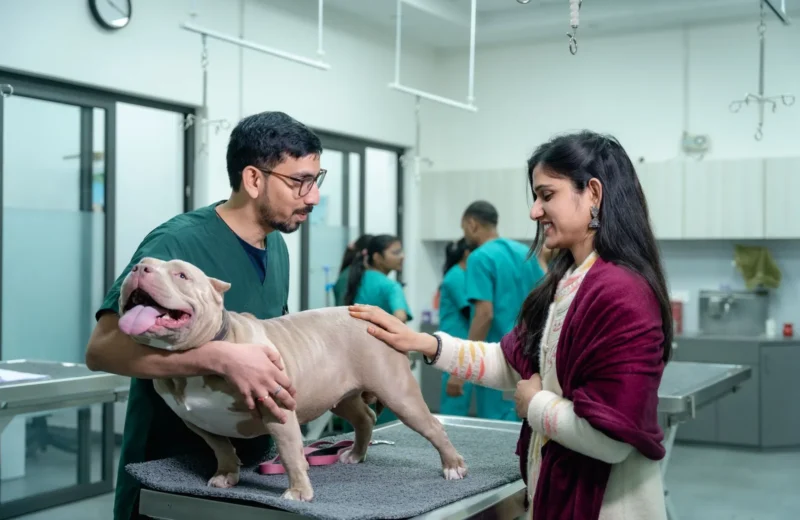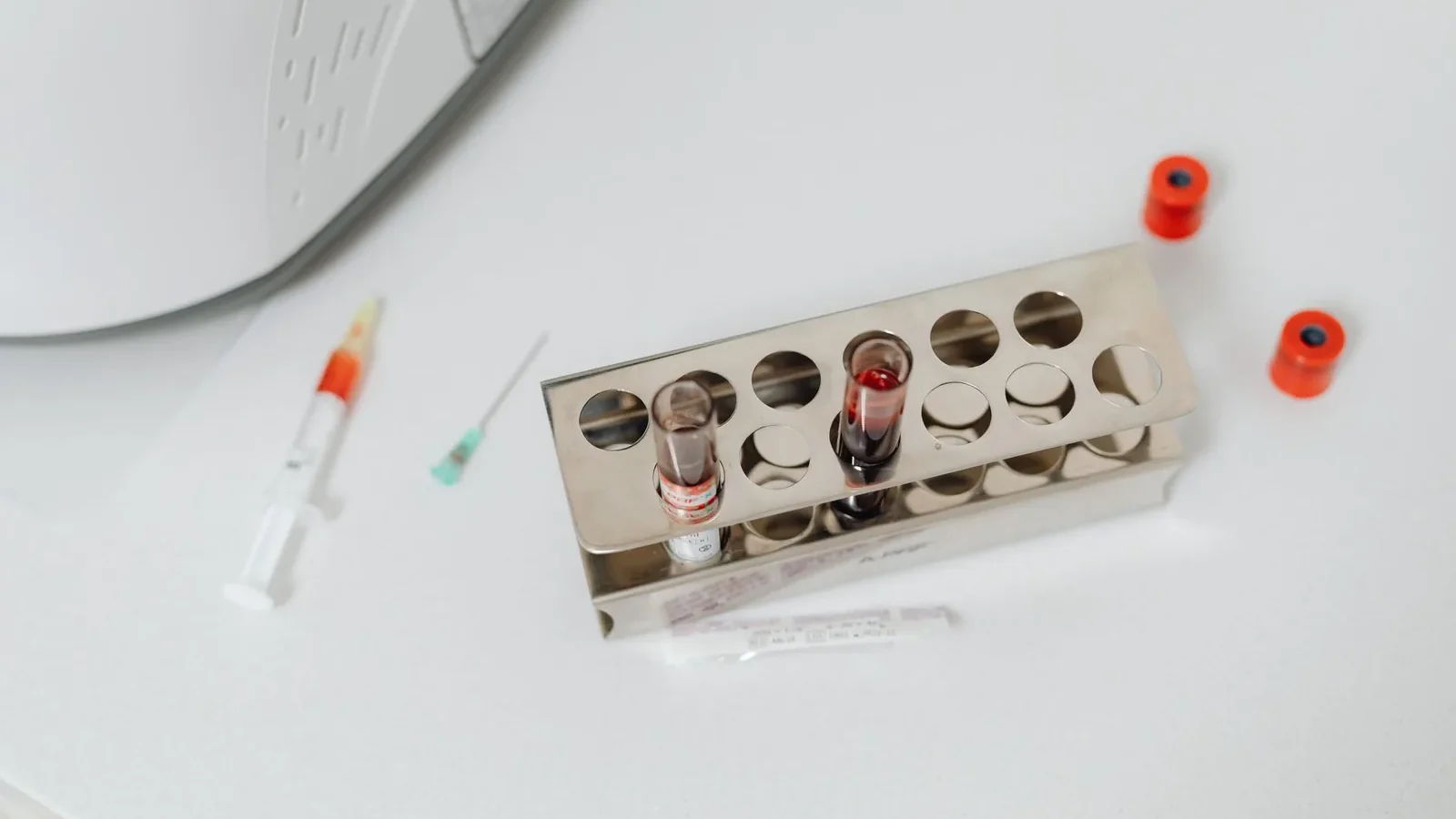
A rabies titre test is not required for a Malaysia to UK move. Great Britain asks for the blood test only when the pet is coming from a country that is neither in the EU nor on its listed table, and Malaysia sits on that listed table. Skipping the test removes a 30-day sampling delay and a three-month wait. Your dog still needs a microchip, a rabies vaccination, 21 full days, tapeworm treatment and a Great Britain pet health certificate.
Introduction: the test half the internet tells you to book
The rabies titre test is a blood test that proves a vaccination worked. It is a destination rule, not a rabies rule, and Great Britain does not apply it to pets from Malaysia. Owners book it anyway because they read advice written for a different country. Our pet relocation team in the Klang Valley unwinds that assumption most weeks.
A family moving to Bristol asks their vet in Petaling Jaya about the rabies blood test. The vet has sent samples abroad before, for Singapore and for Japan, so the answer sounds sensible: yes, we can arrange that.
Three weeks later the paperwork comes back and nobody at the British end wants it.
The rabies titre test is one of the most over-ordered items in pet relocation. Most pet-travel guides online still tell Malaysian owners to book one for Britain. GOV.UK’s own tables say otherwise, and that gap is where the wasted money sits.
This article shows where the rule is written, what a rabies titre test would have cost you in days, and the four situations where it quietly comes back. The video below is Defra’s own pet travel guidance.
Does a Malaysian dog need a rabies titre test for the UK?
No. GOV.UK states your pet only needs a rabies blood test if you are travelling from a country that is not part of the EU and not listed. Malaysia appears on the listed table, so a rabies titre test on the Malaysia to UK route is not part of the requirement. Read on GOV.UK on 12 August 2026.
The rule sits in one sentence on the GOV.UK page “Blood tests for rabies”. Two conditions trigger the test, not one, and Malaysia fails the second in the owner’s favour.
Malaysia’s entry on the “Which pet travel document you need” table names one document: the Great Britain pet health certificate. Peninsular Malaysia has its own line and adds a certificate from the Malaysian government veterinary health service. Neither mentions a blood test, as our guide to whether Malaysia is a listed country for UK pet travel sets out.
Which Origins Great Britain Asks For A Rabies Blood Test, August 2026
| Where the pet travels from | Rabies blood test | Wait after the sample | Travel document |
|---|---|---|---|
| An EU country | Not required | None | Pet passport, AHC or GB pet health certificate |
| Malaysia (listed) | Not required | None | GB pet health certificate |
| Peninsular Malaysia (listed, separate entry) | Not required | None | GB pet health certificate plus a Malaysian government veterinary certificate |
| A country that is not listed | Required, at least 0.5 IU/ml | 3 months from the sampling date | GB pet health certificate |
Source: compiled by My Pet Mover from GOV.UK, blood tests for rabies and which pet travel document you need, both read 12 August 2026 (guide last updated 24 October 2024). Listings are reviewed and can change.
Not sure which rules your move actually falls under?
The requirements change with the destination, not with the dog, so the first job is confirming which set applies to you. See what a Malaysia to UK pet move involves →
What the rabies titre test measures, and why 0.5 IU/ml
The test counts rabies antibodies in a blood sample. It does not check whether a dog is infected. Most authorities, Britain included, treat a result of at least 0.5 IU/ml as proof the vaccination worked. Britain’s version of the rule sits alongside its rabies vaccination requirements.
Owners often assume the titre is a health screen. A vaccinated, healthy dog can still fail one, usually because the sample was drawn too soon or the vaccine did not produce a strong enough response.
Three details do the work in every country that uses a rabies titre test:
- The 30-day gap. Under the GB rule, the sample must be taken at least 30 days after the rabies vaccination. Draw it earlier and the result is void regardless of the number it returns.
- The 0.5 IU/ml threshold. The result has to show the vaccination was successful, which GOV.UK defines as an antibody level of at least 0.5 IU/ml. A borderline pass is still a pass; a fail means vaccinating again and re-sampling.
- The approved laboratory. The sample must go to an EU-approved rabies serology laboratory, either inside or outside the EU. A result from an unapproved lab is not a result.
None of that applies to a listed origin. It is worth knowing anyway, because the same three details govern the Singapore and Japan routes many Malaysian families take instead.
Four destinations, one dog: where the titre really applies
The same Malaysian dog needs no titre for Great Britain and none for the EU, but needs one for Singapore and one for Japan. Japan attaches the longest wait: 180 days from the sampling date. That single table settles most of the confusion around exporting a pet from Malaysia.
The reason owners get bad advice is that all four rules are true at once, for four different countries. Advice written for a Tokyo move reads as authoritative and is completely wrong for Manchester.
The Same Malaysian Dog, Four Destinations, August 2026
| Destination | Titre required from Malaysia? | Earliest sample | Wait after sampling |
|---|---|---|---|
| Great Britain | No | Not applicable | None |
| An EU country | No | Not applicable | None |
| Singapore | Yes, at least 0.5 IU/ml | 28 days after the vaccination or booster | 90 days, and not more than 12 months before export |
| Japan | Yes, at least 0.5 IU/ml | After vaccination, at a designated laboratory | 180 days, counted from the sampling date as day 0 |
Source: compiled by My Pet Mover from GOV.UK blood tests for rabies; the European Commission listing of territories and non-EU countries, where Malaysia appears in Annex II to Implementing Regulation (EU) 2026/636; Singapore’s Animal and Veterinary Service import conditions; and Japan’s Animal Quarantine Service guidance for non-designated regions. All read 12 August 2026. Confirm each with the named authority before booking.
Two destinations sit outside this table because the titre is not the deciding factor. Australia’s country grouping decides whether a direct export is possible at all, covered in Australia’s pet import position for Malaysia. Taiwan restricts arrivals outright, as Taiwan’s ban on pets arriving from Malaysia sets out.
What a titre would add to a Malaysia to UK calendar
Roughly 100 days. A listed origin lets a dog fly 21 full days after its rabies vaccination. A not-listed origin adds a 30-day wait before sampling and then three months from the sampling date, pushing the earliest departure out past day 120. That gap is what Malaysia’s listing is worth.
Counting both calendars from the same vaccination makes the cost obvious. Day 0 is the injection; GOV.UK counts day 1 as the day after.
Two Calendars For The Same Dog, Counted From The Rabies Vaccination
| Milestone | Malaysia today (listed) | A not-listed origin |
|---|---|---|
| Microchip implanted | Before or with the vaccine | Before or with the vaccine |
| Rabies vaccination (dog at least 12 weeks old) | Day 0 | Day 0 |
| Earliest blood sample | Not applicable | Day 30 |
| Statutory wait after sampling | None | 3 months |
| Earliest departure | Day 21 | About day 121 |
| Health certificate issued | Within 10 days of entry | Within 10 days of entry |
| Tapeworm treatment for dogs | 24 to 120 hours before arrival | 24 to 120 hours before arrival |
Source: modelled by My Pet Mover on the day counts published by GOV.UK in rabies vaccination and boosters, blood tests for rabies and tapeworm treatment for dogs, read 12 August 2026. Illustrative timeline: some vaccines take longer than 21 days to work, and laboratory turnaround sits inside the three-month wait.
One caveat matters. The 21 days is a minimum, not a promise. GOV.UK’s worked example uses a vaccine that takes 30 days to work, so a dog injected on 1 October cannot travel until 1 November. Ask your vet for the waiting period attached to the product in the syringe.
Want these dates against a real departure?
Most owners fix the flight first and discover the vaccine clock second, which is the wrong order. Check what a UK relocation includes and costs →
Four situations that put the titre back on your file
The exemption belongs to the origin country, not to your dog. It disappears if Malaysia is removed from the listed table, if the dog spends its pre-departure period somewhere not listed, or if a missed booster resets the vaccination history. Each one costs days, and two of them cost about four months.
The chart below scales the four scenarios by the delay each one adds to the earliest possible departure date.
What Each Scenario Adds To The Earliest Departure Date, In Days
| Scenario | Relative delay | Days added |
|---|---|---|
| Nothing changes, Malaysia stays listed | 0 | |
| Booster missed, primary course restarted | 21 | |
| Dog waits out the move in a not-listed country | About 100 | |
| Malaysia removed from the listed table | About 100 |
Illustrative scenario modelled by My Pet Mover on GOV.UK’s published day counts for rabies vaccination and boosters and blood tests for rabies, read 12 August 2026. Not a prediction that any listing will change.
The booster case is the one owners create themselves. GOV.UK is blunt: miss the booster and the pet restarts its vaccinations. From a listed origin that costs a fresh 21-day wait; from a not-listed origin it drags a rabies titre test back in too. Keeping the record unbroken is the cheapest paperwork in the whole move, and our note on rabies vaccination rules for pets covers it.
What Great Britain asks for instead
Five things, in order. A microchip, then a rabies vaccination at 12 weeks or older, then 21 full days of waiting. After that, tapeworm treatment 24 to 120 hours before arrival and a Great Britain pet health certificate issued within 10 days of entry. Pets from the peninsula add a Nipah certificate.
Dropping the titre does not make the route casual. The sequence below is where UK moves actually fail, and every step has a date attached.
- Microchip first. GOV.UK requires the microchip to go in before, or at the same time as, the rabies vaccination. Chip afterwards and the dog must be vaccinated again.
- Rabies vaccination at 12 weeks or older. Your vet needs proof of age before injecting. Younger than 12 weeks and the vaccination does not count.
- Wait at least 21 full days. Day 1 is the day after the injection, and some products need longer.
- Tapeworm treatment for dogs. Administered 24 to 120 hours before arrival in Great Britain, in a window we break down in our guide to the tapeworm treatment window for UK entry.
- Great Britain pet health certificate. Signed by an official veterinarian and used within 10 days of entry, as we set out in export health certificates for UK-bound pets.
Dogs living anywhere between Perlis and Johor add the Malaysian government veterinary certificate: pig contact plus a Nipah antibody test taken within 10 days of departure. Why UK pet exports ask about pig contact explains the reasoning.
If you do need one, where the blood has to be tested
Not in Malaysia. Every authority that uses the titre accepts results only from laboratories it has approved, and Malaysian owners routinely find the sample has to be flown out. That logistics step, not the test itself, is what stretches timelines on the routes where a titre does apply.
Owners planning a Singapore move discover this first. The result has to come from a WOAH rabies reference laboratory, or an approved laboratory in a Schedule I or II country. The blood leaves Malaysia before the dog does, as the rabies titre test Singapore accepts from Malaysian pets explains.
Japan runs the same logic through its own designated laboratories, and attaches the longest wait of any common destination at 180 days, as Japan’s titer test and the long wait it creates explains. Britain’s version, if it ever applied here, would point at EU-approved serology laboratories.
Three consequences follow whenever a rabies titre test is genuinely in scope:
- Shipping time is your time. Every day between the vet visit and the draw is a day lost, because the clock starts at sampling.
- The approved list differs by destination. A laboratory accepted by Japan is not automatically accepted by Singapore.
- A failed result costs a full restart. Below 0.5 IU/ml means re-vaccinating, re-sampling, and starting the wait again.
Moving a pet the other way as well?
Families often send one pet abroad and bring another into Malaysia in the same year, and the two directions share almost no paperwork. Compare the Singapore corridor’s 30-day quarantine →
Old titre certificates: keep them or bin them?
Keep them. A passing result stays valid for as long as the rabies boosters are unbroken, so a certificate from an earlier move can save an entire waiting period on a future one. It does nothing for the UK leg, but it is not waste paper.
Plenty of Klang Valley dogs already hold a titre certificate from an earlier relocation or a Singapore stay. GOV.UK’s position is useful here: the blood test stays valid as long as the rabies vaccinations are kept up to date.
That gives an old certificate real optional value:
- It travels with the vaccination record. Break the booster chain and the certificate loses its usefulness too.
- It can shortcut a future destination. A dog moving somewhere that does require a titre may already satisfy the test, subject to that country’s validity window.
- It does not shorten the UK route. The 21-day wait runs from the vaccination date, not from any blood result.
File it with the microchip certificate and the vaccination card, alongside the rest of our pet document checklist.
What to say to your vet in Kuala Lumpur
Lead with the destination and the entry rule, not the test. Tell your vet the dog is entering Great Britain from a listed country on a Great Britain pet health certificate. That single sentence puts the appointment on the right track and removes the reflex to order a titre.
Malaysian vets see far more Singapore and Japan files than British ones, and both routes start with a blood draw. The reflex is understandable. Naming the rule resolves it faster than arguing about the test.
Bring four things to the consultation:
- The microchip number and implant date. The order of chip and vaccine is the one thing nobody can fix afterwards.
- The full vaccination history. Your vet confirms the booster chain is unbroken before setting a date.
- The intended landing month. Everything counts backwards from the flight.
- Where the dog has physically lived. The peninsula triggers the Nipah certificate, and time in a not-listed country changes the answer entirely.
Confirm the export side with Malaysia’s Department of Veterinary Services before certification, and check the identification standard in our note on microchip rules for pets.
Conclusion: skip the test, but check the date
A rabies titre test on the Malaysia to UK route is not required, and paying for one buys nothing. Britain applies the blood test to origins that are neither EU nor listed, and Malaysia is listed on both the British table and the European Commission’s Annex II.
The exemption belongs to the country of departure, not to your dog. Send the dog to wait somewhere not listed, miss a booster, or read the table after it has been revised, and the calendar moves by about three months.
Everything above was read from GOV.UK, the European Commission, Singapore’s AVS and Japan’s Animal Quarantine Service on 12 August 2026. Check the position again on the day you commit to dates. Our Malaysia to UK pet transport page covers the full route, and families weighing destinations can start with sending a pet from Malaysia to the EU.
Told you need a blood test you may not need?
Send us your destination, your intended departure month, and your dog’s microchip and rabies dates. We will confirm whether a titre applies to your route, map the 21-day and 10-day windows against a real landing date, and tell you where the sequence gets tight.
Frequently Asked Questions
1. Does my dog need a rabies titre test to go from Malaysia to the UK?
No. GOV.UK requires a rabies blood test only for pets travelling from a country that is not part of the EU and not listed. Malaysia appears on the listed-countries table, read on 12 August 2026, so a rabies titre test for a Malaysia to UK move is not part of the requirement. Your dog travels on a Great Britain pet health certificate instead.
2. What antibody level counts as a pass?
At least 0.5 IU/ml. GOV.UK defines a successful result as a rabies antibody level of at least 0.5 IU/ml, and the same threshold applies in Singapore and Japan. A result below that means the vaccination is repeated and a fresh sample taken, which restarts the destination’s waiting period from the new sampling date.
3. How long is the wait if a titre test does apply?
Three months for Great Britain, counted from the date the blood sample was taken, on top of the 30-day gap required between vaccination and sampling. Singapore requires 90 days after sampling and Japan requires 180 days, with Japan counting the sampling date as day 0. The waits are set by the destination, not by the laboratory.
4. Can the blood sample be tested in Malaysia?
Generally not. Authorities accept titre results only from laboratories they have approved, so Malaysian samples are usually couriered abroad. Great Britain points to EU-approved rabies serology laboratories, Singapore accepts WOAH reference laboratories or approved laboratories in Schedule I and II countries, and Japan maintains its own designated list.
5. My dog already has a titre certificate. Is it wasted?
No, but it will not help the UK move. GOV.UK states the blood test remains valid as long as the pet’s rabies vaccinations are kept up to date, so a passing result can shorten a future move to a country that does require one. Keep it filed with the microchip and vaccination records rather than discarding it.
6. Could Malaysia lose its listed status?
It is possible. Country listings are reviewed and revised, which is why the GOV.UK table should be checked on the day you commit to travel dates rather than trusted from an earlier search. If Malaysia were removed, a UK-bound dog would need the rabies blood test plus the three-month wait, adding roughly 100 days to the timeline.