Denmark asks Malaysian pets for something it asks almost nobody else for: a negative Nipah virus blood test drawn in the last ten days before departure. There is no rabies blood test, because Malaysia is a listed country. Your pet may only land at Copenhagen, Billund or Aalborg. And once you arrive, a dog has four weeks to appear in the Danish Dog Register.
Introduction: the one test only Malaysian pets sit
Denmark applies standard EU pet entry rules to Malaysia, then adds one national condition almost no owner expects. Dogs, cats and ferrets leaving Peninsular Malaysia must carry a negative Nipah virus antibody test. Miss it and the animal is turned back at the border post, fully vaccinated or not.
Families moving from Kuala Lumpur to Copenhagen or Aarhus usually start with a generic EU checklist. Microchip, rabies vaccine, wait 21 days, get the certificate. All correct, all incomplete.
In Denmark’s country-by-country guide, Malaysia does not sit in the long list of ordinary listed countries. It gets its own branch, with extra conditions. Our team at My Pet Mover treats a Malaysia to Denmark pet file as a European file with a Malaysian appendix. The shared baseline sits in our guide to sending a pet from Malaysia to the EU.
The video below walks through how a third-country pet file is built for Europe.
Is Denmark harder than the rest of the EU?
Medically, no. A Malaysia to Denmark pet move needs the same microchip, rabies vaccine and 21-day wait as Germany or France. Administratively, yes. Three national layers sit on top: the Nipah test, a hard list of 13 banned dog breeds, and a registration duty after arrival.
Owners often assume a Scandinavian address means a Nordic rulebook, with tapeworm dosing and long lead times. Denmark is not built that way.
- No tapeworm rule. Unlike our Malaysia to Norway pet move guide, Denmark asks for no anti-echinococcus dose in the final days.
- No self-declared parasite step. Sweden dropped its treatment too, per our Malaysia to Sweden pet relocation guide.
- One test the others skip. Nipah is the piece that makes Denmark specific to you.
So a Danish file is easier to build than a Norwegian one, and far easier to fail if you copy a checklist written for American or British pets. Those never mention Nipah, because Nipah has nothing to do with those countries.
Nipah testing: Denmark’s Malaysia-only condition
Every dog, cat and ferret leaving Peninsular Malaysia for Denmark needs a negative ELISA test for Nipah virus IgG antibodies, on blood drawn within the ten days before departure. It also needs 60 days clear of pigs. Animals travelling from Sabah or Sarawak are exempt.
The rule traces back to the 1998 to 1999 Nipah outbreak in Perak and Negeri Sembilan, when the virus moved from bats to pigs and then to people. The safeguard was never lifted, so it still sits in Denmark’s guidance for travelling with your dog and, word for word, for cats and ferrets.
Three conditions apply, and a Malaysian official veterinarian has to certify all three:
- No pig contact for 60 days. Counted back from the date of dispatch from Malaysia.
- No stay on an affected pig holding. Not kept where Nipah was confirmed in those 60 days.
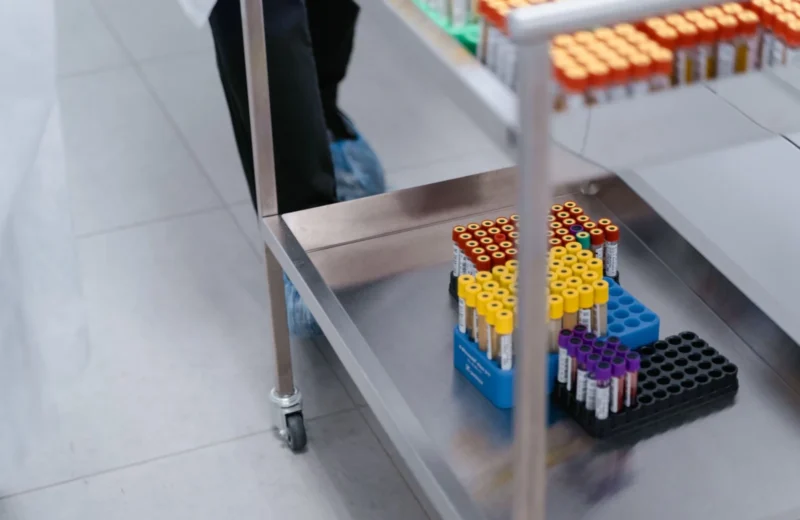
- A negative ELISA test for IgG. Run at an approved Malaysian laboratory, on blood taken in the last 10 days before departure.
The ten-day window is what breaks schedules. It is short, it sits at the busiest point of the move, and the laboratory turnaround has to fit inside it. We handle the same attestation on British files, in our note on why UK pet exports ask about pig contact. If your pet leaves from Kota Kinabalu or Kuching, read the exemption carefully: it covers dispatch from Borneo, not a Bornean dog that spent the year in Selangor.
Not sure which Malaysian laboratory can run the Nipah ELISA in time?
Tell us your departure city and month, and we will build the draw date backwards. Full scope on our pet export from Malaysia page.
Does your pet need a rabies blood test for Denmark?
No. Malaysia is a listed country under EU rules, so no rabies antibody titration is drawn and the three-month wait that follows one never starts. The pet still needs an ISO microchip implanted before the rabies vaccine, and 21 days must pass after the primary shot.
This is the biggest saving on a Danish file. Owners in unlisted countries lose roughly four months to a blood test and its waiting period. Malaysian owners lose none of it. Two conditions still decide whether the vaccine counts:
- Order matters. The microchip must be read or implanted before the rabies vaccine. A vaccine dated earlier than the chip is void, a trap we unpack in our guide to the microchip before rabies vaccine rule.
- Age matters. The animal must be 12 weeks old on the day of vaccination, then wait a further 21 days.
The chip must meet ISO 11784 and read on ISO 11785 equipment. Danish border staff carry readers, but a chip that fails to scan turns a five-minute clearance into an afternoon.
What changed for pets entering Denmark in April 2026?
The EU replaced its pet travel framework on 22 April 2026. New certificate and declaration models arrived under Regulation 2026/705, the country lists moved to Regulation 2026/636, and the five-animal limit was rewritten to count per vehicle and to include pet birds from outside the EU.
If your veterinarian is working from a template dated 2013, the certificate will be rejected. The model now required follows Annex III of Commission Implementing Regulation (EU) 2026/705, with the owner’s declaration drawn from the same instrument.
The listed-country tables that keep Malaysia exempt from rabies serology now live in Regulation (EU) 2026/636. Same outcome, different citation. The five-animal cap also tightened: it is counted per means of transport, and for arrivals from outside the EU it now includes pet birds.
Denmark’s own instructions moved with it, on the agency’s page for import of dogs, cats and ferrets. Germany moved early on the same framework, as our Malaysia to Germany pet relocation guide explains.
Which Danish airports accept a pet from Malaysia?
Three, and only three. Copenhagen Airport at Kastrup, Billund Airport and Aalborg Airport are Denmark’s designated travellers’ points of entry. Bringing a pet in directly from outside the EU through any other airport, port or border crossing is illegal.
The Danish list of travellers’ points of entry is blunt about it. In practice almost every Malaysian file lands at Copenhagen, where the long-haul connections arrive. Two details are worth planning around:
- Notify 24 hours ahead. Not compulsory, but the agency says notice eases the check. An unannounced arrival waits for whoever is available.
- The Danish check is free. Other EU states may charge a fee for the same documentary and identity check.
If your itinerary lands first in Amsterdam or Frankfurt, Denmark is no longer the border. The EU check happens at that airport instead, changing who inspects your file and what it costs. Our guide to transiting Schiphol with a pet on KL to EU routes covers that handover.
What paperwork does a Malaysia to Denmark file need?
Seven documents, from three issuers. The microchip record, rabies certificate and Nipah laboratory report come from your vet and lab. The animal health certificate and Nipah attestation come from a Malaysian official veterinarian. The owner’s declaration comes from you.
Below is the pack we assemble on every Danish file, with the deadline governing each line and where it is inspected. The certificate is a close cousin of the one in our note on export health certificates for UK-bound pets.
Malaysia to Denmark Document Pack (2026)
| Document | Issued by | Timing | Checked where |
|---|---|---|---|
| ISO microchip record | Implanting vet | Before the rabies vaccine | Copenhagen border post |
| Rabies vaccination certificate | Malaysian vet | At least 21 days before travel | Copenhagen border post |
| Nipah ELISA laboratory report | Approved Malaysian lab | Blood drawn within 10 days of departure | Copenhagen border post |
| Nipah and pig-contact attestation | Official veterinarian | With the health certificate | Copenhagen border post |
| EU animal health certificate | Official veterinarian | Issued close to departure | Copenhagen border post |
| Owner’s non-commercial declaration | You | Handed to the official vet | Copenhagen border post |
| Written authorisation, if you fly separately | You | Travel within 5 days of your own | Copenhagen border post |
Source: My Pet Mover file records for Malaysia to Denmark moves, 2024 to 2026, cross-checked against Danish Veterinary and Food Agency guidance.
The last line catches people out. If the pet flies more than five days apart from you, it stops being a non-commercial movement and falls under commercial import rules.
Denmark’s 13 banned dog breeds, and why there is no appeal
Thirteen breeds and their crossbreeds are banned under the Danish Act on Dogs. Exemption is not possible. If the police doubt your dog’s breed, they may demand documentary proof of its parentage, and appearance alone will not settle the question.
The Danish legislation on dogs lists them: Pitbull Terrier, Tosa Inu, American Staffordshire Terrier, Fila Brasileiro, Dogo Argentino, American Bulldog, Boerboel, Kangal, Central Asian Shepherd, Caucasian Shepherd, South Russian Shepherd, Tornjak and Sarplaninac.
Two things make this stricter than it first reads. Crossbreeds are covered, and there is no exemption for a dog acquired after 17 March 2010. Transit is the only carve-out, and only if the dog stays in the vehicle.
Denmark publishes the consequences. Since the Act took effect in 2010, the agency reports 465 prohibited-list dogs put down and 157 more after savaging incidents, against a national population above 585,000 dogs.
Mixed-breed Malaysian rescues are most at risk, because street dogs rarely come with pedigree paperwork. Where documentation is thin, we look at destinations with softer breed rules first. Our overview of banned dog breeds in Malaysia shows the same logic in reverse.
The Danish Dog Register: four weeks after you land
A dog brought into Denmark must be entered in the Danish Dog Register within four weeks of arrival. The duty applies even to temporary stays, as long as the stay runs past four weeks. Cats and ferrets are not covered.
Owners forget this one because it sits after the move. The border check is done, the crate is unpacked, and the obligation is still running.
Registration goes through Dansk Hunderegister or an authorised Danish vet. It links your dog’s microchip number to a Danish address and owner, so a scanned stray can be traced.
The easiest path is a vet appointment inside your first fortnight. The vet registers the dog and checks it over after a long flight, which mirrors the fit-to-fly vet check airlines require at the other end.
Direct to Copenhagen, or in through an EU hub?
Where your pet first touches EU soil decides who inspects the file. Land at Copenhagen and Danish officers check it, free of charge. Land at Amsterdam or Frankfurt first and that country runs the check, possibly for a fee, before the pet moves on as an internal EU journey.
Neither routing is automatically better. Below is what we weigh when a family asks us to pick. Carrier availability out of KLIA is the usual constraint, covered in our list of airlines that carry pets.
Two Routings Into Denmark, Compared
| Factor | Routing A: first EU landing is Copenhagen | Routing B: first EU landing is another hub |
|---|---|---|
| Who runs the check | Danish authorities at Kastrup | The hub country’s border staff |
| Cost of the check | Free in Denmark | A fee may apply |
| Permitted entry points | Copenhagen, Billund or Aalborg only | Any designated EU travellers’ point of entry |
| Final Denmark leg | None; you have arrived | Treated as movement within the EU |
| Handling touches | One transfer, usually via a Gulf hub | Two transfers, more crate movement |
| Best when | Schedules line up and the crate is large | Copenhagen capacity is full that week |
Source: My Pet Mover route notes for Denmark, compiled from Danish Veterinary and Food Agency and European Commission traveller guidance, 2026.
Our default is Routing A. Fewer transfers means less time on tarmac, and the free Danish check is a small but real saving.
Comparing two Copenhagen itineraries and unsure which is safer?
Send both and we will map the border checks on each before anything is ticketed. Options sit on our international pet transport routes page.
Counting the Nipah draw backwards from Copenhagen
Build the schedule backwards from the departure date, not forwards from today. The Nipah blood draw sits inside the final ten days, the health certificate is signed after the result lands, and the 60-day pig-free period must already have run its course by then.
Below is the schedule we run on every Malaysia to Denmark pet file, with day 0 as dispatch. Flight-day mechanics sit in our walkthrough of pet cargo at KLIA on flight day.
The Final 60 Days, Counted Back From Departure
| Days before departure | What must happen | Who does it |
|---|---|---|
| Day 60 | Pig-free period starts; no pig contact from here on | Owner |
| Day 30 | Crate confirmed, airline booked, laboratory slot reserved | Agent |
| Day 21 | Last date the rabies vaccine can still mature in time | Malaysian vet |
| Day 10 | Nipah window opens; blood may now be drawn | Malaysian vet |
| Day 9 to 8 | Sample delivered to the approved laboratory | Vet or agent |
| Day 5 to 3 | Negative ELISA result issued and attached to the file | Laboratory |
| Day 2 | Official veterinarian signs the certificate and attestations | Official vet |
| Day 1 | Copenhagen border post notified; crate prepared | Agent |
| Day 0 | Pet is dispatched from Malaysia | Airline |
Source: My Pet Mover scheduling model for Malaysia to Denmark moves, based on files handled 2024 to 2026.
Notice how little slack sits between day 10 and day 2. That corridor holds a blood draw, a courier run, a laboratory result and a signature. One public holiday inside it and the booking moves.
Where Malaysia to Denmark files lose time
Nipah scheduling is the biggest single cause of delay on a Malaysia to Denmark pet file, ahead of certificate errors and breed questions. Almost every cause is a calendar problem rather than a medical one, which is why almost every delay is preventable.
The chart reflects delayed files only. Most Danish moves run clean. Budget surprises that follow a delay sit in our guide to hidden costs in pet relocation quotes.
Delay Causes on the Denmark Route
| Cause | Share of delayed files | Share | Days lost |
|---|---|---|---|
| Nipah draw or result outside the window | 37% | 9 | |
| Certificate on an outdated model | 24% | 5 | |
| Microchip and vaccine dated in the wrong order | 17% | 23 | |
| Breed documentation queried | 12% | 14 | |
| Crate rejected at acceptance | 10% | 4 |
Source: My Pet Mover internal file records, Malaysia to Denmark moves, 2024 to 2026. Delayed files only.
The order-of-dates error is the costliest. It is 17% of delayed files but averages 23 days lost, because the fix is a fresh rabies vaccine and another 21-day wait.
How to move your pet from Malaysia to Denmark
Eight steps, run in order. Chip, vaccinate, wait 21 days, keep the animal clear of pigs, draw the Nipah sample inside the final ten days, certify the file, fly into a permitted airport, then register the dog in Denmark within four weeks.
- Confirm the breed is legal. Check your dog against Denmark’s list of 13 first. There is no exemption to fall back on.
- Implant an ISO microchip. It must be readable before the rabies vaccine is given.
- Vaccinate against rabies. The animal must be at least 12 weeks old on the day of the shot.
- Wait 21 full days. Day 0 is the primary vaccination; travel is possible from day 21.
- Keep the animal away from pigs for 60 days. The period must be complete before dispatch and will be certified.
- Draw the Nipah sample inside the final 10 days. Use an approved Malaysian laboratory and allow for turnaround.
- Have the official veterinarian certify the file. Health certificate, Nipah attestation and your declaration together.
- Fly into Copenhagen, Billund or Aalborg, then register. Enter the dog in the Danish Dog Register within four weeks.
Crate sizing belongs alongside step 6, because a crate ordered late is a delay of its own. Our method sits in our guide to IATA crate sizing for dogs.
Conclusion: a European file with a Malaysian appendix
A Malaysia to Denmark pet move is comfortable by European standards: no quarantine, no rabies blood test, a free border check. The risk is not medical. It is a ten-day Nipah window, a breed list with no appeal, and a registration deadline that runs after you land.
A generic EU checklist gets most of a Danish file right. The parts it leaves out are the parts that stop an animal at Kastrup.
Start with the breed question, then work the calendar backwards from your departure date. Everything else follows. If you want a second pair of eyes on the dates, that is the work we do on every overseas dog flight we handle.
Frequently Asked Questions
Does Denmark quarantine pets arriving from Malaysia?
No. A compliant dog or cat is released once Danish officers finish the documentary and identity check. Detention only follows a failed check, at the owner’s cost.
Do cats also need the Nipah test for Denmark?
Yes. Danish guidance applies the same Nipah conditions to cats and ferrets dispatched from Peninsular Malaysia as it does to dogs.
Does my pet need a rabies blood test for Denmark?
No. Malaysia is a listed country, so no rabies antibody titration is required. The microchip, vaccine and 21-day wait still apply.
Are pets from Sabah and Sarawak exempt from the Nipah test?
Yes. Danish guidance states the Nipah requirements do not apply to animals moved from Sarawak or Sabah on Borneo.
Which Danish airport should my pet fly into?
Copenhagen Airport at Kastrup for most Malaysian files. Billund and Aalborg are the only other permitted entry points.
How soon must I register my dog after arriving in Denmark?
Within four weeks of arrival, in the Danish Dog Register. The duty applies to a temporary stay too, if it runs past four weeks.
Ready to plan your pet’s move to Denmark?
Send us your pet’s vaccination card, breed, departure state and target travel month. We audit the records, build the Nipah schedule around your Copenhagen landing, and return a fixed all-in quotation.