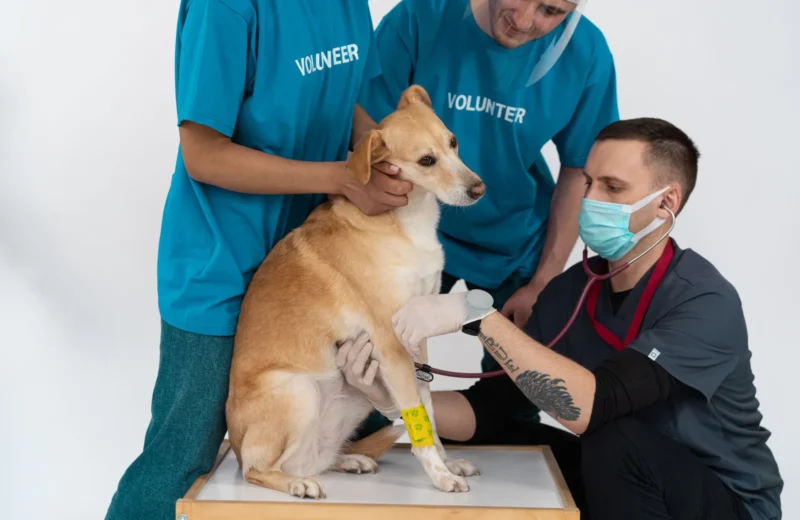
Somebody must fly with the pet, but China's rules never say that person has to be the owner. The governing announcement is written around a "carrier" — the passenger who brings the animal in — and caps that person at one dog or one cat per entry. A relative, a friend or a hired handler can be the carrier. What China does not offer is a normal route for a pet that lands with nobody on board.
Introduction: the question behind the question
When owners ask whether the china pet owner must travel with the animal, they are usually asking two different things at once — must a human be on the aircraft, and must that human be me? The answers differ. Yes to the first. No to the second.
Almost nobody asks this question out of curiosity. It comes from a scheduling problem. The job starts in Shanghai in three weeks, the tenancy in Kuala Lumpur runs to the end of the quarter, and the dog’s blood test result is still sitting in a laboratory somewhere.
The searches that follow return a wall of “one pet per person” with no explanation of who the person is. That gap is what this piece closes. We handle it at the start of every Malaysia to China pet transport file at My Pet Mover, because the answer changes who buys which ticket.
Before the workarounds, it is worth reading what the regulation itself actually says.
What the regulation asks for, clause by clause
Every operative clause of China’s pet rule names the same figure — the person carrying the animal in. It is that person who is capped at one pet, that person who hands over the certificates, and that person who must collect a refused animal. Ownership is never mentioned.
The governing text is Announcement [2019] No. 5 of the General Administration of Customs, in force since 1 May 2019. The Chinese original sits on the State Council policy database; an English translation is published by the Beijing municipal government. Read side by side, one word does the heavy lifting: 携带人, the carrier — literally the person who brings the animal with them.
Set out the clauses in a row and the pattern is hard to miss. What the full document requires is covered in more detail in our note on what China needs before departure.
Who Each Clause Names — Announcement [2019] No. 5
| Clause | What it requires | Person named | Ownership mentioned? |
|---|---|---|---|
| Article I — quota | One dog or one cat per person, per entry | Each entering person | No |
| Article I — papers | Official quarantine certificate and rabies vaccination certificate handed to customs | The carrier | No |
| Article II — exemption | Microchip plus an accepted antibody report clears the 30-day quarantine | The carrier (for assistance dogs) | No |
| Article III — refusal | Over quota, missing certificates or a failed inspection means return or disposal | The carrier | No |
| Article III — return | A refused pet must be collected on the customs voucher and taken back out | The carrier | No |
| Attachment 3 | A registration form for pets carried in by passengers | The passenger | No |
Compiled by My Pet Mover from the text of GACC Announcement [2019] No. 5 as published on gov.cn and in the Beijing municipal government’s English translation, read August 2026.
Does the person on the flight have to be you?
On the published wording, no. The carrier is whoever presents the animal at the counter, and the one-pet cap follows that person’s passport rather than the pet’s paperwork. A spouse, an adult child, a colleague or a hired handler can all be the carrier — each carrying one animal.
The China pet owner must travel question turns on a single word in the Chinese text, and that word describes an action rather than a legal relationship. If the rule ran on ownership, a two-dog family could never split the move and an owner who could not fly would be stuck. It runs on presence instead, and presence can be arranged.
Three practical consequences follow, and they are worth stating plainly.
- The quota belongs to the passenger. Two adults on the same flight can bring two animals between them, one each. This is the same arithmetic covered in China’s one pet per person limit.
- The passport on the form is the carrier’s. The customs registration form is completed by the passenger who brings the animal in, so the name customs works from is the person standing there, not the name on the tenancy agreement in Shanghai.
- The health paperwork is about the animal. The export certificates describe the dog or cat — species, microchip, clinical findings, vaccination history. Keep the consignee and carrier details consistent across the file so nothing looks like a mismatch at the counter.
Two cautions. First, this is the position on the published text, and individual customs districts apply it at the counter. Relocation guidance widely reports that the name on the animal’s certificates is expected to match the passport of the person presenting it, so a late swap of carrier can create a mismatch. Where a friend or handler is flying instead of the registered owner, name that person on the export paperwork from the start, tell the arrival customs office in advance, and carry a signed authorisation letter from the owner.
Second, nothing here changes what the animal itself must satisfy. The microchip, the official certificates and, for Malaysian pets, the antibody result are all conditions on the dog or cat, and swapping the human does not soften any of them.
Not sure who should be on the ticket?
Tell us how many animals are moving and who can realistically fly, and we will map the entries before anything is booked — see what a China move costs.
How many people does your household actually need?
Count the animals, then count the adults who can be on the aircraft. One animal per adult entry is the ceiling. Households with more pets than travelling adults either split the move across separate trips or add a carrier — there is no third option.
Most Malaysian households moving to China have one or two animals, so the arithmetic is short. It stops being short at three.
Pets Against Carriers — Worked Household Scenarios
| Household | Pets | Adults on the flight | Can enter | What has to change |
|---|---|---|---|---|
| Single owner, one dog | 1 | 1 | 1 | Nothing |
| Couple, two cats | 2 | 2 | 2 | Both must actually be on the entry, one cat each |
| Couple, three dogs | 3 | 2 | 2 | Third dog needs a later entry or a third carrier |
| Family, two adults plus child, two pets | 2 | 2 | 2 | Confirm with customs whether a minor may be counted |
| Owner already in China, pet in KL | 1 | 0 | 0 | Someone must fly with it, or the owner returns for it |
| Owner medically unable to fly | 1 | 0 | 0 | Appoint a carrier with a signed authorisation |
Scenarios modelled by My Pet Mover against the one-animal-per-person-per-entry cap in GACC Announcement [2019] No. 5. Whether an accompanied minor counts as a separate entry is not addressed in the published text — confirm with the arrival customs office.
Can the pet just fly to China alone as cargo?
Not on the passenger route. Announcement [2019] No. 5 governs pets carried in by a person. An animal arriving with no passenger falls outside it and is handled as an imported live animal, which is a permit-based regime with a different timetable and a different set of forms.
This is where the China pet owner must travel question gets its sharpest answer, and where China parts company with most destinations Malaysians ship to. On many routes the pet travels as manifest cargo under an air waybill and the owner flies whenever suits — the comparison is set out in our guide to cabin, cargo and excess baggage. China’s pet announcement simply does not describe that arrangement.
The airline layer narrows it further. Air China’s published conditions for animals carried as baggage state that each passenger may check only one animal, and that the animal with its container must not exceed 32 kg. Check-in closes 120 minutes before departure, and connecting carriage of animals with other airlines is not offered. Every one of those conditions assumes a passenger.
Four Ways a Pet Can Reach China — and How Each Is Read
| Arrangement | Passenger aboard? | Transport document | How China reads it |
|---|---|---|---|
| Cabin | Yes | Passenger ticket | Carried in — but Chinese carriers generally do not allow pets in the cabin |
| Checked as baggage | Yes | Baggage tag on the passenger’s ticket | Carried in — the standard route |
| Cargo, handler on the same flight | Yes | Air waybill plus a passenger present | Workable, but confirm the treatment with the arrival customs office first |
| Cargo, nobody aboard | No | Air waybill only | Outside the pet announcement — treated as an imported live animal, permit required |
Compiled by My Pet Mover from GACC Announcement [2019] No. 5 and Air China’s published conditions for animals carried as baggage, read August 2026. Treatment of the third row varies by port — confirm before booking.
There is a narrower path that sits between the two. Consular and relocation guidance has long described a separated-shipment arrangement, where the named person enters China first and the animal follows on a later flight, cleared against that person’s passport. Reported time limits between the two arrivals vary from one account to another, and the announcement itself does not set the path out. Treat it as something to confirm rather than something to plan around: ask the arrival customs office directly and get the answer in writing before booking.
What does not vary is the ending. Somebody named, with a passport, has to be standing at the counter when the animal is cleared.
Booking flights around a pet is the wrong order.
Send us your dates and we will tell you which carriers will actually take the animal on that routing — start with which airlines carry pets to and from Malaysia.
Whose name goes on which document?
Most of the Malaysian paperwork describes the animal, not the human, so a change of carrier late in the process is rarely fatal. The documents that do carry a person’s name are the export permit application and the arrival registration form — and those are the two to get right.
Owners assume the whole file is welded to their name from the first vaccination. It is not. Laying the stages out in order shows where the human actually appears.
Stage By Stage — Who Acts and Whose Name Appears
| Stage | Typical timing | Who acts | Whose name appears |
|---|---|---|---|
| Microchip implanted | Before everything else | Private vet | The animal’s — chip number is the identifier |
| Rabies vaccination | After the chip | Private vet | Animal, with owner as record holder |
| Antibody blood draw and report | Months ahead — sample goes to a customs-accepted laboratory | Vet plus laboratory | Animal and chip number |
| Export permit and health certificate | Weeks before the flight | Applicant, through DVS | A named human applicant |
| Flight booking and check-in | At booking, then 120 minutes before departure | The carrier | The passenger flying |
| Arrival registration in China | On landing | The carrier | The passenger flying |
Sequenced by My Pet Mover from GACC Announcement [2019] No. 5, Air China’s baggage conditions and the Department of Veterinary Services import and export pages. Timings vary by case.
Two stages are worth flagging. The antibody report is the long pole for Malaysian pets, because Malaysia does not sit on China’s designated list. The reasons are set out in whether Malaysia is on China’s designated country list, and the testing itself in our note on the rabies titer test. The second is the export application, which is where a human name first attaches to the file. Decide who is flying before that form is drawn up, not after.
Three arrangements that work when you cannot fly
If the owner cannot be on the aircraft, three arrangements are used in practice: a family member carries the animal, a hired handler carries it, or the owner returns to Malaysia briefly and flies back with it. Each carries a different cost and a different amount of paperwork.
- A family member or friend carries the pet. Cheapest when someone is already making the trip. Give them a signed owner authorisation, copies of the animal’s documents, and the arrival customs contact. They count as one carrier, so one animal.
- A hired handler flies with the animal. Used when nobody in the household can travel on the required date. The handler is booked as a passenger and the animal goes as their checked animal. This is the most expensive option because you are buying a return ticket for a person.
- The owner flies back for the pet. Often overlooked and sometimes the cheapest of the three, particularly on a short regional routing where an economy return costs less than a handler’s time.
Whichever you choose, the animal’s own conditions do not move. It still needs the microchip, the certificates and, on the Malaysian route, the antibody result that keeps it out of the thirty-day facility. The mechanics are in our guide to avoiding China’s 30-day pet quarantine. If the exemption is not met, the port matters too, because only some ports have quarantine facilities: see China’s designated ports of entry for pets.
What to confirm before anyone buys a ticket
Confirm four things in writing before booking: that the airline will carry the animal on that exact routing, that the arrival customs office accepts your chosen carrier, that the antibody report will be valid on the day, and whether the destination city adds its own registration rules after arrival.
Rules in this space change without much warning, so treat every figure here as the position published up to August 2026 and check it again close to departure. The checks that matter most:
- Airline acceptance on the routing. Chinese carriers restrict which aircraft types will take animals and generally do not offer connecting animal carriage with other airlines, so a one-stop itinerary can quietly fail.
- Carrier identity at the destination port. If the person flying is not the registered owner, tell the arrival customs office in advance rather than explaining it at the counter.
- Validity of the antibody report on the travel date. Build the schedule backwards from the flight, not forwards from the vet visit.
- City rules after arrival. National entry and municipal dog registration are separate gates — Beijing’s is a good example, covered in Beijing’s dog height limit.
It is worth knowing that this passenger requirement is a China feature rather than a regional norm. On the Singapore route, animals move under an import licence and a booked quarantine slot rather than a passenger’s baggage tag. The shape of that corridor is set out in Singapore pet quarantine for Malaysian pets. Assuming China works the same way is the most common planning error we see.
Conclusion: choose the carrier, then book the flights
The China pet owner must travel answer splits in two. A person must accompany the animal into China, and that person does not have to be the owner. Decide who it will be early, because the export application, the flight booking and the arrival form all depend on it.
The households that struggle with this are not the ones with complicated pets. They are the ones who settled the human travel plans first and then discovered the animal could not follow on its own.
Work in the other order. Count the animals, name the carriers, confirm the airline will take them on that routing, then buy tickets. Every figure above reflects the rules published up to August 2026 — confirm the current position with China’s General Administration of Customs and read it beside the Malaysia to China corridor guide before committing.
Moving to China and cannot fly with your pet?
Tell us how many animals are moving, who can travel and when. We will tell you how many entries you need and what each one costs before you book anything.
Frequently asked questions
1. Must the owner travel with the pet to China?
Someone must, but it does not have to be the owner. China’s rules are written around the person carrying the animal in, and that person can be a relative, a friend or a hired handler. What the rules do not describe is a normal passenger route for an animal arriving with nobody on board.
2. Can my friend bring my dog into China for me?
On the published wording, yes. The friend becomes the carrier, completes the arrival registration form and is capped at one animal for that entry. Name them on the export paperwork rather than swapping late, because the name on the animal’s certificates is expected to match the passport presented at clearance. Give them a signed authorisation and notify the arrival customs office before the flight.
3. How many pets can one person bring into China?
One dog or one cat, per person, per entry. The cap is set in Article I of the 2019 customs announcement and applies to the entering person rather than the household. Two adults travelling together can therefore bring two animals between them, one each.
4. Can I send my pet to China as unaccompanied cargo?
Not under the passenger rules. The 2019 announcement covers pets carried in by a person. An animal arriving with no passenger sits outside that announcement and is handled as an imported live animal under the entry animal quarantine regime, which requires an advance permit and a longer lead time.
5. Does my pet fly in the cabin with me on Chinese airlines?
Generally no. Chinese carriers move pets in the hold as checked animals rather than in the cabin, subject to breed and aircraft restrictions. Air China’s published conditions also cap the animal and its container at 32 kg and require check-in no later than 120 minutes before departure.
6. Do I need a Chinese import permit for my pet?
Not for the ordinary accompanied route. A pet carried in by a passenger with the required certificates, microchip and antibody result is handled under the customs announcement without a separate import permit. The permit regime applies when the animal is imported as a live animal consignment rather than carried in.
7. Does the same rule apply to cats?
Yes. The announcement treats dogs and cats identically for the purposes of the quota, the certificates, the microchip requirement and the quarantine exemption. One cat per person per entry, with the same documents a dog would need on the Malaysian route.