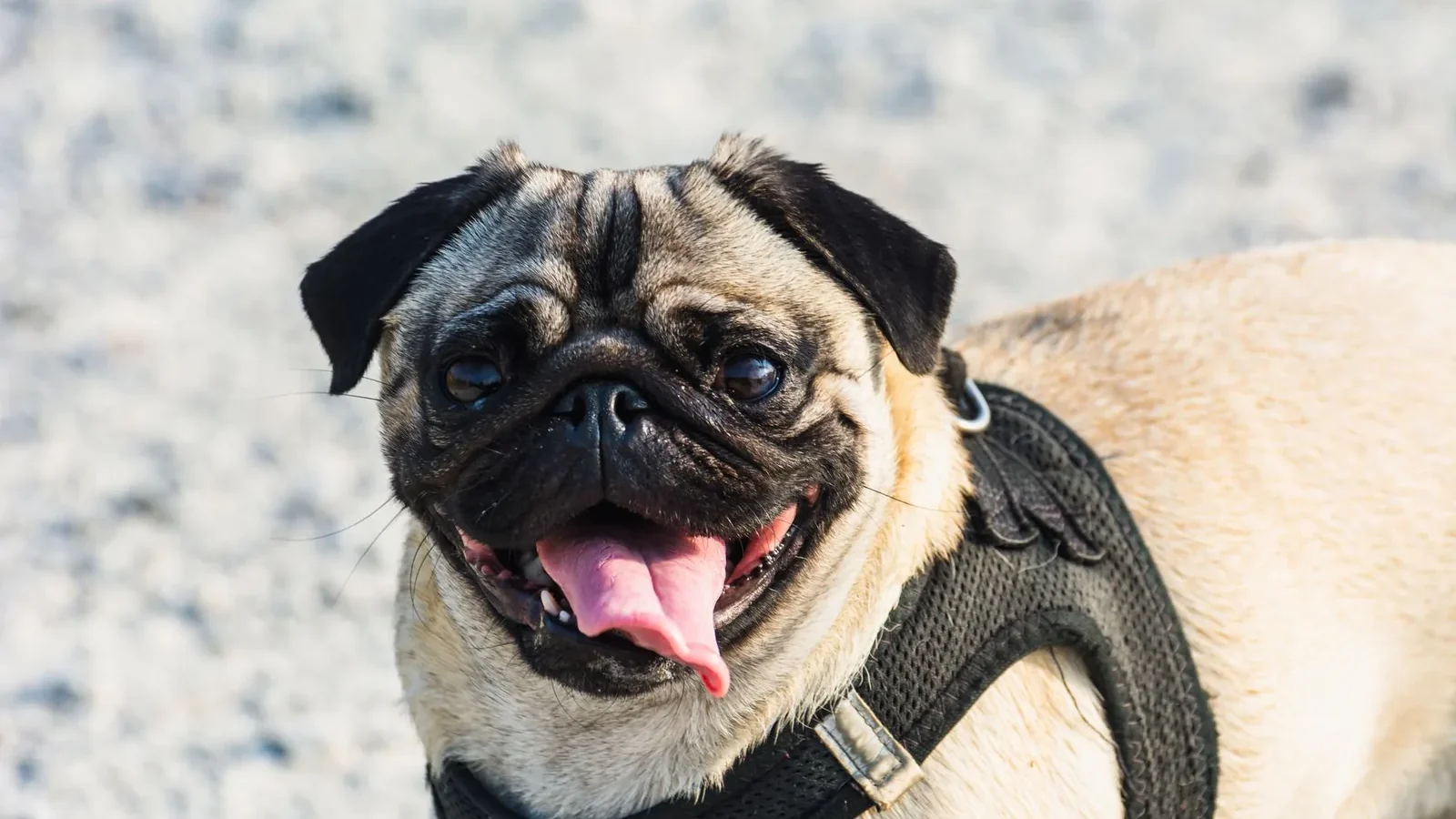
Snub-nosed breed airline restrictions are decided by the carrier before your paperwork is even read. A French Bulldog, Pug, Shih Tzu or Persian cat is refused by name on most airlines flying out of KLIA, and the usual workaround people read about online — fly in the cabin instead — is rarely available on an international move. Route selection is the real fix.
Introduction: the breed list is read before the file
Snub-nosed breed airline restrictions sit above every other requirement in a pet move. Vaccinations, titer tests and import permits all assume there is a flight. For a flat-faced dog or cat, the flight is the part that has to be solved first, because most carriers refuse the breed outright.
Owners come to us in the right order for a normal dog and the wrong order for a flat-faced one. Microchip done, rabies shot recorded, destination rules printed. Then the airline says no, and the plan stops.
The refusal is not about your animal. Airlines publish breed lists, and a healthy three-year-old Frenchie with a clean vet report is on the list exactly the same as an obese, wheezing one. No assessment, no appeal, no vet letter that changes it. That is what makes these moves different from every other export we handle at My Pet Mover.
Before the lists, it helps to understand what airlines are actually worried about.
Which dogs and cats actually count as snub-nosed?
Each airline publishes its own list, and the lists do not match. A breed accepted by one carrier is refused by the next. Crossbreeds are usually caught too, because most policies extend to crosses and to “any other brachycephalic breed” — something to settle early in any overseas pet export.
The lists are longer than owners expect, and include animals people do not think of as flat-faced. Singapore Airlines, for example, names Lhasa Apso, Chow Chow and Cavalier King Charles Spaniel alongside the obvious Pugs and Bulldogs, and refuses six cat breeds as well.
Breeds that appear on most airline lists:
- The core group. Pug (all types), French Bulldog, English Bulldog, Boston Terrier, Boxer, Shih Tzu, Pekingese.
- The ones owners argue about. Lhasa Apso, Cavalier King Charles Spaniel, Japanese Chin, Brussels Griffon, Shar-Pei, Chow Chow, Affenpinscher.
- The mastiff family. Neapolitan Mastiff, Dogue de Bordeaux, Bullmastiff, Cane Corso, Presa Canario.
- Cats. Persian, Exotic Shorthair, British Shorthair, Himalayan, Burmese, Scottish Fold.
Note what is missing: any measurement of your individual animal. Nobody grades the nostrils. The breed on the vaccination card decides it.
Not sure whether your dog is on the list?
Send us the breed and the destination and we will check it against the carriers that actually serve that route. See how we move pets between Malaysia and Singapore →
Why the brachycephalic breed flight ban exists
The brachycephalic breed flight ban comes from anatomy plus an unmonitored hold. Flat-faced animals carry a full set of nasal structures in a shortened skull, so they cool themselves poorly and their airway can narrow under stress. In a cargo hold nobody sees it happening — unlike the cabin.
The American Veterinary Medical Association explains the mechanism plainly: short-nosed breeds still have to pack the same nasal passages, sinuses and hard palate into a much smaller space. Under stress the airway can partially collapse, like sucking too hard through a straw.
Two things make a flight worse than a hot afternoon at home:
- Dogs cool by panting. A shortened airway makes panting less effective, so heat builds faster than the animal can shed it.
- Nobody is watching. The hold is pressurised but unattended. A problem in the air is only found after landing.
The second point is the one carriers act on. The risk is not enormous, but it is unobservable and unfixable mid-flight, and the airline carries the liability either way.
The ban is not a judgement about your dog. It is a judgement about a space where nobody can intervene.
What the carriers serving Malaysia actually publish
The three long-haul carriers most Malaysian pet moves route through all restrict snub-nosed breeds, but in different ways — one refuses outright, one refuses above a stated temperature, one allows a seasonal window. Those differences decide which of our international pet routes stay open.
Published Snub-Nosed Policies, Three Long-Haul Carriers
| Carrier | Snub-nosed rule | Stated trigger | Window |
|---|---|---|---|
| Singapore Airlines | Listed dog and cat breeds, crosses and any other brachycephalic breed refused as checked baggage | Breed name | None |
| Qatar Airways | Snub-nosed dogs and cats not accepted as checked baggage | Heat stroke risk above 21 °C, or under stress | None stated |
| Emirates SkyCargo | Listed snub-nosed breeds and crosses not permitted, except under specific conditions | Season | November to April only |
Source: carriers’ own published live-animal policies — Singapore Airlines, Qatar Airways, Emirates SkyCargo, read 2026.
Read the middle row against Malaysian weather. Kuala Lumpur sits two degrees off the equator, so a threshold written for a temperate climate works here as a permanent refusal.
French bulldog flying rules and the cabin myth
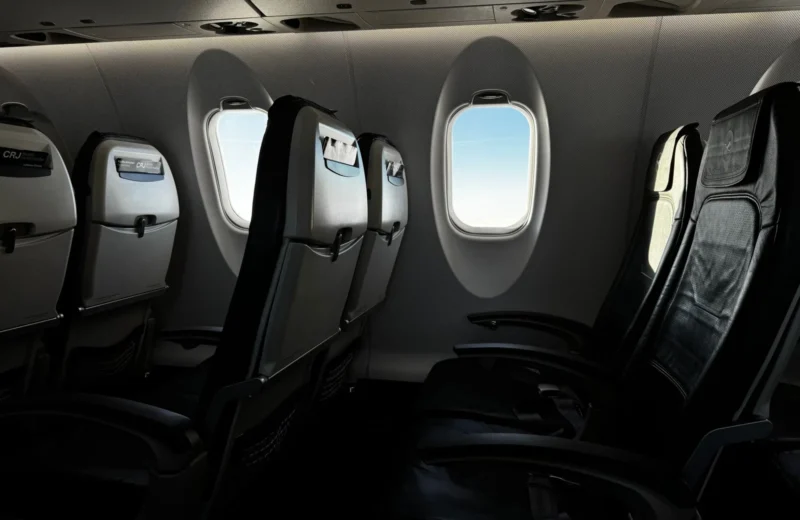
Most articles on French bulldog flying rules end with “so fly her in the cabin instead”. That advice is written for domestic flights in the United States. On an international move out of Malaysia the cabin is usually closed, for reasons that have nothing to do with the breed.
Three separate things block the cabin option on an export, and they stack:
- The airline may not offer it. Several carriers out of KLIA accept pets only as checked baggage or manifest cargo, with no in-cabin product on these routes.
- The destination may not allow it. Countries that inspect arriving animals at a quarantine station generally require manifest cargo arrival, not a pet walked off by a passenger.
- The weight ceiling is low. Cabin allowances assume a carrier that fits under the seat. An adult French Bulldog with its container is normally over the limit anyway.
So the honest answer is narrower than the internet version. The cabin rescues a small Persian cat on a route that offers it. It rarely rescues an adult Frenchie moving country, and the three channels differ in ways worth understanding — we set them out in our comparison of cabin, cargo and excess baggage.
The record the restrictions were built on
The modern breed lists trace back to United States Department of Transportation figures showing short-faced breeds dying on flights far out of proportion to their numbers — the reason every airline carrying pets to and from Malaysia now publishes a list.
Short-Faced Share Of Airline-Associated Dog Deaths
| Group | Deaths recorded | Share of total |
|---|---|---|
| All dogs, five-year total |
122 |
100% |
| Short-faced breeds |
about half |
~50% |
| English Bulldogs |
25 |
20% |
| Pugs |
11 |
9% |
Source: US Department of Transportation five-year figures, as summarised by the American Veterinary Medical Association. Bars scaled to the 122 total.
Two breeds produced roughly a third of all recorded deaths. The AVMA adds that this is a small number against hundreds of thousands of animals flown yearly — but airlines write policy against the pattern, not the base rate.
Pug air travel restrictions and the temperature clock
Pug air travel restrictions are often written as a temperature limit rather than a flat ban, and the limit applies at departure, transit and arrival. One hot airport anywhere on the routing is enough to stop the whole journey, which is why carrier choice for pets flying out of Malaysia matters so much.
Qatar Airways states the trigger explicitly: snub-nosed animals are refused because they are susceptible to heat stroke above 21 °C or when under stress. That number is worth sitting with. It is not an extreme-weather threshold — it is roughly a cool morning in the Cameron Highlands, and below KLIA’s overnight low on most nights of the year.
Three places the temperature is checked:
- Departure. Measured or forecast at the airport at acceptance, not when you booked.
- Transit. Every intermediate stop counts, including ones the animal never leaves the aircraft for.
- Arrival. The forecast at destination on the day, which is the one nobody thinks to check.
This is why seasonal windows matter more than they look. A November-to-April window is not about Malaysia’s weather; it is about the temperate airport at the other end being cold enough to satisfy the rule.
What the restriction does to a real routing
Once a breed is restricted, the routing options collapse from many to a handful, and each survivor carries a trade-off in cost, timing or flexibility. Seeing them side by side is usually what turns a stuck move into a decision.
Routing Options For A Restricted Breed Leaving Malaysia
| Option | Aspect | Detail |
|---|---|---|
| Seasonal-window carrier | Main constraint | Departure must fall inside the published months |
| Consequence | Move date follows the airline, not your job start | |
| Direct manifest cargo | Main constraint | Few nonstop options on some corridors |
| Consequence | Removes transit checkpoints; usually costs more | |
| Road to a regional gateway | Main constraint | Needs an import permit for the transit country |
| Consequence | Opens carriers that do not serve KLIA | |
| Delay to cooler months | Main constraint | Vaccination and test validity may lapse |
| Consequence | Some documents must be redone before departure |
Illustrative scenario: routing options modelled against the published carrier policies above, by My Pet Mover, 2026. Licence.
The road option surprises people most. Driving to a regional gateway is a real tool, but it is a formal export with its own permits, not a day trip — as we explain in the guide to taking a dog across the Causeway.
Want the numbers behind these options?
Restricted-breed routings price differently, and the gap is usually the routing rather than the breed. Compare our pet relocation pricing →
What IATA adds on top of the airline’s own rules
Even where a flat-faced animal is accepted, the industry container standard imposes extra requirements. The crate must be larger, ventilated on all four sides, and loaded away from other freight. These are minimums, and getting them wrong fails the animal at acceptance.
The IATA Live Animals Regulations container requirement sets three things apart for snub-nosed animals:
- Ten per cent more box. Calculated dimensions increase by 10%, so the crate is bigger than a same-sized long-nosed dog would need.
- Ventilation on all four sides. Openings sit over the upper two-thirds of the sides and back, total ventilated area at least 16%.
- Stowed apart. Snub-nosed dogs must be stowed as far as practical from other loads, for the largest possible air space.
The 10% uplift applies to the calculated figures, not to a crate you already own — a distinction we work through in the guide to measuring your dog for an IATA crate. The same regulations advise against tranquillising animals for flight: sedation lowers blood pressure at altitude, exactly the wrong intervention for an animal already breathing hard.
How the planning window moves through the year
Because seasonal windows are set by the destination’s climate rather than Malaysia’s, the practical booking calendar for a restricted breed is narrow and predictable. Working backwards from it, the way we do on every export file, is the difference between a booked flight and a queue.
Restricted-Breed Booking Calendar Through The Year
| Period | Seasonal window | What to be doing |
|---|---|---|
| January to April | Open | Flying; last departures before the window closes |
| May to July | Closed | Vaccinations, titer tests, crate acclimatisation |
| August to October | Closed | Permits filed; space requested for November |
| November to December | Open | Peak demand; earliest bookings depart first |
Illustrative scenario: planning calendar modelled on the published November to April carrier window, by My Pet Mover, 2026. Licence.
The trap sits in the closed months. Owners wait, then find in November that a titer result has aged out or a permit needs refiling. Closed is preparation time, not dead time.
Working around snub-nosed breed airline restrictions
You cannot change the breed list, so the work goes into what you can change: the carrier, the routing, the season and the animal’s condition on the day. Handled together, these turn a refusal into a booking on most corridors we fly.
What genuinely helps, in the order we work through it:
- Fix the corridor first. Find which carriers serve the destination and which will take the breed, before anything else is decided.
- Cut the transit stops. Each extra airport is another temperature test and another handling window.
- Book the season, not the month. On a seasonal-window carrier, space in the open months goes early.
- Get the weight down. Excess weight worsens breathing, and it is one of the few variables in your control.
- Acclimatise to the crate. Weeks of feeding in the crate lowers stress, and stress is half the stated risk.
- Line the crate thinly. The AVMA advises against thick blankets a flat-faced animal can bury its nose in.
What does not help: a vet letter declaring the animal fit, a request to reclassify the breed, or a booking made without naming the breed. The last one ends at the counter, with a family flying and a dog left behind.
Conclusion: solve the flight, then the paperwork
For a flat-faced dog or cat, the order of work is reversed. Confirm a carrier that will take the breed on your corridor, then build the vaccination and permit timeline backwards from that flight rather than forwards from today.
Snub-nosed breed airline restrictions frustrate owners precisely because they are impersonal. Nothing about your animal is assessed, so nothing about your animal can be improved to pass. The route can be improved, and that is where the effort belongs.
Most of these moves do happen — on fewer carriers, in narrower months, with a bigger crate and a longer lead time than an ordinary export, and far more reliably when the flight is settled before the file is opened.
Frequently Asked Questions
1. Is my dog snub-nosed if only one parent was?
Usually yes, for policy purposes. Most carriers extend the restriction to crossbreeds explicitly, and several add wording covering any other brachycephalic animal. A cross with a visibly shortened muzzle is treated like a purebred at acceptance.
2. Can a vet certificate override the restriction?
No. The restriction is a carrier policy applied by breed name, not a medical assessment. A fit-to-fly certificate is still required where the airline asks for one, but it does not remove a breed from the published list.
3. Are snub-nosed cats restricted too?
Yes. Persian, Exotic Shorthair, British Shorthair, Himalayan, Burmese and Scottish Fold appear on several airline lists. Cats are more often small enough for a cabin option where one exists, so the issue surfaces less often than with dogs.
4. Does the 10% larger crate rule apply in the cabin?
The uplift is written into the container standard for animals travelling in the hold. Cabin carriers follow a relaxed version of the same standard, but the animal must still stand, turn and lie naturally inside it.
5. How far ahead should I start a restricted-breed move?
Longer than a standard export. Where a seasonal window applies, the planning horizon runs to the next open month, so a decision made in May generally works towards a November departure with the medical timeline built around it.
Moving a flat-faced dog or cat overseas?
Tell us the breed and the destination. We will check every carrier serving that corridor, tell you honestly whether the route is open, and give you the crate specification and timeline to work backwards from.