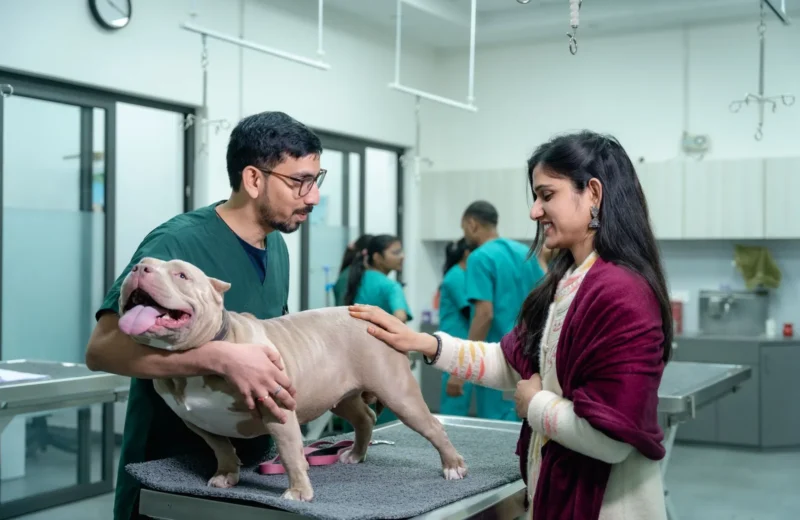
From a standing start, plan five to eight weeks. Britain lists Malaysia, so there is no rabies blood test and no three-month wait. The binding clock is 21 full days after the rabies vaccination, then a tight fortnight around the Nipah sample, the 10-day certificate window and the tapeworm dose. Cargo space usually fixes the date.
Introduction: the timeline question is really two questions
Asking how long to move a pet to the UK really asks two things: how long the health rules take, and how long the freight takes. The rules set a floor you cannot compress. The freight sets the date you actually fly.
Most owners arrive with a job start date already fixed. The real question is whether the dog flies before the family, with them, or six weeks after everyone has moved into an empty flat in Reading.
Two clocks run at once. One is regulatory and published: waiting periods, sample windows, certificate validity. The other is commercial and quiet, and it is whether a carrier has a pet-approved hold in your month.
Owners plan around the first and get surprised by the second. This piece walks both, in the order a real file is built, for owners on the Malaysia to UK pet transport route, drawing on the export files My Pet Mover books through KLIA. The Defra video sets out Britain’s general position first.
How long does it take to move a pet to the UK from Malaysia?
From a standing start, five to eight weeks is the honest range. The regulatory floor is 21 full days after the rabies vaccination plus a final fortnight of certificates. Everything above that is flight availability, vet appointments and laboratory turnaround.
Britain runs quicker than most long-haul destinations because of one line in the guidance. GOV.UK’s country table puts Malaysia and Peninsular Malaysia in the listed column, and listed countries skip the rabies blood test and the three-month wait GOV.UK applies to not-listed countries.
Three components make up the total, and two of them overlap rather than queue.
- The rabies wait. At least 21 full days after the first vaccination, and nothing shortens it.
- The Malaysian export file. Nipah test, health certificate and export permit, compressed into the final fortnight.
- The freight slot. A pet-approved flight on a Defra-approved route, booked early enough to time the vet diary to it.
If your pet was microchipped and vaccinated more than 21 days ago, that component is already spent and the answer drops to two to four weeks. Malaysia’s place in the listed column shapes the whole timeline, covered in our explainer on Malaysia’s listed-country status for UK pet travel.
Working backwards from a fixed arrival date?
Send us the date and your pet’s vaccination history and we will tell you whether it is reachable. See how our pet export process works →
The one date that sets everything: the rabies vaccination
Britain counts 21 full days from the first rabies vaccination before your pet may travel. The microchip must be implanted before that vaccination, or the vaccination does not count and the clock restarts from a fresh jab. This ordering error is the most expensive mistake on the corridor.
The trap sits one step earlier than owners expect. Britain’s published sequence is microchip first, rabies vaccination second. A pet vaccinated in March and microchipped in June has, in Britain’s reading, no valid vaccination at all, so the chip means a fresh jab and a fresh 21 days. The reasoning is in our piece on the UK’s microchip-before-rabies order rule.
Check three things on the vaccination card before you plan a single date.
- Is the microchip number printed on the certificate? Not just in the clinic’s system, but on the document a vet certifies from.
- Is the microchip date earlier than the vaccination date? Same day works if the chip went in first; a later chip date does not.
- Has the vaccination lapsed? A booster given after the previous one expired counts as a first vaccination again, restarting the 21 days.
What the Nipah certificate does to your last two weeks
Pets leaving Peninsular Malaysia need an extra government certificate covering Nipah virus, including a negative antibody blood test taken no more than 10 days before departure. That ceiling is what makes the final fortnight tight, because the sample, the laboratory and the signature all fit inside it.
GOV.UK asks Peninsular Malaysian pets for a certificate from the Malaysian government veterinary health service showing no pig contact in the 60 days before departure, no stay on a Nipah-affected holding in that period, and a negative Nipah antibody blood test.
The 60-day conditions are usually free. A Klang Valley house pet has not been near a pig farm. The blood test is different, with a hard deadline at both ends.
- Taken no more than 10 days before you leave. Too early and it is void; too late and the result will not be back.
- Sent to a laboratory approved for Nipah virus. Not a clinic’s routine panel.
- Returned in time to be certified. The certificate is signed on the result, not on the sample.
So the departure date is locked before the needle goes in, and booking the sample without a confirmed flight is how files fall apart. The pig-contact wording is explained in our explainer on why UK pet exports ask about pig contact.
The countdown: every published window, counted back from landing
Four published windows govern the file: 21 full days after the rabies vaccination, a Nipah sample within 10 days of departure, entry to Great Britain within 10 days of the certificate being issued, and a tapeworm dose 24 to 120 hours before arrival.
Laid out as a countdown, the rules read less like a list than a diary.
The Published Countdown For A Peninsular Malaysia Pet Move
| Counted back from GB arrival | What must be true | Source |
|---|---|---|
| 21+ full days before | Rabies vaccination given, after the microchip was implanted | GOV.UK |
| Within 10 days of departure | Nipah antibody sample taken at an approved lab | GOV.UK |
| Within 10 days of arrival | GB pet health certificate issued and stamped by an official vet | GOV.UK |
| 24 to 120 hours before | Tapeworm treatment given to dogs by a vet and recorded | GOV.UK |
| Day of arrival | Arrival on a Defra-approved route, as cargo | GOV.UK |
Source: GOV.UK, Bringing your pet to Great Britain, current at August 2026.
Only the 21-day rabies period is dead time; the rest is scheduling, and scheduling runs in parallel. The tapeworm window is finer than owners expect, and our guide to the tapeworm window for UK entry breaks it down.
Where the Malaysian side of the file eats time
The Malaysian export steps are short but sequential, and several depend on someone else’s diary. Laboratory turnaround, official veterinarian availability and the DVS export permit are the three that most often slip.
British requirements get the attention, but the Malaysian departure file takes just as much of the calendar, because each step waits on the one before it.
The Malaysian Departure Steps And What Each One Waits On
| Step | Who does it | Typical allowance | Waits on |
|---|---|---|---|
| Crate sizing and acclimatisation | Owner | 2 to 4 weeks | Nothing, so start it first |
| Cargo booking on an approved route | Agent or airline | 2 to 6 weeks ahead | Hold space and breed acceptance |
| Nipah sample and laboratory result | Vet and approved laboratory | Inside the 10-day window | A confirmed departure date |
| DVS export permit | Department of Veterinary Services | 3 to 5 working days | A complete application |
| Certificates signed by the OV | Government-authorised vet | Final 10 days | The Nipah result being back |
| Tapeworm dose for dogs | Vet | 24 to 120 hours out | The confirmed arrival time |
Sources: GOV.UK for certificate and treatment windows; permit allowance per the Department of Veterinary Services Malaysia’s import and export services guidance. Crate and cargo allowances are My Pet Mover figures, 2024 to 2026.
The crate row is the one owners skip and later regret. A dog that has never slept in its crate will not settle in the 48 hours before a long-haul flight.
Why cargo space usually sets the departure date
GOV.UK requires pets flying into Great Britain to travel as cargo unless the flight is a private charter or the animal is an assistance dog, and only on approved routes. In peak months the first available slot sits further out than any paperwork.
This is the clock owners do not see coming. Health rules are public, dated and identical for everyone. Freight capacity is none of those.
- Approved routes only. Defra publishes the approved air, sea, rail and charter routes, and warns they change or run seasonally.
- Cargo, not the cabin. Live animals occupy temperature-controlled hold positions, and the number per aircraft is small.
- Carrier acceptance. Breed, crate size and season sit in the airline’s rules, and a snub-nosed dog in July is a different conversation.
So the order inverts: you secure the slot, then build the vet diary backwards from it. Why Britain insists on the hold is covered in our piece on why UK-bound pets fly as cargo and never as baggage, and for a Gulf routing, the rules for pet stopovers in Dubai or Doha are worth reading first.
Moving in a peak month?
June to August and December fill early on the KLIA to London corridor, and prices move with them. Check our pet relocation pricing →
Realistic timelines by where your pet is starting from
Four starting positions cover most owners, and the gap between fastest and slowest is about six weeks. The difference is whether the microchip and rabies vaccination are already valid.
The model below is illustrative. It shows the shape of the answer to how long to move a pet to the UK, depending on where the paperwork already stands.
Illustrative Lead Time By Starting Position, Peninsular Malaysia To Great Britain
| Starting position | Relative lead time | Weeks | Governing step |
|---|---|---|---|
| Chip and rabies valid, flight open | 2 to 3 | Nipah result and OV signature | |
| Chip and rabies valid, peak month | 4 to 6 | Cargo slot availability | |
| Starting from scratch | 5 to 8 | 21-day rabies wait | |
| Microchip implanted after the jab | 6 to 9 | Fresh vaccination, fresh 21 days |
Illustrative scenario built on published GOV.UK and Department of Veterinary Services Malaysia windows, applied to My Pet Mover export files, 2024 to 2026. Not a quotation.
The bottom row is worth staring at. An avoidable ordering error costs about as much time as the whole regulatory floor, and it surfaces late, long after the vet visit.
What actually pushes a UK pet move later
Delays cluster around six causes, and only two sit outside the owner’s control. That is why most slipped dates were preventable weeks before anyone noticed.
Grouping the causes by who controls them shows where to spend your attention.
Delay Drivers On The Malaysia To Great Britain Pet Corridor
| Delay driver | Typical slip | Usually discovered |
|---|---|---|
| Owner-controlled | ||
| Microchip implanted after the rabies jab | 3 to 4 weeks | At the first document review |
| Rabies booster lapsed before renewal | 3 to 4 weeks | At the first document review |
| Schedule-controlled | ||
| Nipah sample outside the 10-day window | 1 to 2 weeks | When the OV reviews the result |
| Peak-season cargo unavailable | 2 to 5 weeks | At booking |
| Rule-controlled | ||
| Banned breed under UK law | May not proceed | Before anything is booked |
| Pet arriving 5+ days apart from the owner | Different rule set | At planning, if checked |
Rule-controlled rows per GOV.UK: banned breeds cannot enter without a valid Certificate of Exemption, and a pet arriving more than five days apart from its owner falls under the Balai rules. Slip estimates are My Pet Mover figures, 2024 to 2026.
That last row catches families who send the dog ahead while they finish a lease, so the human move belongs in the pet’s plan. Where a file fails at the border, what happens when UK pet paperwork is wrong sets out the cost.
How to compress the timeline without breaking the file
You cannot shorten the 21-day rabies wait or the 10-day certificate window, so compression comes from running steps in parallel and fixing the arrival date early.
Work this sequence rather than the one that feels natural. It front-loads everything with a queue and leaves the time-bound items for last.
- Read the vaccination card. Chip date, rabies date, expiry date decide whether the 21-day clock is behind you or ahead.
- Clear the breed and the crate. Confirm the dog is not a banned type and measure before any money moves.
- Fix the arrival airport and month. Where the family lands narrows the approved routes and carriers.
- Book the cargo slot. Every other appointment is built backwards from this date.
- Start crate acclimatisation. Two to four weeks with the crate at home, door open, running alongside the rest.
- Schedule the Nipah sample inside the 10-day window. Late enough to be valid, early enough for the result to return.
- Sign the certificate last. Entry within 10 days of issue, with the tapeworm dose 24 to 120 hours before arrival.
Only steps six and seven are date-bound; everything above can start this week. For the certificate side, see the EHC 3914 UK export certificate for Malaysia and export health certificates for UK-bound pets. If you land at Heathrow, the Heathrow Animal Reception Centre arrival process explains what follows.
Conclusion: a booking problem in paperwork clothing
Britain is one of the faster long-haul destinations for a Malaysian pet, because listed-country status removes the blood test and the three-month wait. Plan five to eight weeks from scratch, two to four if the vaccination is valid.
A comparison helps. A pet moving from Malaysia to Singapore still faces a quarantine stay, as set out in our guide to Singapore’s pet quarantine for Malaysian pets. Britain asks for none when the file is complete, but its windows are unforgiving.
So the honest answer to how long to move a pet to the UK is: as long as it takes to get a cargo slot, plus 21 days if the rabies vaccination is not already valid. Owners who ask early almost always get the date they wanted.
Frequently asked questions
1. What is the minimum time to move a pet from Malaysia to the UK?
If the microchip and rabies vaccination are already valid and more than 21 days old, and a cargo slot is open, about two weeks. That fortnight covers the Nipah sample, the laboratory result, the certificate and the tapeworm dose.
2. Does my pet need a rabies blood test to enter the UK from Malaysia?
No. GOV.UK requires a rabies blood test only for pets travelling from a country that is not in the EU and not listed. Malaysia and Peninsular Malaysia both appear in GOV.UK’s listed table, so the test and the three-month wait do not apply. Confirm the table before travelling.
3. How long is the Great Britain pet health certificate valid?
Your pet must enter Great Britain within 10 days of the certificate being issued, per GOV.UK, and it must be signed, stamped and dated by a government-authorised official veterinarian. That is why it is the last document signed, not the first.
4. Will my pet be quarantined when it arrives in the UK?
Not if the rules were followed. GOV.UK states a pet may be quarantined for up to four months if they are not, or refused entry if it travelled by sea, with the owner paying the fees.
5. Can my pet fly to the UK before I do?
It can, but check the gap. GOV.UK applies a separate set of requirements, the Balai rules, if your pet arrives more than five days before or after you, on top of the usual microchip, rabies and tapeworm steps.
Need a date you can actually plan around?
Send us your target arrival month, your pet’s breed and a photo of the vaccination card. We will tell you the earliest realistic departure and what the move costs.