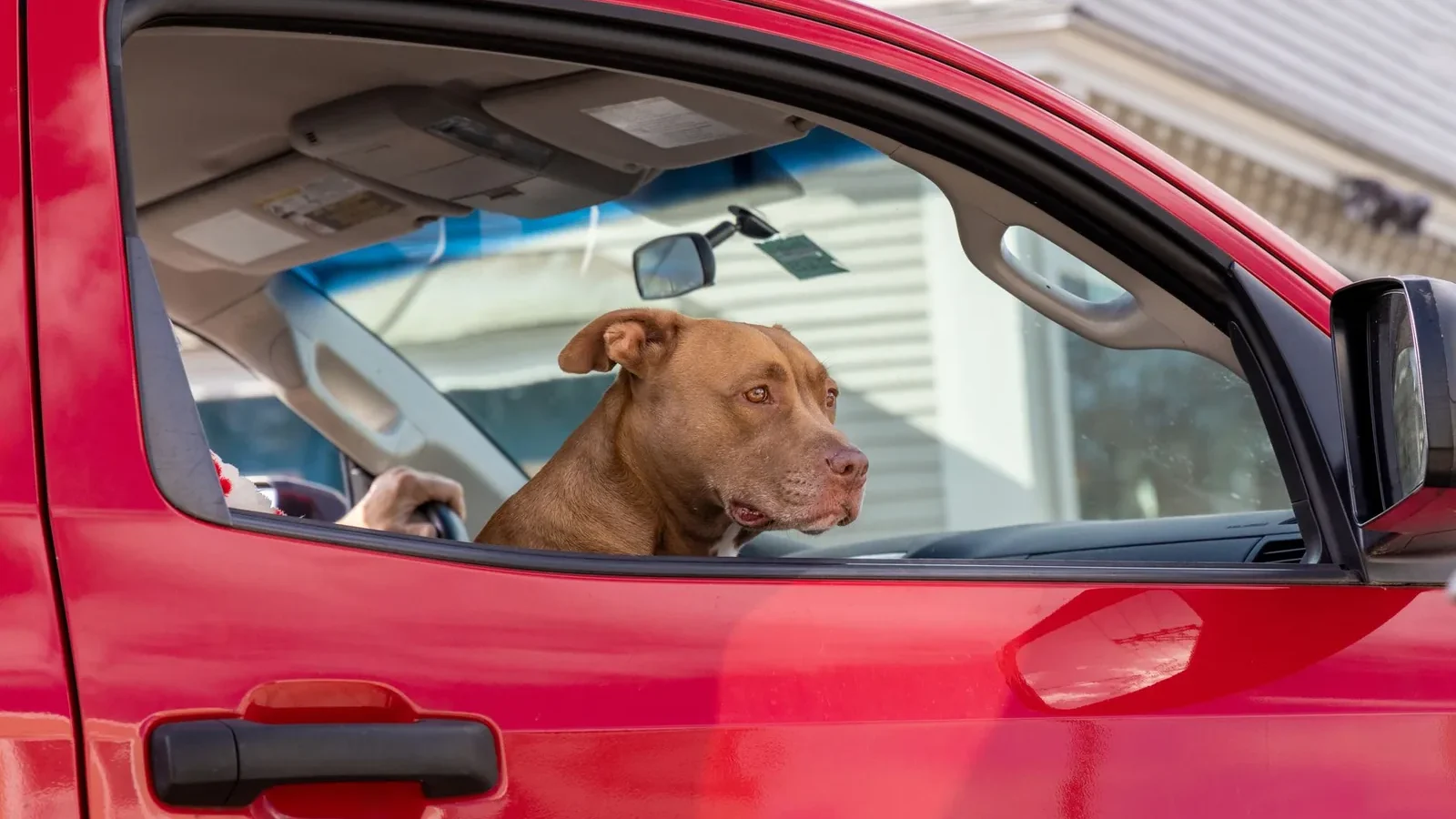
Chile asks for no import permit, no blood test and no government quarantine for a cat or dog. It asks for one document, the International Veterinary Certificate, and that certificate lives for only ten days. Rabies immunity, a clinical examination, deworming and the certificate itself all hang off dates that must be counted backwards. A Malaysia to Chile pet relocation is short on paperwork and unusually tight on time.
Introduction: a short rulebook on a very short clock
Chile’s pet entry rules are among the shortest in South America. The difficulty is not what is asked, but when. The certificate is valid for ten days, extendable by five, and a Kuala Lumpur to Santiago journey can eat most of that window before the animal even lands.
Most owners planning a Malaysia to Chile pet relocation read the requirement list, count four items, and relax. Four items is genuinely light. Germany asks for more. Japan asks for far more.
Then they look at the validity period. Ten days.
That single number changes how the whole file has to be built. There is no direct service between Kuala Lumpur and Santiago, so the animal changes aircraft at least once and often twice. Add the working days a Malaysian export certificate takes to endorse, and the certificate can be halfway through its life before the crate reaches the airport.
My Pet Mover builds a Chilean file backwards from the landing date rather than forwards from the vet visit. That is the opposite of how most pet export from Malaysia files are usually assembled, and on this route it is the only sequence that survives.
Landing date not fixed yet?
On a ten-day certificate the flight has to be held before the vet is booked, not after. Compare our international pet transport routes →
The video below is SAG’s own walkthrough of the sworn declaration every arriving traveller now files, which is where a Chilean arrival actually begins.
What Chile requires from a Malaysian cat or dog
A cat or dog needs an International Veterinary Certificate issued by Malaysia’s veterinary authority, permanent identification, rabies immunity, and broad-spectrum internal and external parasite treatment. There is no import permit for cats and dogs, no rabies titre test and no government quarantine.
The current conditions come from SAG Resolution No. 3,343 of 2026, as amended by Resolution No. 5,444 of 2026. Working from SAG’s published entry conditions, a Malaysian file has to satisfy four things:
- Clinical examination. Performed by a veterinarian inside the ten days before the certificate is issued, showing no clinical signs of infectious or parasitic disease.
- Permanent identification. A tattoo or a microchip meeting ISO 11784 or ISO 11785. The number on the animal must match the number on the certificate.
- Rabies vaccination. An animal receiving its first-ever dose, or a dose given after the previous one lapsed, must be immunised at least 21 days before entering Chile, whatever its age. For an animal with unbroken cover, the certificate must record the last two doses.
- Parasite treatment. A broad-spectrum internal and external product, given between 5 and 30 days before the certificate is issued, at the manufacturer’s dose.
Ferrets are treated differently and need a separate wildlife authorisation. Cats and dogs do not. That is the whole list.
Two official SAG pages, two different rulebooks
SAG publishes the pet entry rules twice, on two pages that no longer agree. The older service page still cites a 2021 resolution and older windows. The newer policy page cites the 2026 resolutions. Follow the 2026 page, and read the older one only for the practical detail it still adds.
This is the trap almost nobody writing for the Malaysian market has flagged, and it costs real days.
Search for Chile’s pet rules and you will usually land on SAG’s service-request page for entering Chile with dogs and cats. It is an official page on an official domain. Its stated legal basis, however, is the 2021 resolution that the 2026 instruments replaced, and the conditions on it read accordingly: rabies given between one and twelve months before shipment, deworming inside 30 days of shipment, and windows counted against the flight.
The policy page cited in the previous section counts the same windows against the certificate issue date instead, and replaces the rabies rule with the 21-day first-vaccination rule. On a Malaysia to Chile pet relocation the difference is not academic. A certificate endorsed three days before departure moves every deadline three days earlier than the older page implies.
Our working rule is simple. Build the file to the tighter reading of both pages, so it satisfies either. That approach is the same one behind our Malaysia to Germany pet relocation timeline, where two authorities also describe the same journey differently.
The four windows behind the Chilean certificate
Rabies is measured against the arrival date. Deworming and the clinical examination are measured against the certificate issue date. The certificate itself then runs for ten days, extendable by five. Four clocks, three different reference points.
The Chilean Certificate Timeline, Counted From the Day of Issue
| Point in time | What must happen | Measured against |
|---|---|---|
| Any time before | Microchip or tattoo applied and recorded | Nothing, but must precede vaccination records |
| At least 21 days before arrival | First or lapsed rabies dose administered | Date of entry into Chile |
| Day −30 to day −5 | Broad-spectrum internal and external parasite treatment | Certificate issue date |
| Day −10 to day 0 | Clinical examination by a veterinarian | Certificate issue date |
| Day 0 | Certificate issued, signed and stamped by the Malaysian authority | Starts every remaining clock |
| Day +10 | Standard expiry of the certificate | Certificate issue date |
| Day +15 | Absolute ceiling, where travel conditions justify the extension | Certificate issue date |
Source: compiled by My Pet Mover from SAG Resolution No. 3,343 of 2026 and Resolution No. 5,444 of 2026, as published by the Servicio Agrícola y Ganadero.
Read the table once and the sequencing problem becomes obvious. Deworming has a five-day minimum lead as well as a thirty-day ceiling, so a treatment given the same morning as the certificate is too late even though it feels early.
Why Spanish belongs on the certificate before it is signed
SAG expects the certificate in Spanish alongside the official language of the country of origin. Malaysian veterinary certification is issued in English and Malay, so the bilingual version has to be built into the drafting, not translated afterwards.
Malaysia’s Department of Veterinary Services issues export health certification in English and Malay. Neither is Spanish, and a certificate is only endorsed once.
The fix is a drafting decision. The Chilean model is prepared bilingually, then signed and stamped in that form. Done at the drafting stage it costs nothing. Done afterwards it means either a fresh endorsement or a translation argued at the counter while a crated animal waits.
This is one of the few points where Chile and Argentina genuinely rhyme. If you are weighing the two markets, our guide to Malaysia to Argentina pet export requirements covers the same language question from the Argentine side.
Certificate not drafted yet?
Bilingual drafting has to be agreed before the vet signs, and the ten-day clock makes a second attempt expensive. See how our Malaysian export process works →
How Chile compares with other export destinations
Chile sits with the light-paperwork destinations. No permit, no laboratory result, no quarantine. What sets it apart is certificate life. Ten days is the shortest window among the destinations Malaysian owners commonly ship to.
Entry Conditions for a Pet Leaving Malaysia, Chile Against Four Comparators
| Destination | Advance permit | Laboratory result | Certificate life | Certificate language | Post-arrival restriction |
|---|---|---|---|---|---|
| Chile | Not required for cats and dogs | Not required | 10 days, extendable to 15 | Spanish plus origin language | Home confinement expected |
| Argentina | Not required for cats and dogs | Not required | 60 days | Spanish required | None |
| Germany | Not required, but EU rules apply | Rabies titre required | 10 days to entry, then 4 months in the EU | German plus English | None once cleared |
| Oman | Import permit required | Not routinely required | Short, tied to the permit | English accepted | None |
| South Africa | Veterinary import permit required | Additional testing applies | Short, tied to the permit | English accepted | Quarantine possible |
Source: compiled by My Pet Mover from the published entry conditions of each destination authority, current at August 2026. Confirm with the destination authority before booking.
Chile trades paperwork for tempo. You avoid the laboratory work Germany insists on and the permit lead time Oman and South Africa impose, but you give up the comfortable validity period Argentina offers. If your destination is still open, our guide to Oman’s Muscat entry rules and our explanation of Malaysia to South Africa pet export show what a permit-led file looks like instead.
Ten days of confinement at a Chilean address
SAG’s guidance states that once in Chile, animals should remain confined at the destination address for ten days. It is not kennel quarantine and there is no facility fee, but the address has to be declared on the certificate and it has to be real.
This condition surprises owners because it does not look like quarantine and is not described as one. There is no government facility, no booking and no daily rate. The animal goes home and stays home.
Two practical consequences follow:
- The Chilean address is a certificate field, not an afterthought. SAG’s guidance asks the certificate to carry the owner’s details, the animal’s history and the address where it will stay in Chile.
- A hotel or short-term rental is a weak answer. If the first ten days are meant to be spent at one address, that address should be one you actually hold.
For owners arriving before their shipping container does, this is usually the item that decides whether the pet travels on the same week as the family or a fortnight later. It is worth settling before anything else on a Malaysia to Chile pet relocation gets booked.
Routing from Kuala Lumpur to Santiago
There is no single carrier running Kuala Lumpur to Santiago, so the animal changes aircraft twice on most itineraries. Gulf hubs into Brazil, then a regional sector to Santiago, is the family that adds the fewest documents.
Transit Families From Kuala Lumpur to Santiago, by Added Requirement
| Transit region | Documents added | Aircraft changes | Main risk |
|---|---|---|---|
| Preferred | |||
| Gulf hub, then Brazil | None beyond the Chilean certificate | Two | Long ground time and desert heat limits |
| Workable with extra paperwork | |||
| Western Europe | Full EU transit health certificate | Two | A second document set to keep valid inside ten days |
| Closed or avoid | |||
| Australia or New Zealand | Not applicable, live animal service restricted | Two | The trans-Pacific sector will not carry the animal |
| United States | Full high-risk country import file for dogs | Two or three | Refusal or a long hold, with the certificate expiring meanwhile |
Source: My Pet Mover routing assessments for long-haul westbound pet moves from Kuala Lumpur, 2024 to 2026.
Two of those rows deserve a note. LATAM’s own guidance confirms that international pet bookings must go through a cargo agency and that the minimum age is sixteen weeks. Its pet service does not extend across the Australia and New Zealand sectors, which closes the trans-Pacific short cut before it starts. The American routing is a separate problem, because Malaysia sits on the United States high-risk list for dog rabies, as we explain in our note on the CDC high-risk rabies country list.
Holding a quote with two airlines on it?
Interline handovers are where a ten-day certificate quietly runs out. Send us the itinerary before you pay. See our pet relocation pricing →
Where Malaysia to Chile pet files lose days
Chilean files rarely fail on substance. They fail on dates. The single biggest cause is a certificate issued too early for the itinerary, followed by deworming given inside the five-day floor and by owners working from the older SAG service page.
Average Days Lost per Cause, Malaysian Files Bound for Chile
| Cause of delay | Relative impact | Days |
|---|---|---|
| Certificate issued too early for the itinerary | 10 | |
| Spanish drafting arranged after signature | 8 | |
| Owner worked from the superseded SAG page | 6 | |
| Deworming given inside the five-day floor | 5 | |
| Heat embargo forces a rebooking | 5 | |
| Chilean address not settled at drafting | 3 |
Source: My Pet Mover casework on long-haul South American pet relocations from Kuala Lumpur, 2024 to 2026.
Notice that the top cause is not an error. Issuing a certificate early feels responsible everywhere else. On a ten-day document it is the fastest way to arrive expired, especially once a heat embargo pushes the flight by a week. Our note on when airline heat embargoes stop pets flying explains why that push is common on Gulf routings.
Arrival in Santiago and the sworn declaration
SAG checks the certificate at the border post, confirms the microchip against the paperwork, and looks the animal over for visible signs of disease. Arriving travellers also file a digital sworn declaration covering what they are bringing into the country.
Santiago handles serious pet volume. SAG reported that 27,070 pets entered Chile across all border controls in 2023, with 7,667 of them arriving through Santiago’s airport, a figure the service describes as 54 per cent above the 2019 pre-pandemic level.
That volume is good news. Border staff see this file constantly and know what a correct one looks like. It also means an incorrect one is spotted quickly.
Three things happen on the ground:
- The sworn declaration is filed. Arriving travellers complete the SAG entry declaration, which can be done digitally before landing.
- The certificate is verified. SAG confirms the document meets the national requirements and is still inside its validity window.
- The animal is inspected. Identification is matched to the certificate and the animal is checked for visible signs of disease.
If the animal is flying unaccompanied, the arrival also becomes a customs clearance, so a Chilean agent needs to be appointed before departure. What happens at the Malaysian end is covered in our walkthrough of pet cargo at KLIA on flight day.
Conclusion: fix the date, then build backwards
Hold the flight, settle the Chilean address, commit to a bilingual certificate, then count the deworming and examination windows backwards from the issue date. In that order Chile is one of the easier long-haul destinations to reach.
Chile asks very little of a Malaysian owner. No permit, no blood test, no kennel quarantine, and a requirement list any veterinarian can satisfy in a single consultation.
What it will not forgive is a certificate that runs out mid-journey. Ten days is enough for a well-planned itinerary and not quite enough for an improvised one, which is why a Malaysia to Chile pet relocation should always start from the landing date. The same discipline runs through every destination on our pet export from Malaysia service.
Frequently Asked Questions
Does Chile require an import permit for a dog or cat from Malaysia?
No. Cats and dogs enter on an International Veterinary Certificate issued by Malaysia’s veterinary authority, with no advance import permit and no government quarantine. Ferrets are different and need a separate wildlife authorisation from SAG before travel.
Does my pet need a rabies titre test for Chile?
No. Chile does not require a rabies antibody result for a cat or dog entering from Malaysia. What it requires is valid rabies cover. An animal receiving its first dose, or a dose given after the previous one lapsed, must be vaccinated at least 21 days before it enters Chile.
How long is the Chilean certificate valid?
Ten days from the date of issue, extendable by a maximum of five further days where travel conditions justify it. That is the shortest validity window among the destinations Malaysian owners commonly ship to, and it is the single constraint that shapes the whole timeline.
When must the deworming and the clinical examination be done?
Broad-spectrum internal and external parasite treatment must fall between 5 and 30 days before the certificate is issued, and the clinical examination must fall inside the 10 days before issue. Both windows are measured against the certificate date, not the flight date.
Is there quarantine when a pet arrives in Chile?
There is no government kennel quarantine for a compliant cat or dog. SAG’s guidance does state that animals should remain confined at the declared destination address for ten days after arrival, which is why that address belongs on the certificate.
Can my dog transit the United States on the way to Chile?
It is best avoided. Malaysia sits on the American high-risk list for dog rabies, so a Malaysian dog touching American soil falls under the full United States import rulebook even in transit. Gulf routings avoid the question, and on a ten-day certificate a hold in transit is expensive.
Ready to move your pet from Malaysia to Chile?
Tell us your target landing date in Santiago and your pet’s breed, weight and vaccination history. We will hold the airline space, arrange the bilingual certificate, set the issue date against the itinerary, and work the deworming and examination windows backwards so nothing expires in the air.