South Africa will not let a Malaysian cat or dog board until a veterinary import permit has been issued in Pretoria. That permit arrives with the health certificate template attached, and the certificate has to be completed in English within ten days of departure. Dogs also carry a five-disease blood panel, and one of those samples has to leave Malaysia before the dog does.
Introduction: a long file, not a hard one
Nothing South Africa asks for is unusual on its own. What catches Malaysian owners is the order. The permit is applied for first, the certificate is issued by South Africa rather than downloaded, and a dog’s laboratory work runs on a clock that starts weeks before the flight.
Owners moving to Johannesburg or Cape Town usually start the same way. They read the requirements, see a permit, a rabies vaccination and a health certificate, and assume six weeks is generous.
Six weeks is often not generous at all.
The reason is sequencing rather than difficulty. A Malaysia to South Africa pet export is not gated by hard requirements; it is gated by the order they have to happen in. South Africa does not publish a certificate you can print. It issues one to you with your permit, and only after the application has been paid for and approved in Pretoria.
My Pet Mover plans this route backwards from the permit rather than forwards from the vet visit, which is the discipline behind every pet export from Malaysia file where a foreign authority controls the paperwork. The video below covers the same move from an owner’s side.
What South Africa asks of a Malaysian cat or dog
Every cat and dog needs a veterinary import permit obtained before the animal is shipped, plus an original veterinary health certificate completed in English by a vet authorised by Malaysia’s veterinary authority within ten days of departure. Dogs add a blood panel. Cats do not.
South Africa’s published procedure for importing animals is blunt about the order of events. The permit comes from the Director: Animal Health, and you must hold it before the animal leaves the exporting country.
From there, the file has four moving parts:
- The veterinary import permit. Applied for on a species-specific form and paid for in advance. No application is processed without proof of payment.
- The veterinary health certificate. Issued to you with the permit as a template, then completed in English by an authorised veterinarian within ten days of departure.
- Identification and rabies cover. An ISO-standard microchip implanted before the rabies vaccination, so every later record ties to one number.
- Disease testing for dogs. A five-disease panel drawn shortly before export, with the microchip number on every laboratory report.
Notice what is absent. There is no rabies antibody titre, which is where South Africa differs sharply from the rabies titer test requirements China applies to imported pets.
The permit comes first, and it writes your certificate
South Africa issues the veterinary import permit and the veterinary health certificate template together, directly to the applicant. Processing takes three to five working days once the state veterinarian has approved the importation, and applications are expected roughly four weeks ahead.
This is the part most Malaysian owners get wrong, and it is not their fault. Almost every other destination publishes a downloadable certificate. South Africa does not.
Because the certificate is issued to you, your Malaysian vet cannot certify anything until the permit arrives. A vet who vaccinates, tests and signs in advance has built a file against requirements nobody has confirmed.
Three details from the official procedure change how the application should be run:
- Pay before you apply. The fee is revised annually in the Government Gazette, and no application is processed without proof of payment attached.
- Use the right form. There are separate applications for cats, for dogs not subject to quarantine, for dogs subject to quarantine, and for dogs entering for recreational purposes.
- Present originals on arrival. The original permit and certificate are both handed to the veterinary import control officer, with the rabies vaccination certificate.
Not sure which application form applies?
The form you choose decides whether a quarantine reservation has to be arranged before the permit can be issued. See how our Malaysian export process works →
Where the weeks actually go on this route
The flight is the shortest part of a Malaysia to South Africa pet export. On a dog file, the permit leg and the overseas laboratory leg together consume more calendar than everything else combined, and neither can be compressed by paying more.
Working Days Per Stage, Malaysia to South Africa
| Stage | Working days | Days | Runs alone? |
|---|---|---|---|
| Permit application to permit issued | 20 | Yes, blocks everything | |
| Blood draw to overseas laboratory result | 14 | Yes, dogs only | |
| Crate fitting and acclimatisation | 10 | No, runs parallel | |
| Certificate completion and endorsement | 5 | Yes, inside 10-day window | |
| Flight day and arrival clearance | 2 | Yes |
Source: modelled planning schedule, My Pet Mover, built from published South African permit and certificate windows.
The exact figures vary by case. The shape does not. Two stages dominate, both sit at the front, and both are controlled by somebody other than you.
The five blood tests behind every imported dog
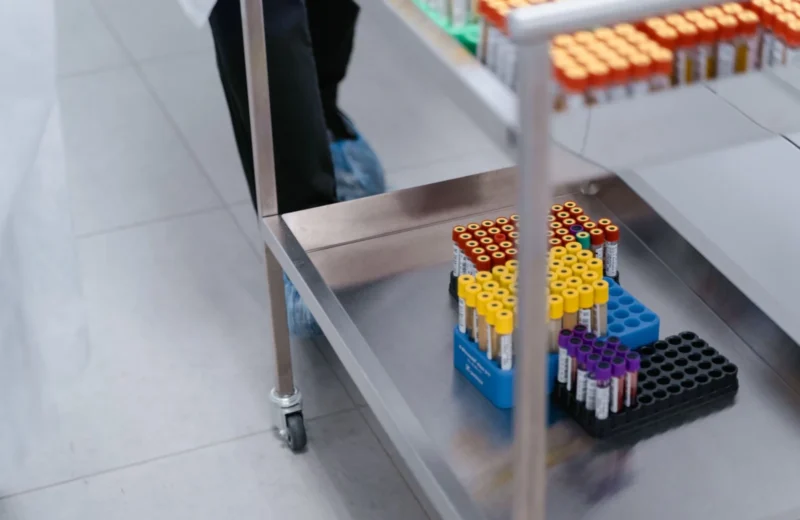
Dogs must be certified free of Brucella canis, Trypanosoma evansi, Babesia gibsoni, Dirofilaria immitis and Leishmania. Each disease has a named test method, and the microchip number has to appear on every laboratory report for the results to be accepted.
South Africa’s Dog Panel and Where Each Sample Goes
| Disease | Test method | Where the sample is processed |
|---|---|---|
| Brucella canis | Serum agglutination | Officially approved laboratory |
| Trypanosoma evansi (surra) | CATT and Giemsa blood smear, both required | Internationally recognised reference laboratory only |
| Babesia gibsoni | Immunofluorescence antibody test and Giemsa blood smear | Officially approved laboratory |
| Dirofilaria immitis | Microfilarial filtration | Officially approved laboratory |
| Leishmania | Indirect fluorescent antibody, ELISA, direct agglutination or immunoblot | Officially approved laboratory |
Source: compiled by My Pet Mover from published South African entry conditions and USDA APHIS guidance for dogs travelling to South Africa.
Four of the five are ordinary veterinary serology. The fifth is not, and it is the one that decides your timeline.
Why one blood sample leaves Malaysia before the dog does
Surra testing is only accepted from internationally recognised reference laboratories, and there are two of them. One is the Institute of Tropical Medicine in Antwerp, the other is at Obihiro University in Japan. Neither is in Malaysia, so the sample travels first.
This is the detail almost nobody writing for the Malaysian market flags, and it quietly decides whether a South African file lands on time.
Surra is endemic across much of tropical Asia, so South Africa will not accept a local result. The USDA’s export guidance names both laboratories and sets out the mechanics. Samples travel as diagnostic specimens, the receiving laboratory wants its tracking number in advance, and the parcel carries that laboratory’s own import permit on the outside.
For a Klang Valley owner that translates into three practical facts:
- The clock starts at the draw, not the result. Testing sits inside a short window before export, and courier time eats into it from day one.
- Courier failures are common. Samples get returned when the paperwork on the outside of the parcel is wrong, and a returned sample means a second blood draw.
- Laboratory closures matter. Reference laboratories publish year-end shutdown periods, and samples arriving then simply wait.
The reverse journey has the same shape, which we cover in our guide to South Africa to Malaysia pet import rules and cost.
Planning a dog move to Johannesburg or Cape Town?
The surra sample has to be couriered, tracked and confirmed before the certificate can be signed. Compare our international pet transport routes →
Every deadline, and what it is counted against
South Africa’s deadlines are measured against four different events: the vaccination, the export date, the departure date and the arrival date. Reading them all as “before the flight” is the single most common planning error on this route.
The South African File in Date Order
| Point in time | What must happen | Measured against |
|---|---|---|
| Any time before | Microchip implanted and recorded | The rabies vaccination that follows it |
| 30 days to 12 months before | Valid rabies vaccination in force | Date of import |
| About 4 weeks before | Permit application lodged with proof of payment | Intended date of introduction |
| Within 30 days of export | Dog blood panel drawn and reported | Export date |
| Within 10 days of departure | Health certificate completed in English and endorsed | Departure date |
| On arrival | Originals presented to the veterinary import control officer | Arrival date |
Source: compiled by My Pet Mover from South Africa’s published animal import procedure.
Read the last two rows together and the squeeze is obvious. The blood panel is measured against export, the certificate against departure, and on a long-haul routing those two dates are not always the same day.
The ten-day certificate window is the last thing to happen and the first thing owners plan around. That inversion is what costs flights.
Quarantine, ports and the state veterinarian
Where quarantine applies, the state veterinarian at the port of entry reserves the space and completes part of the permit application before the permit can be issued. South Africa lists state veterinary contacts at Johannesburg, Cape Town and Durban.
Quarantine here is not a fixed rule. It is a routing decision made during the application, which is why South Africa publishes separate forms for dogs subject to quarantine and dogs not subject to quarantine.
When quarantine does apply, the official sequence runs like this:
- Contact the state veterinarian at the port of entry. Johannesburg, Cape Town and Durban each have their own listed office.
- The state veterinarian reserves the accommodation and completes the relevant part of your application form.
- An indemnity declaration is attached to the application, obtained from the permit office.
- Only then is the permit issued, with the booking already inside it.
Owners used to Malaysian arrivals find this backwards. At home the quarantine slot is booked around the flight, as we explain in our walkthrough of how to book a KLAQS quarantine slot. Into South Africa, the booking is part of the permit.
The published animal health application forms carry a quiet signal too. There are several dog forms and a single form for domestic cats.
Which application route your pet takes
South Africa publishes four separate application routes covering cats, dogs without quarantine, dogs with quarantine, and dogs entering for recreational purposes. Choosing the wrong one delays the permit, because the form controls which extra approvals are gathered.
Four Application Routes, Four Different Files
| Application route | Who it is for | Extra steps it triggers |
|---|---|---|
| Domestic cats | Every pet cat, one published form | None beyond the standard permit file |
| Dogs not subject to quarantine | Dogs whose origin does not trigger a quarantine period | Full disease panel, no accommodation booking |
| Dogs subject to quarantine | Dogs routed into a post-arrival quarantine period | State veterinarian reservation plus indemnity declaration |
| Dogs for recreational purposes | Dogs entering for shows, trials and working events | Purpose-specific conditions on the permit |
Source: compiled by My Pet Mover from the published South African animal health import application forms.
A household moving one cat and one dog runs two applications on two routes, and the dog’s route sets the household timeline. Costing both together is the only way the budget makes sense, which is what our pet relocation pricing shows.
How South Africa sits against other export destinations
A Malaysia to South Africa pet export is permit-heavy and laboratory-heavy, with a short certificate window. It sits at the opposite end of the scale from South American destinations that ask for no permit at all.
Placed beside the routes Malaysian owners most often compare, the pattern is clear. Chile asks for no import permit and no laboratory work, but gives you a very short certificate life, as our guide to Malaysia to Chile pet relocation rules and timeline sets out.
Germany runs the opposite trade, where laboratory work is the gate and the permit is not, as described in our Malaysia to Germany pet relocation timeline. Gulf destinations sit between, with the permit doing most of the work, as in our guide to Muscat entry rules for pets leaving Malaysia.
South Africa asks for both at full strength, and island destinations often do the same. Our guide to Malaysia to Mauritius pet export island rules covers a comparable permit-plus-testing structure.
Conclusion: build the file backwards
Start with the permit application, let the certificate South Africa issues define the veterinary work, and treat the dog blood panel as the long pole. Handled in that order, a Malaysia to South Africa pet export is predictable rather than stressful.
Nothing on this route is exotic. A permit, a microchip, a rabies vaccination, five blood tests and a certificate in English is a list any competent practice can service.
What defeats owners is running the list forwards. Vaccinate, test, book the flight, then apply for the permit, and the file collapses because the certificate that arrives asks for something the earlier work did not cover. Run it backwards and every step lands inside its window first time.
Frequently Asked Questions
1. Does South Africa require a rabies titre test for pets from Malaysia?
A rabies antibody titre is not part of South Africa’s published disease panel for dogs, which covers Brucella canis, Trypanosoma evansi, Babesia gibsoni, Dirofilaria immitis and Leishmania. What South Africa does require is a valid rabies vaccination in force. The binding list is always the one printed on the veterinary health certificate issued with your import permit.
2. How long does a South African veterinary import permit take?
Applications are expected roughly four weeks before the intended date of introduction. Once the state veterinarian at the national office has approved the importation, processing the application and issuing the permit takes three to five working days. No application is processed at all until proof of payment of the permit fee has been received.
3. Will my dog be quarantined on arrival in South Africa?
It depends on how your application is routed. South Africa publishes separate forms for dogs subject to quarantine and dogs not subject to quarantine, and the answer is settled during the permit application rather than on arrival. Where quarantine applies, the state veterinarian at the port of entry reserves the accommodation before the permit is issued.
4. Can my cat and dog travel on the same import permit?
No. South Africa publishes a separate application form for domestic cats and separate forms for dogs, so a household moving both animals runs two applications. The two files also differ in substance, because the five-disease blood panel applies to dogs and not to cats. Budget and plan them as two parallel projects.
5. Which South African airports can my pet arrive at?
South Africa lists state veterinary offices for imported animals at Johannesburg, Cape Town and Durban, and these are the practical arrival points for pets from Malaysia. Your permit will confirm the port of entry. Where quarantine applies, the arrival airport is fixed by the accommodation reserved during the application.
Moving your pet from Malaysia to South Africa?
Send us your intended arrival date and we will map the permit application, the dog blood panel and the ten-day certificate window onto one calendar, with the courier legs for the reference laboratory built in.