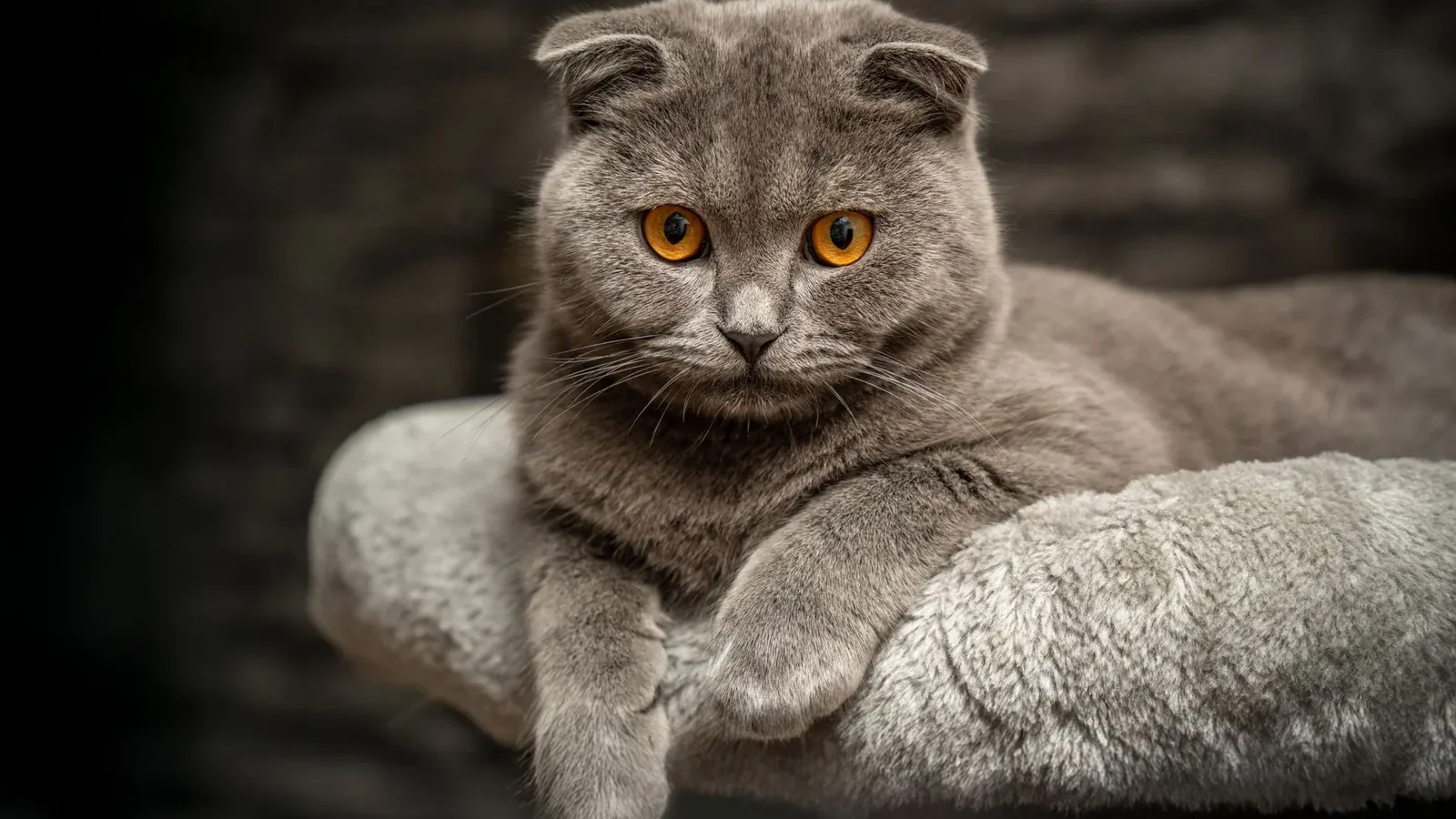
No airline lists the Scottish Fold as a restricted breed. What limits Scottish Fold travel is animal welfare law at the arrival end. Austria bans importing cats with folded ears, Flanders banned breeding and trade in 2021, and from 1 January 2026 the Netherlands bans keeping one at all unless you can prove the cat was chipped before that date. Check the destination before the flight.
Introduction: the limit is legal, not aeronautical
Owners expect the problem to sit with the airline. It does not. A small group of European countries treat folded ears as a harmful inherited trait and write that into law, and one of them changed its rules on 1 January 2026. The arrival country decides.
Nearly every Scottish Fold enquiry we receive opens with a question about the crate or the flight. That is the wrong end of the journey to worry about.
We move cats out of the Klang Valley every month at My Pet Mover, and in our files a fold-eared cat has never been refused by a carrier on breed grounds. It has been refused by a country. The paperwork that decides Scottish Fold travel is an animal welfare statute, not an airline tariff, and it is written thousands of kilometres from KLIA.
This guide sets out where those limits sit, how the map changed, what the Dutch rule asks an arriving owner to prove, which restrictions actually stop a relocation, and what the veterinary record says. Our overview of international pet transport routes from Malaysia shows how destination law shapes every corridor we run.
The walkthrough below starts with the airline question, because it clears fastest.
Is a Scottish Fold banned from flying?
No. Airline cat embargoes target flat-faced breeds, because a shortened airway makes heat regulation dangerous in a crate. A Scottish Fold has a normal muzzle and a normal airway, so it is accepted on breed grounds and judged on the same conditions as any other cat.
Airlines restrict breeds for one reason: a medical risk that travels with the animal into the hold. Folded ears create no airway problem, so they never entered the embargo lists.
- Breed lists are about breathing. Persian, Himalayan, Exotic Shorthair and Burmese appear because of hereditary respiratory risk, as our guide to flat-faced cats flying from Malaysia explains.
- Temperature rules still apply. Every cat leaving Kuala Lumpur is judged against the ground-temperature band at each station on the day, whatever its ears look like.
- Joint condition can matter. A cat with visible lameness may fail the fit-to-fly examination on welfare grounds, which is an individual assessment rather than a breed rule.
So the airline conversation ends quickly. The country conversation is where Scottish Fold travel gets complicated, and it is the one most owners have not had.
Not sure whether your destination restricts fold-eared cats?
Tell us the city and we will check the arrival rules before you commit to a date. See the destinations we move pets to →
Where does a Scottish Fold actually face limits?
Four European jurisdictions carry meaningful restrictions: the Netherlands, Austria, the Flemish region of Belgium and Germany. Only two of them reach an owner arriving with a cat. Everywhere else on our route map, a fold-eared cat enters on the ordinary rabies and microchip rules.
The restrictions on Scottish Fold travel are narrower than the internet suggests, but the two that bite are serious. Read the table by the last column.
Where Fold-Eared Cats Face Legal Limits, and What Each Rule Reaches
| Jurisdiction | What is restricted | In force | Effect on an arriving owner |
|---|---|---|---|
| Netherlands | Breeding, trade, keeping and showing | Keeping ban from 1 January 2026 | Entry only with written proof of a chip date before 1 January 2026 |
| Austria | Breeding, import, acquisition, transfer and exhibition | Under the federal animal protection act | Import is expressly prohibited and has been fined |
| Belgium (Flanders) | Breeding and trade of fold-eared breeds | 1 October 2021 | You cannot buy or sell one locally; keeping is not the target |
| Germany | Breeding, under the harmful-breeding provision | Provision since 1986; breed ruling in 2020 | Breeding and showing are the pressure points, not private keeping |
| United Kingdom | No breed-specific restriction on entry or ownership | — | Standard rabies, microchip and carrier rules only |
| Malaysia (export side) | No breed restriction on cats leaving the country | — | The export file is breed-neutral; the destination decides |
Sources: Netherlands Enterprise Agency (RVO) keeping ban guidance, Vienna Animal Welfare Ombudsman, FECAVA on the Flemish ban and the German Federal Veterinary Chamber’s record of the 2020 ruling, reviewed August 2026.
Germany is the row people misread. The breeding provision is old and the courts have applied it to this breed, but a family arriving in Frankfurt with a pet fold-eared cat is not the target, which is why our Malaysia to Germany pet relocation guide runs on the usual EU entry file. The United Kingdom is similar, and a fold-eared cat clears on the same terms set out in our guide to taking a cat from Malaysia to the UK.
How the map changed between 1986 and 2026
The direction of travel is one way. Rules began as breeding provisions aimed at breeders, moved to trade bans aimed at sellers, and have now reached keeping bans aimed at owners. The 2026 Dutch step is the first that touches someone simply moving house.
Reading the changes in sequence tells you what to expect next, which matters if your posting is a three-year one.
Four Decades of Fold-Ear Rules, and Who Each Step Reached
| Year | Development | Jurisdiction | Who it reached |
|---|---|---|---|
| 1986 | Harmful-breeding provision enters the animal protection act | Germany | Breeders |
| 2020 | An administrative court upholds a breeding ban on the breed | Germany (Bavaria) | Breeders |
| 2021 | Breeding and trade of fold-eared cats prohibited from 1 October | Belgium (Flanders) | Breeders and sellers |
| Before 2026 | Breeding fold-eared cats already prohibited, but buying abroad was not | Netherlands | Breeders |
| 2025 | Keeping and exhibition ban announced on 31 October, with a 1 January cut-off | Netherlands | Everyone, with notice |
| 2026 | Keeping ban in force from 1 January, enforced with administrative fines | Netherlands | Owners, including arrivals from abroad |
Sources: RVO, FECAVA and the German Federal Veterinary Chamber, compiled August 2026.
The pattern is worth planning around. If you expect to move again inside the same region, treat today’s breeding ban as a fair predictor of tomorrow’s ownership rule, and keep the documents that prove your cat’s age. Our route guides for pet owners leaving Malaysia are reviewed on the same assumption.
What the Dutch keeping ban asks you to prove
The Dutch rule is documentary rather than absolute. A fold-eared cat may still live in the Netherlands if the owner can show written evidence that it was born and microchipped before 1 January 2026, and the same test applies to cats brought in from abroad.
The Netherlands Enterprise Agency guidance is unusually direct about people arriving from other countries, and it applies to holidays as well as relocations. These are the points that decide a Malaysian move.
- Proof is a chip date, not a pedigree. A database registration certificate or a vet’s written record of when the microchip was implanted is what the transition arrangement accepts.
- The transition right is generous once earned. A qualifying cat may be kept for the rest of its life and may even be passed on to someone else.
- Showing is out regardless. The exhibition ban applies even to cats that qualify under the transition arrangement, with a separate penalty attached.
- Enforcement is real. Breaching the keeping ban carries an administrative fine of €1,500, and the exhibition ban €500, with inspections running since January 2026.
- Short transit is different. Transporters are exempt for movements of up to four working days, which is why a change of planes is not an arrival.
For a family posted to Amsterdam with an older fold-eared cat, Scottish Fold travel is usually solvable in an afternoon at the vet’s office. For a kitten bought in 2026, it is not solvable at all. The rest of the entry file is unchanged and set out in our guide to a pet move from Malaysia to the Netherlands.
Moving to a country with breed rules attached?
We build the document set around the arrival requirement, not the other way round. Compare our pet relocation pricing from Malaysia →
Which kind of restriction actually stops a relocation?
Five different restriction types get reported as a ban, and only two of them stop an owner arriving from Malaysia. Import bans and keeping bans reach you. Breeding bans, trade bans and exhibition bans mostly reach other people.
Most of the alarm around Scottish Fold travel comes from mixing these categories together. Sorted by who they touch, the picture calms down.
Five Restriction Types, Sorted by Who They Stop
| Restriction type | Stops a breeder | Stops a local buyer | Stops an owner arriving from Malaysia | Typically found in |
|---|---|---|---|---|
| Breeding ban | Yes | Indirectly | No | Germany, Netherlands, Flanders |
| Trade ban | Yes | Yes | No | Flanders, Netherlands |
| Import ban | Yes | Yes | Yes | Austria |
| Keeping ban | Yes | Yes | Yes, unless the transition proof exists | Netherlands |
| Exhibition ban | Indirectly | No | Only if you show cats | Netherlands, Austria |
Sources: classification by My Pet Mover from the RVO guidance, the Vienna Animal Welfare Ombudsman and FECAVA, August 2026.
Welfare law is not the only kind of destination rule that catches a cat. Housing regulations do it too, as owners discover when they read the HDB cat rules that apply when moving a cat to Singapore. Both belong on the same checklist.
Why the law follows the ear, not the diagnosis
Clinic records show far fewer diagnosed cases than the genetics predict. Regulators legislate the visible trait anyway, because the variant behind folded ears is inherited dominantly and affects cartilage throughout the body whether or not a vet has written the diagnosis down.
A large Australian records study is the useful counterweight to the alarming headlines, and it also explains why lawmakers ignore the low numbers.
Osteochondrodysplasia in Clinic Records: 1,131 Australian Scottish Folds
| Record status | Share of the 1,131 cats |
|---|---|
| No related entry in the record |
93.3% (1,055 cats) |
| Suspected osteochondrodysplasia |
5.7% (64 cats) |
| Clinically diagnosed |
1.1% (12 cats) |
Source: An estimation of osteochondrodysplasia prevalence in Australian Scottish Fold cats, BMC Veterinary Research, 2023, drawn from clinic records collected between 1992 and 2018.
Two readings sit side by side, and both are honest. Diagnoses in general practice are uncommon, and most diagnosed cats were identified before 30 months of age. At the same time, the Vienna Animal Welfare Ombudsman notes the variant is inherited dominantly, so one fold-eared parent is enough to pass it on and cross-bred kittens are not exempt.
That gap is why the statutes are drafted around the ear rather than a diagnosis. It is also why the Dutch rule swept in hairless breeds on parallel reasoning, which we cover in our piece on Sphynx cats flying and the temperature rules that apply.
Already holding a flight date you are unsure about?
Send us the destination and your cat’s chip record, and we will tell you what the arrival country will accept. Review the cat export steps from Malaysia →
What to check before you book the flight
Five checks, in order, and the first one is free. Confirm the destination’s position on fold-eared cats, secure dated proof of the microchip, get a written joint assessment, build the standard export file, then choose a departure hour that clears the temperature rule.
Run them in sequence. Each one either clears the move or stops it before you have spent money.
- Check the destination’s welfare law first. Look for the words import, keeping and exhibition, not just breeding, because the category decides whether the rule reaches you at all.
- Get the microchip date in writing. Ask your vet or the registry for a document showing when the chip was implanted, and keep the original alongside the passport.
- Ask for a joint and mobility note. A short written assessment of gait, tail flexibility and any lameness protects the fit-to-fly examination from becoming a surprise.
- Build the ordinary export file. Rabies vaccination, microchip, import permit and health certificate follow the usual sequence set out in our guide to cat export from Malaysia and the vet steps involved.
- Book around the temperature, not the calendar. Kuala Lumpur’s afternoon heat closes the acceptance window most days, so the departure hour matters more than the month on every corridor in our international pet transport route guides.
Conclusion
Most destinations accept a fold-eared cat without comment. Austria does not accept the import, and the Netherlands accepts it only against a chip date before 1 January 2026. Everywhere else, plan the move like any other cat move.
The honest summary is that Scottish Fold travel is unrestricted in most of the world and firmly restricted in a small, growing corner of Europe. That corner has been expanding in one direction for four decades, so the sensible response is to check early and keep your paperwork rather than to assume either the best or the worst.
If the destination is still open, start from the corridor rather than the cat. Our summary of the pet transport routes we run out of Malaysia shows which arrival countries set conditions and which simply ask for the standard file.
Frequently asked questions
1. Is the Scottish Fold banned by any airline?
No. Airline cat embargoes list flat-faced breeds because of hereditary breathing risk. A fold-eared cat has a normal airway and is accepted on breed grounds, then judged on the ground temperatures recorded at each station on the day.
2. Can I take my Scottish Fold to the Netherlands in 2026?
Only with written proof that the cat was born and microchipped before 1 January 2026. The keeping ban applies to cats brought in from abroad and to temporary stays, and a qualifying cat may then be kept for the rest of its life.
3. Which countries ban importing a fold-eared cat?
Austria is the clearest case. Its animal protection act prohibits importing, acquiring, transferring or exhibiting animals with harmful breeding traits, and fines have been issued for offering these cats for sale.
4. Does the Flemish ban stop me moving to Belgium with my cat?
The Flemish measure that took effect on 1 October 2021 prohibits breeding and trading fold-eared cats. It is written around breeders and sellers rather than owners, so it does not work like the Dutch keeping ban.
5. Do all Scottish Folds have joint disease?
The variant behind the folded ear is inherited dominantly and affects cartilage throughout the body, so every fold-eared cat carries it. How early and how severely it shows varies between cats.
6. Will a vet certificate get my cat past a breed rule?
No. These rules are written around the visible trait, not the individual animal, so a clean health assessment creates no exemption. A vet letter helps with fitness to fly, which is a separate question.
Moving overseas with a Scottish Fold?
We check the arrival country’s breed position before anything is booked, assemble the chip and vaccination evidence it asks for, handle the DVS paperwork and manage the KLIA cargo handover from our Klang Valley base.