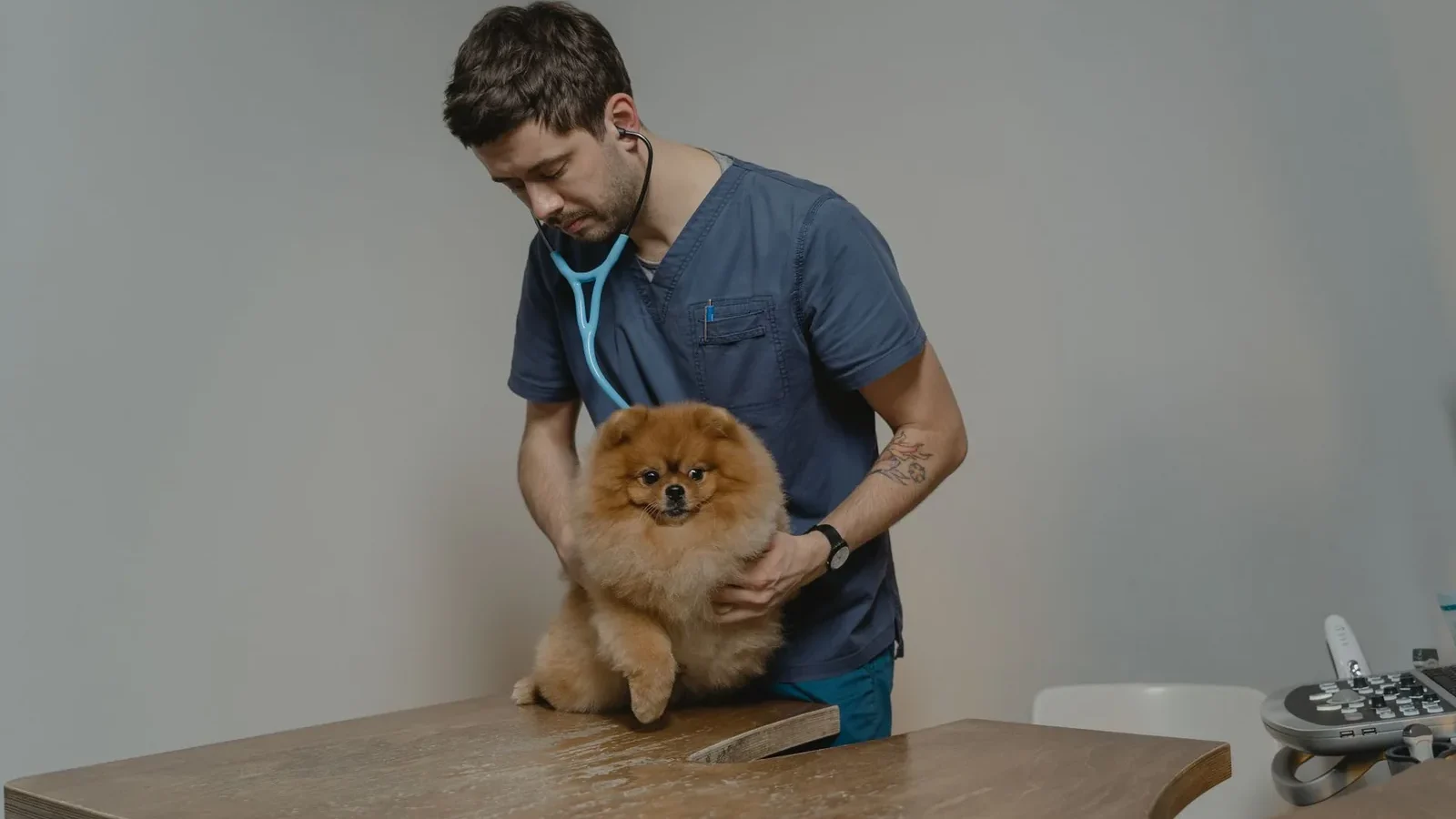
The veterinary health certificate Malaysia requires for a pet is not a note from your own vet. It is a certificate issued by a competent veterinary officer of the exporting country's government veterinary authority, and it carries statements about that country as well as about the animal. Export must happen within seven days of the date it was issued.
Introduction: the one document nobody can prepare early
Every other document in a Malaysian pet import file can be finished weeks ahead. The health certificate cannot. It has a seven-day life, it needs a government signature that a clinic cannot supply on its own, and it is created last precisely because it expires first.
Owners tend to treat the health certificate as the easy one. Book the vet, get the form signed, done. Then it comes back signed by the clinic alone, or dated nine days before the flight. Neither can be fixed without booking the appointment again, and by that point the crate is usually already on a flight.
This guide covers what the certificate has to say, who is legally in a position to say it, how the seven-day window behaves in practice, and where certificates fail. It reflects the files we prepare at My Pet Mover and the published conditions behind every pet relocation into Malaysia. The video below is a veterinary authority’s own explanation of how these certificates are meant to be completed.
What a veterinary health certificate for Malaysia entry must certify
Malaysia’s import conditions list the exact statements the certificate must carry. Some are about your animal — its examination, its rabies vaccination, its core vaccines. Others are about the exporting country itself, including a declaration that no rabies has been reported there in the six months before the certificate date.
That second group is the part almost nobody expects, and it is the reason the certificate cannot simply come from the clinic down the road. Read the table below by the middle column rather than the left one.
What the certificate states, and who holds the evidence
| Statement required | Level of fact | Who holds the evidence |
|---|---|---|
| Examined and found healthy, with no clinical sign of infectious or contagious disease | The animal | The examining veterinarian |
| No case of rabies reported in that country in the preceding six months | The country | The national veterinary authority only |
| The animal was not itself imported into that country in the preceding six months | Movement history | The owner, verified by the authority |
| Vaccinated against rabies with an approved vaccine before export | The animal | The vaccinating veterinarian |
| Other core vaccines given within twelve months before export | The animal | The vaccinating veterinarian |
| Vaccination history, treatments given and health status are up to date | The record | The treating clinic |
| Examined within seven days before export, with no clinical signs on shipment day | The animal, time-bound | The examining veterinarian |
Compiled from the Department of Veterinary Services regulations for the importation of dogs and cats from non-scheduled countries and scheduled countries, read August 2026.
Rows two and three cannot be signed by a clinic in good faith. No private practice has visibility of national rabies surveillance, and none can verify that an animal was not brought into the country nine weeks ago. This is a document about a jurisdiction that happens to name your pet. The vaccination lines behind it are covered in our note on rabies vaccination rules for pets entering Malaysia. Where the certificate sits in the wider file is set out in our guide to the documents your pet needs for Malaysia.
Not sure your vet has the right form?
Send us the blank certificate before the appointment and we will mark the clauses that must be completed for Malaysia. See how our Malaysia import service works →
The government vet certificate pet owners cannot arrange themselves
Malaysia’s conditions ask for a certificate issued by a competent veterinary officer of the exporting country’s government veterinary authority. In most countries that means a two-stage process: an accredited private vet completes and signs the form, then the national authority reviews and endorses it.
The wording matters. It does not say “a licensed vet” and it does not say “your vet”. It names the government veterinary authority of the country you are leaving. Practically, almost no country sends a state officer to examine a family pet, so they operate an accreditation system instead.
- The accredited veterinarian performs the examination. They are a private vet who has been authorised by the national authority to complete export certificates, and they carry personal responsibility for what they sign.
- The national authority endorses the certificate. In the United States this is APHIS Veterinary Services acting as the competent authority, which reviews the certificate and supporting documents before it becomes valid for export.
- The endorsement route may be digital or ink. Some destinations accept electronic endorsement through systems such as the Veterinary Export Health Certification System; others still require the original signed paper to travel with the animal.
The endorsed health certificate pet owners must actually carry
A signed certificate and an endorsed certificate are not the same object. The signature says a vet examined the animal. The endorsement says the government stands behind the country-level statements on the page. Only the second one satisfies Malaysia’s conditions, and only the second one is worth putting in the travel wallet.
Names on the certificate should also match the permit exactly. If the importer named on your MAQIS import permit is spelled differently from the consignee on the certificate, expect a query. The same discipline applies in reverse when we handle pet exports out of Malaysia, where our Department of Veterinary Services plays the endorsing role.
Pet health certificate validity: how long seven days really lasts
Export must take place within seven days of the certificate’s issue date. Those seven days have to absorb the endorsement, any courier leg and the flight itself. That makes the certificate the shortest-lived item in the entire file, by a wide margin.
Set against the other clocks in a Malaysian import file, the difference is not marginal. The chart below shows each window in days.
Validity window by file element, in days
| File element | Window length | Days |
|---|---|---|
| Core vaccination cover before export | 365 | |
| Country rabies-free statement | 180 | |
| Not-previously-imported statement | 180 | |
| Veterinary health certificate | 7 |
Compiled from the Department of Veterinary Services import regulations for dogs and cats, read August 2026.
A seven-day window is not seven working days. Issue the certificate on a Thursday and a public holiday lands on the Monday, and the endorsement office may only see it on day five. Two practical rules follow from that. Never book the pre-export examination before the flight is ticketed, and never treat day seven as a usable departure date — day five or six is the honest target.
The permit sitting alongside it runs on a different and longer clock, which we cover in our note on how long a MAQIS import permit lasts. The two windows have to overlap on the travel date, and only one of them can be moved cheaply.
Working to a fixed flight date?
Give us the departure date and we will build the certificate timeline backwards from it, endorsement included. Ask us to map your dates →
Two versions of the same certificate, depending on where you fly from
Malaysia publishes two sets of import conditions, and the certificate clauses differ between them. The version for higher-risk origins adds explicit rabies wording to the health examination and allows transport other than direct aircraft. Most other clauses are identical.
Owners often download whichever regulation they find first, hand it to their vet, and end up with wording that does not match their route. The comparison below shows exactly where the two diverge.
Certificate clauses by origin category
| Clause | Scheduled list | Non-scheduled list |
|---|---|---|
| Country rabies-free for six months | Required | Required |
| Animal not imported in the previous six months | Required | Required |
| Rabies vaccination with an approved vaccine | Required | Required |
| Health examination at the time of certification | Not listed as a separate clause | Required, naming rabies explicitly |
| Examination within seven days of export | Infectious and contagious disease | Infectious, contagious and rabies |
| Accepted mode of transport | Direct by aircraft | Aircraft or other direct transport |
| Quarantine clause inside the same regulation | Not stated | Stated |
Compiled from the two Department of Veterinary Services regulations for scheduled and non-scheduled origins, read August 2026.
The last row is the one owners feel. Which list your origin sits on drives what happens after landing, and that is covered on our KLIA animal quarantine page and in our note on scheduled and non-scheduled origins. The transport row matters for road arrivals in particular, which we cover in our guide to driving a dog to Singapore across the Causeway.
Where certificates actually fail
Certificates rarely fail because a pet is unwell. They fail on dates, on signatures and on numbers that do not match the rest of the file. Nearly half the queries we raise on certificates come down to timing or a missing endorsement.
The pattern below comes from certificate queries on files we have handled, as a share of all certificate queries.
Certificate queries by share of all queries
| Cause of query | Share of all certificate queries | Share | Fixable before flight |
|---|---|---|---|
| Examination date outside the seven-day window | 26% | Only by re-examining | |
| Signed by a private vet, never endorsed | 21% | Yes, if time remains | |
| Microchip number differs from the vaccination record | 18% | Yes | |
| Rabies vaccine product, batch or date incomplete | 15% | Yes | |
| Country rabies-free statement omitted or reworded | 12% | Yes, at endorsement | |
| Consignee details not matching the permit | 8% | Yes |
My Pet Mover file data, international pet relocations, 2024 to 2026.
Read the right-hand column rather than the percentages. Five of the six causes are recoverable if they are spotted at document review. The first one is not. The only remedy is another examination inside a window that has already closed, which in practice means a new flight. Chip mismatches are the easiest of the six to prevent, and our note on microchip rules for pets entering Malaysia explains why the number should be scanned rather than copied.
Want the certificate checked before it is endorsed?
Send us a scan the moment your vet signs it and we will read it clause by clause against the current conditions. See what document handling costs →
How to sequence the certificate against your flight
Work backwards from a ticketed flight. Confirm the permit and any quarantine booking first, then place the pre-export examination so the endorsement can be completed with a day of slack before departure.
How to time a veterinary health certificate for a Malaysian arrival
These six steps are the order we use on every inbound file, and the reason the certificate always appears last.
- Ticket the flight first. Nothing about the certificate can be scheduled against a provisional date, because the window is measured from issue to export.
- Confirm the permit is in hand. The import permit and, where it applies, the quarantine booking must already exist before the examination is worth booking.
- Book the examination inside the window. Aim for four to five days before departure so the endorsement has room, rather than the theoretical seventh day.
- Have the vet complete every clause. The health line alone is not the certificate — the country statements, the vaccination detail and the microchip number all have to be filled in.
- Send it for government endorsement immediately. Same day where the system allows it, and confirm whether your destination needs digital or original ink.
- Check the endorsed certificate against the permit. Read the chip number, the owner’s name and every date aloud against the other documents before the crate leaves.
Step two is where most timelines slip. Owners book the vet early because it feels productive, then discover the permit is still pending and the certificate has expired by the time it clears.
Conclusion: a government statement, not a vet’s note
Treat the certificate as a document the exporting government issues about its own territory, with your pet named on it. That framing gets the sequencing, the signatures and the seven-day window right in one move.
Read that way, everything else follows. It has to be endorsed because a clinic cannot speak for a country. It expires quickly because a health examination goes stale. It comes last because it is measured against the departure date and nothing else. Owners who see it as a form to collect are the ones who end up rebooking a flight.
Frequently Asked Questions
1. Can my own vet issue the veterinary health certificate for Malaysia?
Only if they are accredited by the national veterinary authority to issue export certificates, and even then the certificate normally goes on to that authority for endorsement. Malaysia’s conditions name a competent veterinary officer of the exporting country’s government veterinary authority, so a clinic signature on its own does not satisfy them.
2. How long is the certificate valid before we fly?
Export must take place within seven days of the date the certificate was issued. That window has to cover the endorsement and any courier movement as well as the flight itself, so plan for departure on day five or six rather than day seven.
3. What does endorsement actually add to the certificate?
The examining vet attests to the animal. The endorsement is the government confirming the country-level statements — that no rabies has been reported there in six months, and that the animal was not imported into it recently. Those are facts no private practice can verify, which is why the second signature exists.
4. Is a pet passport the same thing?
No. Malaysia’s conditions ask separately for a pet passport or certificate carrying a full description and identification of the animal, alongside the veterinary health certificate. The passport identifies the animal; the health certificate certifies its condition and its country of origin within a fixed window.
5. What happens if the flight is delayed past day seven?
The certificate lapses and the animal cannot travel on it. The remedy is a fresh examination and a fresh endorsement, which means the whole sequence restarts. This is the single most expensive failure in the file, and it is the reason we never book a pre-export examination against an unticketed flight.
Ready to get your pet’s paperwork right the first time?
Tell us the origin country, the breed and your target travel month. We will send back a written quote and a dated document plan covering the permit, the endorsement and the certificate window.