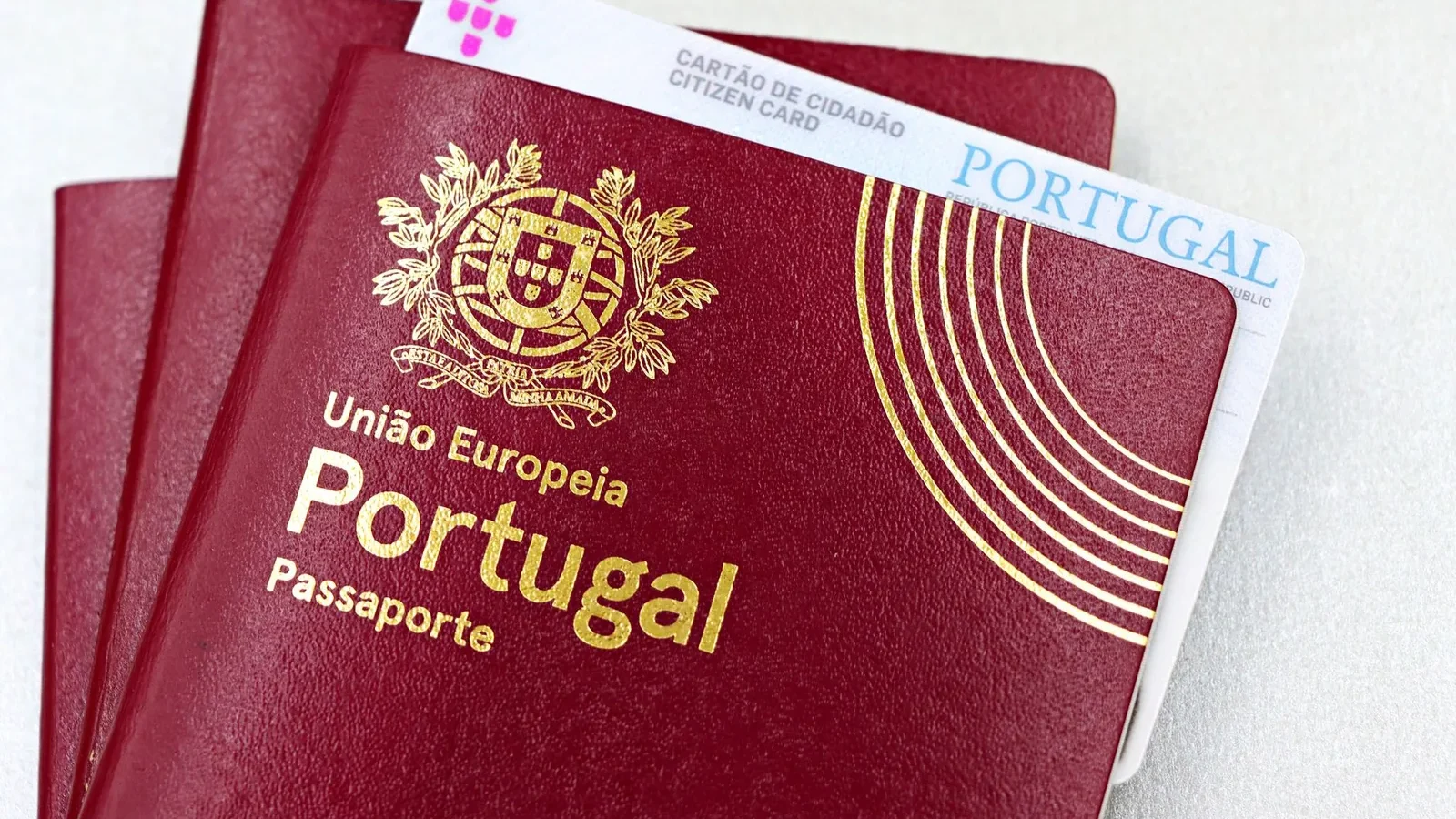
The Malaysia to EU pet export requirements are lighter than most owners expect. Malaysia sits on the EU's listed-country annex, so no rabies blood test and no three-month wait apply. What does apply is a dated certificate, a fixed arrival airport, and national breed rules that sit outside the EU file entirely.
Introduction: the corridor Malaysians over-prepare for
Owners moving to Europe usually brace for the hardest version of the rules, because that is what the internet describes. Most of those pages are written for origins Europe treats as high risk. Malaysia is not one of them, and the difference is months.
Ask ten Malaysians what it takes to fly a dog to Amsterdam and nine will mention a rabies titre test and a long wait afterwards. They are describing a real rule. It just is not the rule that applies to them. Europe splits the world into two groups, and where your pet departs from decides which set of steps you inherit.
That single classification is the most valuable thing to understand before you spend a cent. My Pet Mover handles Europe as part of our international pet transport routes, and the recurring problem is not difficulty. It is owners preparing for the wrong country’s rules. Here is a plain walkthrough of the documents involved.
Malaysia to EU pet export requirements: what travels with the animal
Four things move with the pet: a readable microchip, a valid rabies vaccination given after that microchip, an EU animal health certificate signed and endorsed in Malaysia, and a written declaration that the move is not a sale. No blood test is on that list.
Since 22 April 2026 the framework is Commission Delegated Regulation (EU) 2026/131, which replaced the older pet travel rules. The requirements themselves are recognisable if you have moved a pet before, and they are far shorter than the list for a country like Australia. Owners who read our guide to Brucella canis testing for Australia will notice how much is simply absent here.
- Microchip first, always. The chip must meet the EU’s technical standard and be readable at the border. A tattoo only counts if it was applied before 3 July 2011.
- Rabies vaccination after the chip. The animal must be at least 12 weeks old on the day it is vaccinated, and the vaccination date cannot fall before the microchip date.
- A 21-day wait. Validity begins 21 days after the primary vaccination course is completed. Boosters given inside a valid period do not restart that clock.
- Certificate and declaration. Both are issued close to departure and travel in the owner’s hand, not in the crate.
Cats and ferrets follow the same four-part file as dogs. The only species split appears later, in the tapeworm rule, which applies to dogs alone.
Not sure whether your pet’s dates line up?
Send us the vaccination card and we will read the sequence against the EU rule before you book a flight. See how our export service works →
Why Malaysia’s listed status changes the whole timeline
Malaysia appears on Annex II of the EU’s country list, alongside Singapore, Japan and Australia. Pets leaving a listed origin skip the rabies antibody test and the 90-day wait attached to it. An unlisted origin carries both.
The current list published by the Czech State Veterinary Administration shows MY sitting in Annex II of Implementing Regulation (EU) 2026/636. Germany’s federal agriculture ministry publishes the same listed-country roll in plainer language. Read side by side, the gap between a listed and an unlisted origin is stark.
Malaysia vs Unlisted Origin, EU Entry
| Requirement | Malaysia (Annex II) | Unlisted origin |
|---|---|---|
| Microchip | Required | Required |
| Rabies vaccination | Required, 21-day wait | Required, 21-day wait |
| Rabies antibody test | Not required | Required, EU-designated lab |
| Wait after blood sample | None | 90 days before certificate |
| Animal health certificate | Required | Required |
| Designated arrival airport | Required | Required |
Source: compiled from EU Regulations 2026/131 and 2026/636, 2026. Licence.
The contrast is worth holding onto, because Malaysia’s status cuts both ways. Pets arriving into Malaysia are sorted by a similar logic, which we unpack in our explainer on scheduled and non-scheduled countries.
The EU pet passport Malaysia owners cannot get
An EU pet passport is issued inside the EU and in a short list of neighbouring territories. No Malaysian vet can issue one. A pet leaving Kuala Lumpur travels on an animal health certificate instead, and only receives a passport after it arrives.
This trips up more owners than any other point on the route. The blue booklet is famous, so people ask their vet in Bangsar or Mont Kiara for one and are told no. The vet is right. The passport route is reserved for pets moving from countries such as Switzerland, Norway, Iceland and Monaco, and for pets already living inside the EU.
What owners actually want from a passport is its convenience: one lifetime document, no expiry pressure, no border appointment. You get that eventually, just on the other side.
- Fly on the certificate. Your pet enters on the EU animal health certificate issued in Malaysia.
- Register locally. Once you have a residential address in the destination country, book a local vet.
- Convert to a passport. An authorised vet in the EU can then issue the passport, using the same microchip and rabies record.
After that, travel between member states works the way European owners describe it. The friction is a one-time cost at the start of the move, not a permanent condition. Owners heading to the United Kingdom face a separate set of rules altogether, covered on our Malaysia to UK pet transport page.
Europe pet import certificate: issuer, window and shelf life
The Europe pet import certificate is completed by an official or authorised veterinarian and endorsed by the competent authority in Malaysia. It is valid for ten days from issue to the border check, then six months for onward travel inside the EU.
Ten days sounds generous until you map it against a real week. It cannot be signed months ahead as a precaution, and it cannot be signed the night before departure without endorsement. That window has to be booked, not hoped for.
Two dates matter more than the rest:
- Issue to border check: ten days. Sea journeys get an extension matching the voyage length, which rarely helps a Malaysian owner flying out of KLIA.
- Border check onward: six months. After the entry check, the certificate covers further movement between member states until it expires or the rabies vaccination lapses, whichever comes first.
There is also a live transition to watch. Certificates drawn up under the previous model remain acceptable only if they were issued before 1 October 2026, after which the new model in Implementing Regulation (EU) 2026/705 is the only one accepted. If your move straddles that date, the certificate has to be issued on the correct form, not the one your vet used last year. The certificate logic mirrors what Malaysia demands of incoming animals, described in our piece on the veterinary health certificate for entry to Malaysia.
How the dated chain runs, week by week
A pet already microchipped and vaccinated needs roughly four weeks. A pet starting from nothing needs about eight. The binding gaps are the 21-day vaccination wait and the ten-day certificate window at the end.
EU Preparation Chain, Week by Week
| Step | Wk 8 | Wk 6 | Wk 4 | Wk 2 | Departure |
|---|---|---|---|---|---|
| Microchip | — | — | — | — | |
| Rabies vaccination | — | — | — | — | |
| 21-day wait | — | — | — | ||
| Flight and crate booking | — | — | — | — | |
| Certificate and endorsement | — | — | — | ||
| Tapeworm dose (if needed) | — | — | — | — |
Source: compiled from EU Regulations 2026/131 and 2026/705, 2026. Licence.
Read the last column carefully. Two separate things happen in the final days, and both are veterinary appointments. Missing either one is what turns an easy corridor into a rebooked flight. Compare that with the long titre wait Japan imposes and the scale of Europe’s advantage is obvious.
Why your arrival airport is not your choice
A pet arriving from Malaysia must enter through a designated travellers’ point of entry, and the owner must contact the authority there for the document and identity check. Convenient connections through undesignated airports are not permitted.
Each member state publishes its own list of these entry points, and it is shorter than the country’s airport list. A route that looks sensible on a booking site can be illegal for the animal, which is why the flight and the entry point are chosen together rather than in sequence.
At the counter the officer does three things: reads the microchip, compares it against the certificate, and checks that the travel conditions have been met. Germany’s agriculture ministry describes the same three checks. If the chip cannot be read or a date does not match, further measures follow, and they are decided there and then.
Owners connecting through a third country before Europe should also confirm the transit rules for that stop, a problem we cover in our full guide to moving a pet from Malaysia to Dubai, since Gulf hubs are the common connection point on this corridor.
Already have a European city in mind?
Tell us the destination and we will confirm which airports accept your pet before anything is booked. See what a European move costs →
The national rules the EU file does not cover
Clearing the EU rules does not clear the destination country. Four states require a tapeworm dose for dogs, several restrict breeds, and a handful of others add local registration duties once the pet arrives.
Add-On Rules Beyond the EU File
| Rule | Where it applies | Timing |
|---|---|---|
| Tapeworm treatment (dogs) | Finland, Ireland, Malta, Norway, Northern Ireland | 24 to 120 hours before entry |
| Federal breed import ban | Germany | Enforced at the border |
| Regional breed restrictions | Individual German states and several other members | Before and after arrival |
| Five-animal limit | Whole EU | Per vehicle, at entry |
| Owner accompaniment window | Whole EU | Within five days of the pet |
Source: compiled from EU Regulations 2026/131 and 2026/133, 2026. Licence.
The five-animal limit surprises breeders and large households. Cross that line and the move stops being a family relocation in law and becomes a commercial import, with a different and much heavier set of conditions. Every destination on our international pet transport routes carries add-ons of this kind.
Malaysia to Germany pet export: the breed rule that outranks the file
A Malaysia to Germany pet export can fail on breed alone. German federal law bans the import of Pit Bull Terriers, American Staffordshire Terriers, Staffordshire Bull Terriers, Bull Terriers and their crosses, no matter how complete the EU paperwork is.
Germany is a common destination for Malaysian professional moves, and it is the one where a perfect file can still be refused. German Customs sets out the ban under the Dog Transfer and Import Restrictions Act, which has been in force since 2001 and is enforced at the point of entry.
Two details make this harder than a simple breed list:
- Crosses count. The ban covers crossbreeding between the four named breeds and crosses with other breeds, so a mixed dog with visible bull-terrier type can be assessed at the border.
- States add their own. Beyond the federal four, a dog cannot be imported if the rules of the German state where it will live presume that breed to be dangerous.
Narrow exceptions exist for dogs returning to a household that already holds an authorisation, for assistance and rescue dogs, and for short visits. None of them are a route a relocating family should plan around. Breed screening on our side of the move is the same discipline we apply to inbound animals in our guide to dog breeds banned or restricted in Malaysia.
How long the move takes from where you are now
Lead time depends entirely on your pet’s existing record. A chipped, currently vaccinated adult dog can be Europe-ready in about three weeks. A puppy too young to vaccinate is the longest case, and age drives that wait.
Weeks to Ready by Starting Point (Modelled)
| Starting point | Relative wait | Weeks | Binding step |
|---|---|---|---|
| Chipped, vaccination current | ~3 | Certificate window | |
| Chipped, vaccination lapsed | ~6 | 21-day wait | |
| No chip, vaccinated already | ~8 | Revaccination after chip | |
| Nothing done yet, adult pet | ~8 | Chip then vaccinate | |
| Puppy under 12 weeks | Age-driven | Minimum vaccination age |
Modelled from EU timing rules, 2026. Licence.
Notice the third row. A pet vaccinated before it was chipped has to be vaccinated again, because the EU reads the chip date as the start of the record, the same ordering logic we set out in our guide to microchip rules for pets. That is the most expensive avoidable mistake on this corridor.
Conclusion: an easy route with a short fuse
Europe is one of the kindest corridors out of Malaysia, and one of the least forgiving in its final fortnight. The blood test is gone, the timeline is short, and everything now rests on sequence and a ten-day certificate.
Owners who start with the right column, confirm the breed rules for their destination state, and book the certificate appointment before the flight almost never have trouble. Owners who copy an American or Middle Eastern checklist usually lose either months or money. Neighbouring corridors run on very different logic, as our guides to South Korea’s arrival-only checks and the Thailand relocation route show, and even a short hop can carry its own paperwork, as we explain in our answer on driving a dog to Singapore.
Moving to Europe this year?
Send us your pet’s breed, age and destination city. We will check the breed rules, map the certificate window against your departure date, and quote the move door to door.
Frequently Asked Questions
1. Does my pet need a rabies blood test to enter the EU from Malaysia?
No. Malaysia is on the EU’s listed-country annex, so the rabies antibody titration test and the 90-day wait attached to it do not apply. Your pet still needs a microchip, a valid rabies vaccination given after the chip, and the 21-day wait before the vaccination counts as valid.
2. Can a Malaysian vet issue an EU pet passport?
No. The passport is only issued inside the EU and in a small group of neighbouring territories such as Switzerland and Norway. A pet flying out of Malaysia travels on an EU animal health certificate, then converts to a passport at a local vet once it has arrived and you have a residential address.
3. How long is the EU animal health certificate valid?
Ten days from the date it is issued until the check at the entry point, extended for the length of any sea crossing. After that check it stays valid for six months of onward travel between member states, or until the rabies vaccination expires, whichever comes first.
4. Which European countries need a tapeworm treatment for dogs?
Finland, Ireland, Malta, Northern Ireland and Norway. A vet must administer an approved praziquantel product between 24 and 120 hours before the scheduled entry and record it on the certificate. The rule applies to dogs only, not to cats or ferrets.
5. How many pets can I bring with me?
Five at most in a single vehicle for a family move. Above that number the movement is treated as commercial and a much heavier set of import conditions applies, unless every animal is over six months old and registered for a competition or exhibition with written proof.