Yes, and the Taiwan pet transit permit most guides warn you about does not exist for dogs and cats. Taiwan's own quarantine authority names dogs, cats and rabbits as exempt when they pass through without entering. What decides your route instead is the airline's live-animal acceptance and your destination's transhipment rules. The same generosity does not run in reverse: a pet that has been in Malaysia is a different matter entirely when Taiwan is the destination.
Introduction: a permit that keeps getting invented
Search for a Taiwan pet transit permit and you will find several relocation blogs listing Taiwan alongside Hong Kong and Singapore as a hub that requires one. Taiwan’s Animal and Plant Health Inspection Agency says the opposite in writing. Dogs, cats and rabbits passing through are named as exempt.
The question comes up because Taoyuan is a genuinely useful connection out of Kuala Lumpur. It sits on the way to Japan, Korea, the west coast of North America and a long list of secondary Asian cities, with flights frequent enough for a same-day connection.
Then the owner reads a widely-copied line saying Taiwan requires a transit permit for pets in the hold, panics about the lead time, and books a longer, more expensive routing instead.
This piece separates the three questions hiding inside one word. It sits within our Malaysia to Taiwan pet transport guidance at My Pet Mover.
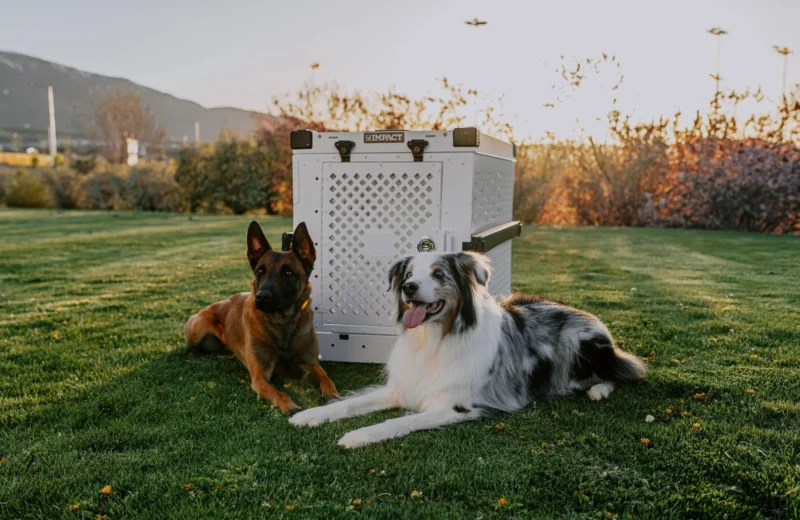
It helps to see what a transit hold actually looks like before working through the paperwork.
Transit, transhipment and entry are three different things
Transit means the aircraft lands and your pet never leaves it. Transhipment means your pet is unloaded and moved to a second aircraft. Entry means your pet is cleared into the country. Almost every authority writes different rules for each, and almost every blog collapses them into one.
The word owners use is “layover”. The word the rulebooks use depends on what physically happens to the crate.
- Transit. The aircraft touches down, refuels or swaps passengers, and your pet stays in the hold. Nothing is unloaded. This is rare on a KL departure because Taoyuan is almost always a change of aircraft, not a technical stop.
- Transhipment. Your pet is unloaded, taken to an airside animal holding area, and loaded onto a second aircraft hours later. This is what actually happens on a KUL–TPE–onward booking, even when both legs carry the same airline code.
- Entry. Your pet is cleared through the destination’s quarantine and customs process and released to an address. This is the only case where an import permit is involved.
Owners who assume they are “just transiting” are usually transhipping, which is the stricter category almost everywhere. Our guide to pet flight layovers, transit rules and permits works through the general version.
Does Taiwan issue a pet transit permit at all?
Not for your pet. Taiwan’s Animal and Plant Health Inspection Agency publishes a transit quarantine process under Article 34-3 of the Statute for Prevention and Control of Infectious Animal Disease. It then states plainly that transiting dogs, cats and rabbits do not need to apply for a transit permit.
The page is easy to miss because it lives on the Taoyuan branch site rather than the main import section. It is worth reading in the original.
APHIA’s animal transit quarantine page for Taoyuan sets out who applies, how, and for which animals. The applicant is the overseas exporter, the freight forwarder or the airline, never the pet owner. Then comes the line that settles this article:
“Transiting of dogs, cats and rabbits through Taiwan (without entering Taiwan) does not need to apply for transit permit.”
That answers the headline question. The relocation guides that list Taiwan as a transit-permit hub are describing a rule written for other animals. Note the bracket, though: the exemption covers pets that do not enter Taiwan, and that boundary matters later.
Not sure whether your connection counts as transit or transhipment?
Send us the flight numbers and we will tell you which category each hub will apply before you pay for anything. Check the route requirements →
Which animals actually need a Taiwan transit permit
The advance transit permit covers hoofed animals, birds, bats and elephants. It is a livestock and wildlife control, written for cattle, horses and poultry moving through a hub. Household pets sit outside it, which is why the rule is so often misread.
Reading the exempt list next to the covered list makes the logic obvious. The permit exists to protect Taiwan’s farms, not to police cat crates.
Who Needs A Taiwan Transit Permit, And Who Does Not
| Permit status | Animals in the group | Who lodges it | How it is lodged |
|---|---|---|---|
| Advance transit permit required | Artiodactyla — even-toed hoofed animals: cattle, sheep, goats, pigs, deer | Overseas exporter, forwarder or airline | Application form for animal transit permit, by fax or email to the Taoyuan Branch Animal Health Section |
| Perissodactyla — odd-toed hoofed animals: horses, donkeys | |||
| Aves — birds | |||
| Bats | |||
| Elephants | |||
| No transit permit required | Dogs | Not applicable | Named as exempt when passing through without entering Taiwan |
| Cats | |||
| Rabbits |
Compiled by My Pet Mover from the APHIA Taoyuan Branch animal transit quarantine page, which sets the rule under Article 34-3 of the Statute for Prevention and Control of Infectious Animal Disease. Branch pages are revised without notice, so confirm the wording before relying on it.
One detail is worth holding on to. Even for a covered species, the pet owner is never the applicant. The permit is lodged by the trade: the exporter, the forwarder or the carrier.
Why no permit still does not mean your route works
Quarantine approval and commercial acceptance are separate gates. A hub can be wide open on paper and still unusable because no carrier will take the animal on that pair of flights. On this corridor the airline is the tighter constraint, not APHIA.
A transit works only if one party agrees to be responsible for the crate the entire way. That party is the airline, and its rules are commercial rather than legal.
- Interline acceptance. Several carriers only accept animals on flights they operate themselves. A booking that connects onto another airline’s aircraft can be refused even when both hubs allow the movement.
- Minimum and maximum connection time. Too short and the crate misses the transfer. Too long and the animal needs a holding facility, feeding and a documented check. Airline floors and ceilings for live animals are stricter than the passenger versions.
- Breed and season limits. Snub-nosed dogs and cats face route and calendar restrictions on most carriers. See our guide to airline restrictions on flying snub-nosed breeds.
- Cargo versus baggage. A change of aircraft usually forces the animal onto its own air waybill as manifested cargo. Excess-baggage bookings rarely survive a transhipment.
None of that appears in a quarantine rulebook, which is why owners who research only the government side get a surprise at booking. Our list of airlines that carry pets to and from Malaysia is the faster place to start.
What four Asia-Pacific hubs ask of a pet in transit
Put the four obvious KL connection points side by side and Taiwan is the outlier in the permissive direction. Singapore licenses transhipment, Hong Kong permits it, New Zealand permits it above six hours, and Taiwan names dogs and cats as exempt outright.
The comparison below is the part no single official page gives you, because each authority only publishes its own position. Read it as a shortlist, then confirm each row before you commit.
Transit And Transhipment Rules At Four Asia-Pacific Hubs
| Hub and authority | Stays on the same aircraft | Changes aircraft | Published fee or limit |
|---|---|---|---|
| Taiwan — Taoyuan (APHIA) | No transit permit | No transit permit — dogs, cats and rabbits named as exempt | None published for these species |
| Singapore — Changi (AVS) | Transhipment licence published for transits under 24 hours | Transhipment licence required | S$50 normal service, issued within 2 working days, valid 90 days |
| Hong Kong (AFCD) | No permit if the animal stays aboard throughout | Special Permit required in advance | Must not remain more than 24 hours without prior approval |
| New Zealand (MPI) | No transit permit if the stop is 6 hours or less | Transit permit plus a booking at an MPI-approved facility | Up to 48 hours; internal parasite treatment for holds of 6 hours or more |
Compiled by My Pet Mover from the APHIA Taoyuan Branch animal transit quarantine page, the AVS Singapore page on transhipping dogs and cats, the AFCD Hong Kong page on transshipment of dogs and cats, and the MPI New Zealand rules for cats and dogs in transit, as published in 2026. New Zealand also restricts transit to animals from its approved countries. Fees and windows change; confirm each with the named authority before booking.
Two things stand out. Taiwan is the only one of the four that names household pets as exempt rather than licensing them, and Singapore is the only one that charges a fee. Owners moving between the peninsula and Singapore meet the stricter version regularly, and our guide to Singapore’s 30-day quarantine for Malaysian pets covers what happens when the pet stays rather than passes through.
Your destination decides the transit, not Taiwan
The country at the end of the route writes rules about where your pet may stop on the way. Those rules override any convenience Taoyuan offers, and they are the ones that most often disqualify an otherwise sensible connection.
Australia states this most clearly of any authority. Its guidance for dogs from a Group 3 country separates the two cases in plain language.
- Transiting. The aircraft may touch down in any country, provided the dog stays on the plane and on the international side of the airport.
- Transhipping. The dog may change aircraft only in an approved country, must not leave the international side, and must stay under the supervision of that country’s competent authority in a place that limits contact with other animals.
The department also puts the legwork on you. The importer has to contact the competent authority at the transhipment point and confirm four things: that animals may tranship there, that a facility exists, how long an animal may be held, and whether extra conditions apply. Taiwan appears on the Group 3 list in Australia’s step-by-step guide for dogs, so a Taoyuan transhipment is available in principle. Malaysia does not appear on that list.
New Zealand runs a similar filter, restricting transit to animals from its approved countries. Japan’s Animal Quarantine Service goes further and requires the export certificate to state which countries the animal has been in. That paper trail quietly turns your routing choice into an import condition. Its import and export quarantine pages for dogs and cats are where to check it.
Planning a multi-leg move out of KLIA?
We clear the destination’s transhipment conditions before we price the flights, so the routing you pay for is the one that will actually be accepted. See how our pet export service works →
How long a pet may sit in a transit hold
New Zealand publishes the longest ceiling at 48 hours, Hong Kong caps a stay at 24 hours without prior approval, and Singapore defines transhipment as a stop under 24 hours. Taiwan publishes no ceiling for dogs and cats, which is a gap rather than permission.
The ceiling matters more than owners expect. It is the number that decides whether a missed connection becomes a rebooking or an emergency.
Published Ceilings On Time Spent In Transit, By Hub
| Hub | Published ceiling | Relative length | Condition attached |
|---|---|---|---|
| New Zealand | 48 hours | Transit permit and an approved facility booking once the stop passes 6 hours | |
| Hong Kong | 24 hours | Longer stays need approval in advance; onward movement must follow immediately | |
| Singapore | Under 24 hours | The under-24-hour window is how transhipment itself is defined | |
| Taiwan | Not published | No figure published for dogs and cats | The airline’s handling window becomes the practical limit |
Compiled by My Pet Mover from the MPI New Zealand transit rules, the AFCD Hong Kong transshipment page, the AVS Singapore transhipment page and the APHIA Taoyuan Branch transit page, as published in 2026. Bars are proportional to the longest published ceiling. Where none is published, treat the airline’s maximum ground time as the working limit.
An absent number is not a licence to plan a long layover. It means nobody has written down who is accountable at hour ten, and that is a worse position than a published cap.
What a Taoyuan stop cannot do for a Malaysian pet
A transit does not change where your pet is from. Owners sometimes hope that routing through an approved country will upgrade a Malaysian pet’s status for a strict destination. It does not, because those destinations count residency, not runways.
This misunderstanding is expensive, so it is worth stating bluntly. Australia’s rule for a Group 3 country asks that the dog has lived in an approved country for at least 180 days before export, counted from the date the rabies titre sample reaches the laboratory. The department is explicit that this is residency, not quarantine.
Two hours on the ground at Taoyuan contributes nothing to that count. The pet would have to live in Taiwan, be prepared there by a government-approved vet, and be exported from there. That is a second relocation inside the first one, not a clever booking.
The same logic applies wherever a destination sets an origin condition. Routing is a travel decision; origin is a residency fact. Our piece on why Malaysia to Australia pet moves take months and the wider Malaysia to Australia pet transport guide cover the staging question in full.
The rule that does run the other way: entering Taiwan
Taiwan is relaxed about pets passing through and strict about pets stopping. Official material for the inbound direction says pets shipped from or transited through Malaysia are not allowed to be imported into Taiwan. That is the exact opposite of the transit exemption.
This asymmetry is the most useful thing to understand about the corridor, and it is where most owners get their wires crossed.
The United States government’s American Institute in Taiwan guidance on bringing pets to Taiwan, dated 1 April 2022, is blunt. Pets are not allowed into Taiwan if they were shipped from, or transited through, China (excluding Hong Kong and Macau), Singapore, Malaysia or Bangladesh. It adds that a cat may not be transshipped through Australia. Copies of Taiwan’s quarantine requirements circulated by other governments carry the same clause.
Sources do not agree on how absolute this is today, and it would be dishonest to pretend otherwise:
- The origin and transit clause. Published on official and government-mirrored copies of Taiwan’s import requirements, including the AIT page dated April 2022. It reads as a flat bar on Malaysian origin or Malaysian transit.
- APHIA’s own branch FAQ. The Kaohsiung Branch FAQ on importing dogs or cats into Taiwan frames it more softly. A pet transshipped through a rabies-infected country is re-exported, destroyed, or detained for seven days at a designated quarantine premise. That FAQ still uses the agency’s former name, so it predates the current structure.
- The rabies classification underneath both. The same FAQ lists Japan, the United Kingdom, Sweden, Iceland, Australia, New Zealand, Norway excluding Svalbard, Hawaii, Guam, Singapore and Estonia as rabies-free. Every country not listed counts as rabies-infected, which puts Malaysia in that group.
Whichever version is applied on the day, the direction of travel is the same. An inbound pet with Malaysia in its history is a problem; an outbound pet passing through Taoyuan is not. Confirm the inbound position directly with APHIA’s Taoyuan Branch before planning anything into Taiwan. Our companion pieces on why Taiwan rejects pets that transit Kuala Lumpur and on Taiwan’s supposed ban on pets arriving from Malaysia cover that side in full.
The dated versions behind this corridor’s rules
APHIA stamps a date on every document it publishes for this corridor. Lining those dates up explains why the advice online contradicts itself: people are quoting different editions of the same rulebook without saying which one.
The timeline below is built from the version dates APHIA prints on its own downloads, plus two events that reset the framework underneath them.
Version Dates On The Documents Governing Taiwan Pet Movement
| Date | Document or event | What it changed |
|---|---|---|
| 16 July 2013 | Rabies confirmed in wild ferret badgers | Ended a run with no reported animal rabies cases since 1961 and changed how other countries classify Taiwan |
| 1 March 2022 | Pit bull terrier breeding and import ban | Added a breed bar on top of the health conditions |
| 1 April 2022 | AIT guidance restating the origin and transit clause | The most widely-cited English statement that Malaysian origin or transit blocks import into Taiwan |
| 6 May 2025 | Quarantine Procedures for Dog or Cat Exportation | Current published version of the outbound process from Taiwan |
| 5 January 2026 | Import quarantine inspection permit revised | 2026 runs as a grace year with both versions valid; the old version stops applying on 1 January 2027 |
| 10 March 2026 | Current APHIA import FAQ | The edition to quote when an agent cites an older answer |
| 14 July 2026 | Process for Importation of Dogs and Cats into Taiwan | Most recent revision at the time of writing |
Compiled by My Pet Mover from version dates printed on the downloads listed on APHIA’s quarantine page for dogs and cats, the American Institute in Taiwan pet guidance, and the Taiwan Centers for Disease Control rabies pages. Dates reflect the versions published as at 13 August 2026 and are revised without notice.
Use the table as a challenge tool. When someone tells you what Taiwan requires, ask which dated version they are reading from.
What to check before you book a KL to Taipei connection
Work destination first, carrier second, hub third. That order stops you paying for a routing that one of the three will reject, and it is the reverse of how most owners research the problem.
Five checks, in the order that saves the most money.
- Read your destination’s transhipment clause. Find the sentence that says where the animal may change aircraft. If it names approved countries, confirm Taiwan is on that list for your species.
- Confirm the carrier accepts the animal on both legs. Ask specifically whether it will accept a live animal that connects onto another operator’s aircraft, and get the answer in writing before you pay.
- Fix the connection time. Ask the airline for its minimum and maximum ground time for live animals at Taoyuan, then choose a connection comfortably inside both.
- Sort the Malaysian export side. The MAQIS export health certificate and the DVS process run to their own clocks, independent of anything Taiwan does. Our walkthrough of pet cargo at KLIA on flight day covers what happens at the Malaysian end.
- Write the contingency down. Agree in advance who holds, feeds and checks the animal if the onward flight is delayed or cancelled, and confirm the airline has a facility at Taoyuan to do it in.
None of these steps involves an APHIA transit permit, which is the point. The work sits with the destination and the carrier.
Conclusion
A pet can transit Taoyuan on the way from KL, and Taiwan asks nothing of a dog or cat that passes through without entering. Spend the effort you saved on the destination’s transhipment clause and the airline’s acceptance rules instead.
The Taiwan pet transit permit is a rule that exists for cattle, horses, birds, bats and elephants, and has been quietly attached to dogs and cats by people repeating each other. Taiwan’s own transit page settles it, in English, in one sentence.
Rules on this corridor move without announcement, and the inbound direction is genuinely restrictive where the outbound one is not. Verify both directions close to your travel date rather than at the start of planning, and always with the authority itself. The same discipline applies on every route we run out of KLIA — see the full list of international pet transport routes for the corridor you need.
Routing a pet out of KL through Taipei?
Tell us the destination, your pet’s breed and your target month. We will confirm the destination’s transhipment clause, check carrier acceptance on both legs, book the connection that will actually be accepted, and quote you before you commit to anything.
Frequently Asked Questions
Does Taiwan require a transit permit for a dog or cat?
No. The APHIA Taoyuan Branch states that transiting dogs, cats and rabbits through Taiwan without entering Taiwan does not need a transit permit. The advance permit applies to Artiodactyla, Perissodactyla, birds, bats and elephants, and is lodged by the exporter, forwarder or airline.
Can my pet change aircraft at Taoyuan, or must it stay on board?
Taiwan’s exemption is written for animals passing through without entering, and does not draw a line between staying aboard and changing aircraft. The distinction still matters, because your destination almost certainly draws it. Australia, for example, allows transit anywhere but restricts transhipment to approved countries.
How long can a pet stay in transit at Taoyuan?
Taiwan publishes no ceiling for dogs and cats. In practice the airline’s maximum ground-handling time for live animals becomes the limit, so agree that figure with the carrier in advance. For comparison, New Zealand publishes 48 hours and Hong Kong 24 hours without prior approval.
Does transiting Taiwan help my pet qualify for Australia?
No. Australia counts residency in an approved country for at least 180 days before export, measured from when the rabies titre sample reaches the laboratory. A connection at Taoyuan contributes nothing to that count, however long the layover.
Can I bring a pet into Taiwan from Malaysia?
That is a different and much harder question. Official material for the inbound direction says pets shipped from or transited through Malaysia are not allowed into Taiwan. APHIA’s branch FAQ describes transshipment through a rabies-infected country as grounds for re-export, destruction or seven days’ detention. Confirm the current position directly with APHIA first.
Who applies for transit approval — me or the airline?
Where an advance transit permit applies at all, APHIA names the overseas exporter, the freight forwarder or the airline as the applicant, not the pet owner. For a dog or cat no permit is needed, so the only approvals to chase are the carrier’s acceptance and your destination’s conditions.