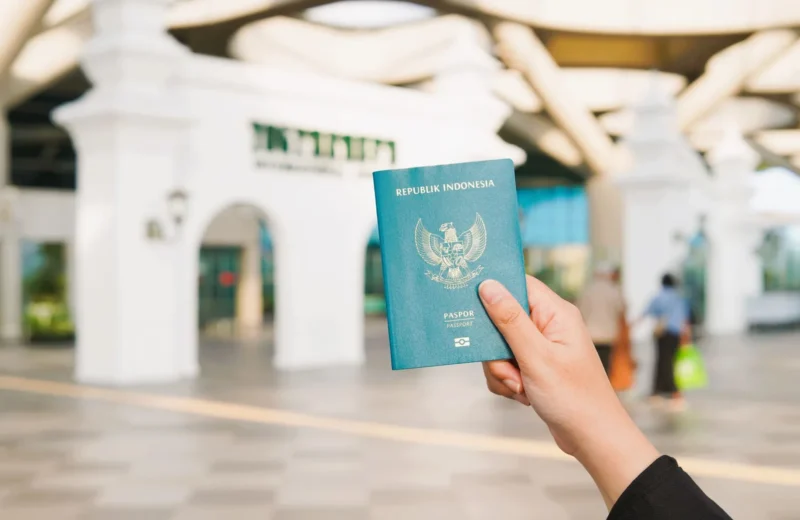
No. There is no CFIA import permit pet dog requirement in Canada, whatever country the dog flies from. Canada issues dog import permits only on the commercial route, and only for commercial dogs under eight months. A pet leaving Kuala Lumpur travels on published conditions instead — in most cases a single rabies vaccination certificate.
Introduction: the permit question that starts every Canada file
Owners moving to Canada ask about the permit first, because most destinations require one. Canada is the exception for pet dogs. The permit sits on a different route entirely, and knowing that early saves weeks chasing a document that will never be issued.
Almost every owner who writes to My Pet Mover about Canada opens with the same question: how long does the import permit take. Fair enough, since Malaysia, Singapore, Australia and New Zealand all issue one.
Canada does not work that way for pet dogs. It splits dog imports into two legal routes before looking at any paperwork, and the permit belongs to only one of them.
This guide sets out where the rule sits in Canadian law and what a dog leaving Malaysia carries instead. Rules on the Malaysia to Canada pet corridor change without notice, so every figure below carries the date of the page it came from.
Here is a walk-through of what Canada asks for on arrival, and where the permit does and does not appear.
Does a pet dog need a CFIA import permit?
No. A dog imported as its owner’s personal pet enters Canada under published import conditions, not under a permit. The CFIA’s own import tool routes personal pets straight to a document list with no permit step, asking only for the dog’s age and escort arrangement.
The CFIA’s pet import tool, last modified 22 July 2024, opens by asking what the dog is coming for: personal pet, certified assistance dog, or commercial. Pick personal and it asks about age and escort, then produces requirements. A permit is not one of them.
This surprises people because the word "import" carries a permit assumption almost everywhere else. Three points are worth separating when you test whether a CFIA import permit pet dog rule could apply to you:
- Purpose, not distance. A dog flying thirteen hours from KLIA and a dog driven across the Detroit border sit under the same rule if both are personal pets.
- Purpose, not breed. No federal breed list pushes a pet dog onto the permit route, though provincial and municipal breed rules still apply after arrival.
- Purpose, not country risk. Malaysia’s rabies status changes what a commercial dog may do. It creates no permit requirement for a pet.
Classification decides everything else. The line between commercial and personal dog imports into Canada is settled by who ends up owning the dog, not by whether money changes hands.
Where Canada’s permit rule actually sits in law
Sections 11 and 12 of the Health of Animals Regulations allow a regulated animal to be imported in two ways only: under a permit issued by the Minister, or under the published conditions in the Import Reference Document. Dogs have their own published conditions.
The Import Reference Document, last amended 8 October 2025, is incorporated by reference into the Regulations. Its introduction states the two-branch rule plainly, and Part III section 2 then sets out the conditions for domestic dogs.
Because those conditions are published, a dog that meets them is lawfully imported without a permit. The permit branch is the fallback for animals no published condition covers. Turtles, elephants, honeybees and non-human primates all sit on it in the same document.
Section 2 ends with a single carve-out: it does not apply to commercial dogs under eight months, which may only be imported under paragraph 12(1)(a) — the permit branch.
That subsection is the entire permit rule for dogs. Everything else in section 2 runs on published conditions, whatever the age band, escort arrangement or country of origin.
Not sure which branch your dog falls under?
Send us the dog’s age, its owner on paper, and who receives it in Canada, and we will classify the file before you spend anything. See how pet export from Malaysia works →
Which Dog Imports Into Canada Need a CFIA Permit
Of the eight situations Canada’s dog rules recognise, exactly one requires an import permit — a commercial dog under eight months. Six personal and assistance categories run permit-free, and the eighth, a commercial dog aged eight months or over, needs no permit but is barred outright from high-risk countries.
Which Dog Imports Into Canada Need a CFIA Permit
| Import situation | Permit needed? | Governing provision | Open from Malaysia? |
|---|---|---|---|
| Personal pet, 8 months or older | No | Import Reference Document s.2(2) | Yes |
| Personal pet under 8 months, with owner | No | Import Reference Document s.2(3) | Yes |
| Personal pet under 8 months, unaccompanied | No | Import Reference Document s.2(4) | Yes, with extra certification |
| Pet under 3 months at import | No | Import Reference Document s.2, note | Yes, no rabies certification |
| Certified assistance dog with its user | No | Import Reference Document s.2(6) | Yes, no import restrictions |
| Dog under 8 months, temporary entry for a show or trial | No | Import Reference Document s.2(5) | Yes, with proof of entry |
| Commercial dog under 8 months | Yes | Regulations para 12(1)(a), via s.2(7) | No — prohibited |
| Commercial dog 8 months or older | No permit branch | CFIA notice, 28 June 2022 | No — prohibited |
Source: compiled by My Pet Mover from the CFIA Import Reference Document (last amended 8 October 2025) and the CFIA notice to industry of 28 June 2022 (last modified 13 March 2025). Malaysian status reflects Malaysia’s listing on the CFIA high-risk dog rabies list as at August 2026.
Read down the permit column and the pattern is clear. Six of the eight situations carry no permit, and both rows that touch the permit branch are closed to Malaysia anyway.
What a Malaysian pet dog carries instead of a permit
For a dog eight months or older leaving Malaysia, one document does the work: a valid rabies vaccination certificate in English or French, from a licensed veterinarian, identifying the dog and showing it is currently vaccinated. A titre result of at least 0.5 IU/ml also qualifies.
Malaysia is not designated rabies-free under section 7, so subsection 2(2) applies. It gives two ways to satisfy the requirement, plus a fallback at the border.
- Current rabies vaccination certificate. In English or French, from a licensed veterinarian in the country of origin, identifying the dog and confirming current vaccination. Almost every Malaysian file uses this route.
- Rabies Neutralising Antibody Titre Test. At least 0.5 IU/ml, taken at least three to four weeks after any prior vaccination, with the dog identified on a laboratory report that travels with the animal.
- Inspector-ordered vaccination on arrival. If neither is met, an inspector may order the dog vaccinated at the owner’s expense within a specified period.
That third option is a safety net, not a plan: it leaves the outcome to an inspector’s discretion on the day. What the certificate must actually say is covered in our guide to what Canada needs on a rabies vaccination certificate.
One timing difference is worth flagging because most sources miss it. For rabies-free countries the titre test sits at 30 days after prior vaccination. For countries that are not, including Malaysia, subsection 2(2) says three to four weeks.
What a Pet Dog Carries Instead of a Permit, by Age Band
Canada’s pet dog requirements sit in three age bands. Under three months, no rabies certification is required. Three to eight months adds it, plus a certificate package if the dog travels unaccompanied. Eight months and over is the simplest band.
What a Pet Dog Carries Instead of a Permit, by Age Band
| Document or condition | Accompanied | Unaccompanied | Provision |
|---|---|---|---|
| Band A — under 3 months at import | |||
| Import permit | Not required | Not required | s.2(3), s.2(4) |
| Rabies vaccination or certification | Not required | Not required | s.2, note |
| Veterinary certificate package | Not required | Required | s.2(4)(c) |
| Band B — 3 months to under 8 months | |||
| Import permit | Not required | Not required | s.2(3), s.2(4) |
| Rabies vaccination certificate, or titre of 0.5 IU/ml | Required | Required | s.2(2)(a), s.2(2)(b) |
| Distemper, hepatitis, parvovirus, parainfluenza record | Not required | Required, from 6 weeks of age | s.2(4)(c)(i)(C) |
| Veterinary examination within 72 hours of import | Not required | Required | s.2(4)(d) |
| Band C — 8 months or older | |||
| Import permit | Not required | Not required | s.2(2) |
| Rabies vaccination certificate, or titre of 0.5 IU/ml | Required | Required | s.2(2)(a), s.2(2)(b) |
| Post-arrival quarantine | None | None | s.2, note |
Source: compiled by My Pet Mover from Part III section 2 of the CFIA Import Reference Document, last amended 8 October 2025. Applies to a dog imported from a country not designated free from rabies under section 7 of the Regulations, which includes Malaysia.
Band B catches families out. A puppy sent ahead unaccompanied picks up a certificate package the same puppy in the cabin would not need, so settle the escort arrangement before booking any vet appointment.
The one route that needs a permit, and why Malaysia cannot use it
Commercial dogs under eight months, imported for breeding or resale including adoption, need a permit applied for through the My CFIA portal. For a Malaysian dog the question is academic: since 28 September 2022 the CFIA has not issued these permits for high-risk countries.
Malaysia sits on the CFIA’s list of countries at high risk for dog rabies, last modified 13 March 2025, alongside Indonesia, Thailand, the Philippines and Vietnam. Why Malaysia appears there at all is explained in our piece on Malaysia’s high-risk rabies status in Canada.
The consequence sits in the CFIA’s notice to industry. Permits issued on or after 28 June 2022 expired on 27 September 2022. From 28 September 2022 none were issued, and all commercial dog shipments from high-risk countries, regardless of age, were prohibited.
That last phrase matters. The permit branch covers commercial dogs under eight months, but the prohibition is wider and catches any age. An adult rescue dog is barred by the shipment ban rather than the permit rule, which is why rescue dogs from Malaysia cannot currently enter Canada.
Where the route is open, from countries not on the high-risk list, applications go through the My CFIA portal only, using form CFIA/ACIA 5860 for live animals.
How Canada’s Dog Import Permit Route Changed, 2021 to 2026
The permit route narrowed in three moves. May 2021 tightened the conditions attached to each permit. September 2022 stopped issuing permits altogether for high-risk countries. Everything since has been maintenance of that position, with the underlying legal document last amended in October 2025.
How Canada’s Dog Import Permit Route Changed, 2021 to 2026
| Date | Change to the permit route | Effect on a Malaysian dog |
|---|---|---|
| Until 14 May 2021 | Permits available by My CFIA or paper form, multiple entry allowed, multiple routings accepted, no post-import quarantine facility required. | Commercial route workable |
| 4 to 14 May 2021 | Issuing paused for commercial dogs under 8 months while the new conditions were implemented. | Ten-day gap in issuing |
| 15 May 2021 | My CFIA only, single entry only, single routing and port of entry, kennel certified by an official veterinarian, parasite treatment, pre-approved post-import quarantine facility, inspection scheduled before departure. | Route open but far heavier |
| 28 June 2022 | CFIA notice published. Permits issued on or after this date set to expire 27 September 2022. | Three-month closing window |
| 28 September 2022 | Import permits no longer issued for high-risk rabies countries. All commercial dog shipments from those countries prohibited, regardless of age. | Commercial route closed |
| 13 March 2025 | High-risk country list and the 2022 notice both last modified on this date, with Malaysia still listed. | Closure confirmed |
| 8 October 2025 | Import Reference Document last amended, keeping the personal pet conditions in section 2 and the permit carve-out in subsection 2(7). | Personal route unchanged |
| August 2026 | Position at the time of writing: personal pets permit-free, commercial route still shut for high-risk countries. | Pet route open, permit-free |
Source: compiled by My Pet Mover from the CFIA "Then and now" fact sheet (last modified 5 July 2024), the notice to industry of 28 June 2022, and the Import Reference Document. Dates are the effective dates or last-modified dates published by the CFIA.
One line in the 2022 notice is easy to skip and worth reading twice. The CFIA said it would explore options to strengthen requirements for personal pet dogs and assistance dogs from high-risk countries. Nothing has been introduced as at August 2026, but the intention is on the record.
Moving to Canada within the next twelve months?
Rules on this corridor move faster than most families plan, so we lock the certificate timing against your actual flight date rather than a generic checklist. Compare our pet relocation pricing →
How to check your own case before you book a flight
Two official tools settle it. The CFIA’s pet import tool answers the question in plain language for owners. The Automated Import Reference System sets out detailed commodity-level requirements. Both are free, both are current, and both beat a forum thread.
Working through them in order takes about ten minutes.
- Open the CFIA pet import tool. Choose dog, then personal, then the age band, then whether it is accompanied. The tool returns the conditions for your exact situation.
- Cross-check the Import Reference Document. Read Part III section 2 in full. It is short, and it is what the border officer’s decision ultimately rests on.
- Check the high-risk country list. Confirm Malaysia’s current status. It decides the commercial question and nothing else, but it is worth knowing before someone quotes it at you.
- Use AIRS only if the file is commercial. The Automated Import Reference System carries more detail than a pet owner needs.
- Note the last-modified date on every page. If a page has not been touched in two years, verify the point elsewhere.
Do this before the Malaysian side starts, because the Canadian answer determines what MAQIS certifies on export. Our guide to MAQIS fees and permit costs covers that half.
The Age and Timing Thresholds That Decide Whether a Permit Applies
Canada’s dog rules turn on a handful of thresholds measured in weeks. Eight months, about 35 weeks, is the line that decides whether the permit branch applies at all. The rest sit far lower, and only bite on the commercial route.
The Age and Timing Thresholds That Decide Whether a Permit Applies
| Threshold | Length in weeks | Weeks | Route affected |
|---|---|---|---|
| Permit branch applies to commercial dogs below | 35 | Commercial | |
| Extra certification for unaccompanied pets below | 35 | Personal | |
| Import permit validity, where issued | 13 | Commercial | |
| No rabies certification required below | 13 | Personal | |
| Earliest rabies vaccination, commercial route | 13 | Commercial | |
| Minimum age at export, commercial route | 16 | Commercial | |
| Earliest distemper and parvovirus vaccination | 6 | Both | |
| Waiting period after rabies vaccination, commercial route | 4 | Commercial |
Source: compiled by My Pet Mover from Part III section 2 of the CFIA Import Reference Document (amended 8 October 2025) and the CFIA commercial dog fact sheet (modified 5 July 2024). Months converted to weeks at 4.33 weeks per month and rounded; the underlying rules are expressed in months, weeks and days as shown in the source documents.
The two longest bars belong to different routes. Eight months is where the commercial permit branch stops and where extra certification for unaccompanied pets stops. Same number, two separate consequences, which is why it gets quoted wrongly so often.
What happens at the Canadian border with no permit
Nothing unusual. The dog and its documents are inspected on arrival to confirm the paperwork matches the animal and the vaccination is current. No permit is asked for, and pet dogs are not held in post-import quarantine.
The Import Reference Document states directly that pet dogs from any country are not held in post-import quarantine, a point covered in our piece on whether Canada quarantines dogs arriving from Malaysia.
What can still go wrong is documentation. The CFIA’s dog travel page, last modified 9 January 2026, is blunt: a dog that does not meet the requirements has its case reviewed, and may be ordered removed, with fines or legal action possible.
Two habits reduce that risk to almost nothing:
- Travel with original hard copies. The CFIA recommends carrying the physical original of every required document, not a photograph on a phone.
- Declare the animal. Travellers must by law declare all animal items brought into Canada, and the Canada Border Services Agency takes that declaration at the port of entry.
Compared with Singapore, where a quarantine stay is booked before the dog flies, Canada’s arrival process is unusually light for a pet.
Conclusion: spend the effort on the certificate, not the permit
The CFIA import permit pet dog question resolves quickly once the two-route structure is clear. Personal pets travel on published conditions. Permits belong to commercial dogs under eight months, a branch closed to Malaysia since 28 September 2022.
For a family moving from Kuala Lumpur with its own dog, that means no permit application, no permit fee, and no waiting on approval. It also means the entire federal requirement rests on one certificate, so the wording, the dog’s identification and the vaccination validity carry all the weight.
Rules on this corridor are revised without notice, and the CFIA has already said it may strengthen the personal pet requirements from high-risk countries. Check your dog’s position against the current CFIA pages before committing to a flight, and note the last-modified date on whatever you read.
Frequently Asked Questions
1. Do you need a CFIA import permit for a pet dog?
No. A dog imported as its owner’s personal pet enters under the published conditions in Part III section 2 of the Import Reference Document. The permit branch under paragraph 12(1)(a) of the Health of Animals Regulations applies only to commercial dogs under eight months.
2. Does the answer change because Malaysia is a high-risk rabies country?
Not for a personal pet. Malaysia’s listing closes the commercial route but creates no permit requirement for a pet dog. As at August 2026 a personal pet from Malaysia still enters permit-free on a rabies vaccination certificate.
3. What document does a Malaysian pet dog need instead of a permit?
A valid rabies vaccination certificate in English or French, from a licensed veterinarian in the country of origin, clearly identifying the dog and showing it is currently vaccinated. A titre result of at least 0.5 IU/ml is accepted as an alternative.
4. Does a puppy under three months need a permit or a rabies certificate?
Neither. The Import Reference Document states that a dog under three months of age at import needs no rabies vaccination or rabies-free country certification. If the puppy travels unaccompanied, a separate veterinary certificate package still applies.
5. Where do I apply if my dog genuinely does need a permit?
Through the My CFIA online services portal, using form CFIA/ACIA 5860 for live animals. Since 15 May 2021 permits for commercial dogs under eight months are single entry, valid three months, and tied to one routing and port of entry.
6. Is a pet dog quarantined in Canada after arrival?
No. The Import Reference Document states that pet dogs imported from any country are not subject to post-import quarantine in Canada. Inspection at the port of entry confirms the documents match the dog and the vaccination is current.
7. Could Canada start requiring permits for pet dogs?
It is possible. In its notice of 28 June 2022 the CFIA said it would explore options to strengthen requirements for personal pet dogs and assistance dogs from high-risk countries. Nothing has been introduced as at August 2026, so confirm the position before you book.
Flying your dog from Malaysia to Canada?
Send us your dog’s age, vaccination dates and target travel month. We confirm the import category, check the certificate wording against the current CFIA conditions, and build the routing around your date.