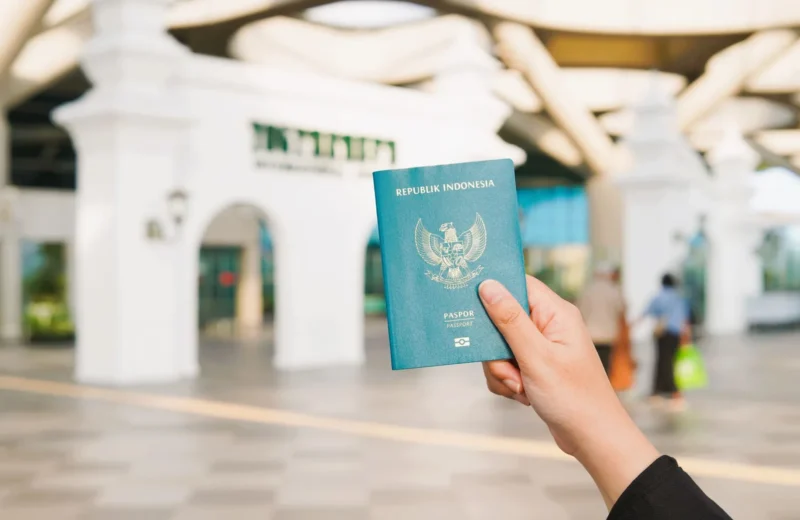
Yes. Canada's food inspection agency lists Malaysia as high-risk for dog rabies, and has since the list was first published in 2022. The label does not stop you moving your own pet dog. It stops commercial dogs — resale, breeding, fostering and adoption, which includes rescues. A personal pet still travels on a rabies vaccination certificate, with no quarantine on arrival.
Introduction: one label, two completely different outcomes
Malaysia sits on Canada’s high-risk country list for dog rabies. Owners read that and assume their dog is blocked. It is not. The listing bites one category of import — commercial dogs — and leaves personal pet dogs, cats and accompanied assistance dogs on their normal path.
Owners writing to My Pet Mover about Canada usually open the same way. Someone has told them Malaysia is on a rabies blacklist. They want to know whether the move is dead before they start.
The listing is real. What people get wrong is what it does. A high-risk designation in Canada is not a border closure. It is a switch that changes the rules for one import category and leaves the others where they were.
Get the category wrong and the dog is refused. Get it right and the paperwork is lighter than most owners expect — lighter, in several respects, than the file we build for the same dog going to Singapore or Australia.
This guide covers what the high-risk label means in Canadian law, why Malaysia carries it when three of its four regions are rabies-free, exactly what changes because of it, and what a Malaysian pet dog still needs to walk through Canadian customs. The sequencing is written for a departure out of KLIA on the Malaysia to Canada pet corridor.
The video below covers the import ban that grew out of this designation — useful context for why the commercial half of the rule exists at all.
Is Malaysia high-risk for dog rabies in Canada?
Yes. Malaysia appears by name on the Canadian Food Inspection Agency’s list of countries at high risk for rabies caused by canine-variant viruses, under the Asia and Middle East grouping. The list was last modified on 13 March 2025 and Malaysia remains on it.
Canada does not run a single risk scale. It runs two separate lists, and most countries appear on neither. Understanding which list Malaysia is on — and which one it is not on — explains the whole rule set.
- Rabies-free. A short list designated under section 7 of the Health of Animals Regulations. Nine countries. Malaysia is not one of them.
- High-risk for dog rabies. Over a hundred countries and political units where canine-variant rabies circulates. Malaysia is on this list.
- Neither list. Everything else. Not certified free, not flagged high-risk. Singapore and Hong Kong sit here, for example.
The distinction matters because the two lists do different jobs. Rabies-free status opens a lighter certification path. The high-risk designation triggers a prohibition, but only on one import category, which the next few sections unpack.
Where Malaysia Sits in Canada’s Country Classification
| Classification | Legal basis | Who is in it | Malaysia |
|---|---|---|---|
| Rabies-free | Section 7, Health of Animals Regulations | Nine countries: Australia, Fiji, Finland, Iceland, Ireland, Japan, New Zealand, Sweden, United Kingdom | Not listed |
| High-risk for dog rabies | CFIA designation, applied to commercial import permits | Over 100 countries and political units across Africa, the Americas, Asia, the Middle East and Europe | Listed — Asia and Middle East grouping |
| Neither list | Undesignated under the Import Reference Document | Every country on neither list, including Singapore and Hong Kong | Not applicable |
Source: compiled by My Pet Mover from CFIA’s countries at high-risk for dog rabies list, modified 13 March 2025, and its rabies-free countries list, modified 20 September 2024. Both lists are reviewed regularly and subject to change.
Both lists carry the same warning on the page: they are reviewed regularly and subject to change. That is not boilerplate. Countries have moved. Check the live page before you commit to a departure date rather than trusting a figure from a forum post.
Not sure which category your dog falls into?
The category is decided by ownership and purpose, not by breed or paperwork. Tell us the situation and we will place it correctly before anything is booked. See how our pet export service works →
Why Malaysia is listed when most of the country is rabies-free
Canada classifies by country, not by state. Peninsular Malaysia, Sabah and Labuan have held rabies-free status since July 2013, but Sarawak has had an active canine rabies outbreak since 2017. One affected region puts the whole country on the list.
This is the part Malaysian owners find hardest to accept, and it is a fair objection. A dog that has lived its whole life in Bangsar has no plausible exposure to a Sarawak outbreak. The regulation does not care, because it is written at country level.
Malaysia’s own veterinary authority draws the internal line clearly. In its country update to the ASEAN Rabies Consultation Meeting in February 2025, the Department of Veterinary Services recorded Peninsular Malaysia, Sabah and the Federal Territory of Labuan as rabies-free since July 2013. The last animal case in those regions was in 1999, the last human case in 1998. Sarawak is recorded as the affected region.
The species split in the outbreak data is what makes the listing a dog rabies listing rather than a general rabies listing.
Malaysia’s Animal Rabies Cases by Species, All in Sarawak
| Species | Share of recorded cases | % |
|---|---|---|
| Canine | 88.87 | |
| Feline | 10.95 | |
| Other species | 0.18 |
Source: compiled by My Pet Mover from the Department of Veterinary Services Malaysia country update to the ASEAN Rabies Consultation Meeting, February 2025, hosted by WOAH. Based on 1,123 recorded animal cases as at 17 February 2025.
Nearly nine in ten recorded animal cases are canine. That is the profile of a dog-maintained virus, which is precisely the thing Canada’s measure is designed to keep out. The listing follows the epidemiology, not a judgement about Malaysian pet ownership.
Malaysia’s own import controls run on the same country-level logic in reverse. Our scheduled and non-scheduled country system classifies whole countries too. That is why a pet arriving here from a low-risk city in a listed country still faces the full protocol.
What the high-risk listing changes, and what it leaves alone
The listing does one thing: it stops commercial dogs entering Canada from Malaysia, at any age. It does not add quarantine, does not add a titre test, does not add a permit for personal pets, and does not touch cats at all.
The measure took effect on 28 September 2022. From that date CFIA stopped issuing import permits for commercial dogs from any high-risk country, and shipments were prohibited regardless of the dog’s age. That is the entirety of the prohibition.
What owners expect to follow — and what does not follow — is worth listing plainly:
- No quarantine on arrival. CFIA’s own import reference document states that pet dogs imported from any country are not subject to post-import quarantine in Canada. We cover the detail in whether Canada quarantines dogs arriving from Malaysia.
- No rabies antibody titre test required. A titre result is offered as an alternative route to certification, not an added hurdle on top of vaccination.
- No import permit for a personal pet. Permits belong to the commercial stream, which is the stream that is now closed.
- No breed restriction from CFIA. Breed rules in Canada are municipal or provincial, not federal, and sit entirely separate from rabies risk.
The contrast with other corridors is stark. A dog flying to Singapore from Malaysia faces a fixed quarantine stay on arrival, as Singapore’s 30-day quarantine rule for Malaysian pets sets out. Canada, despite the scarier-sounding label, asks for less at the border for a personal pet.
Personal pet or commercial dog: the line that decides entry
A personal dog is one that lives or will live with you, is not being transferred to anyone else on arrival, and is imported by you as the documented owner. Anything else — adoption, fostering, resale, breeding, exhibition, research — is commercial and is barred from Malaysia.
Canada Border Services Agency states the test in two parts. You must be the importer of the dog, and you must hold proper documentation proving ownership. Fail either part and the import is treated as commercial.
The commercial category is broader than most owners assume. It covers:
- Dogs intended for further adoption, an animal welfare organisation, or fostering — which explicitly includes rescue dogs, whether moved by an individual or an organisation.
- Dogs used for breeding, including selling or distributing the offspring.
- Dogs for further resale, shows or exhibitions, or scientific research.
- Dogs with a special “training status”.
- Canadian commercial dogs returning to Canada.
The rescue case is the one that catches people. A Malaysian street dog rehomed to a family in Ontario is a commercial import in Canadian law even when no money changes hands and the family fully intends to keep it. We treat that scenario separately in whether rescue dogs from Malaysia can enter Canada, because the answer depends on facts that predate the flight.
The practical consequence: ownership has to be established in Malaysia, before departure, not asserted at the Canadian border. Three things carry weight, and none of them can be produced at the airport:
- Vaccination records in the owner’s name. The clinic file is usually the oldest dated document tying you to the dog.
- Local council licence or registration, where the council issues one for dogs.
- A consistent paper trail. Microchip registration, insurance, boarding receipts — all in the same name, over time.
What a personal pet dog from Malaysia still needs
A valid rabies vaccination certificate in English or French, issued by a licensed vet in Malaysia, clearly identifying the dog and showing it is currently vaccinated. Under three months of age, even that is not required. Unaccompanied dogs under eight months carry a second certificate with a hard 72-hour clock.
Canada’s requirements are set out by age band in the Import Reference Document incorporated into the Health of Animals Regulations, last amended 8 October 2025. The bands are where the real complexity sits.
Personal Pet Dog Requirements by Age, Malaysia to Canada
| Age at import | Owner travelling with the dog | What Canada asks for | Quarantine |
|---|---|---|---|
| Under 3 months | Yes | No rabies vaccination or rabies-free certification required | None. Pet dogs from any country are not subject to post-import quarantine |
| No | Rabies exemption still applies, plus the unaccompanied vet certificate below | ||
| 3 months to under 8 months | Yes | Valid rabies vaccination certificate, or a rabies titre of at least 0.5 IU/ml with the lab report travelling with the dog | |
| No | As above, plus a handwritten-signed vet certificate covering examination, health, DHPP vaccination and fitness to fly — and arrival within 72 hours of that examination | ||
| 8 months or older | Either | Valid rabies vaccination certificate in English or French from a licensed vet, clearly identifying the dog | None |
Source: compiled by My Pet Mover from CFIA’s Import Reference Document, Part III section 2, last amended 8 October 2025. Confirm against CFIA’s live requirements before booking.
One warning before you read further afield. A good deal of pet-travel guidance online tells owners that a dog from a listed country needs all of the following to enter Canada:
- A minimum age of seven months at entry
- A 15-digit ISO microchip fitted before vaccination
- A CFIA import permit
- A rabies titre test with a 90-day wait after it
- Arrival through a designated airport only
That is the United States rule set, not Canada’s. None of it appears in CFIA’s Import Reference Document. Applying it to a Canadian move adds months and cost to a file that does not need them, so check the requirement against CFIA’s own published document rather than a summary of it.
The 72-hour clock on unaccompanied young dogs is the trap. That certificate must record the date and time of examination in the vet’s own handwriting, and the dog has to land in Canada within 72 hours of it. On a Kuala Lumpur routing with a connection, that window closes faster than families expect. Where the dog is under eight months, we usually recommend the owner travels on the same booking.
The vaccination itself follows Malaysian veterinary practice, and the certificate wording is what Canada scrutinises. Our guide to rabies vaccination rules for pets covers how Malaysian clinics record the detail Canada expects to see.
Moving a dog under eight months?
The 72-hour rule reshapes the whole booking — vet appointment, flight, connection and arrival all have to sit inside it. Check our relocation pricing →
Cats from Malaysia are not on this list
The high-risk designation covers dog rabies and applies to dog imports only. A domestic cat from Malaysia enters Canada on a vet certificate showing current rabies vaccination once it is three months old, and under three months it faces no restriction at all.
Cat owners often assume the ban sweeps them in. It does not. Canada’s rules for domestic cats sit in their own section of the Import Reference Document and were untouched by the 2022 commercial dog measure.
A cat aged three months or older needs a veterinarian’s certificate in English or French that clearly identifies the animal. That certificate has to show one of three things:
- The cat is currently vaccinated against rabies.
- The cat comes from a designated rabies-free country where it has lived for the past six months.
- The cat has a rabies titre of at least 0.5 IU/ml, taken at least 30 days after any prior vaccination.
For a Malaysian cat, the first option is the normal route. There is no commercial-versus-personal split blocking cats, no import permit, and no quarantine.
Assistance dogs and the one real exemption
A certified assistance dog imported by its own user, travelling with that user, faces no import restrictions and is exempt from the rabies vaccination requirement. Send it ahead with someone else, or move it in training status, and it becomes a commercial import.
This is the narrowest exemption in the whole rule set, and it is easy to fall out of. Two conditions have to hold at once: the person importing the dog must be the user of the dog, and that person must accompany the dog to Canada.
Canada also defines the term tightly. An assistance dog must provide a distinct service to its designated handler and be certified and trained by an organisation accredited by the International Guide Dog Federation or Assistance Dogs International. Therapy animals, companionship animals, emotional support animals and comfort animals are expressly excluded.
Two situations flip an assistance dog into the commercial stream, and therefore into the prohibition:
- The dog travels with someone other than its assigned handler. A family member flying the dog over ahead of the handler’s own move is a commercial import.
- The dog is in special training status. A dog being placed with a handler, rather than already assigned to one, does not qualify.
Because the exemption is so narrow, we route accompanied assistance dogs on the same flight as the handler wherever the airline allows it. The cabin, cargo and excess baggage comparison matters here, since the booking method affects whether the dog and handler stay on one itinerary.
How the rule has moved since 2022
The commercial prohibition landed on 28 September 2022 and has not been lifted. Both country lists have been reviewed since, and Malaysia’s position has not changed on either. The rules for personal pet dogs have stayed where they were.
Tracking the version dates matters on this corridor, because competing guidance online still describes the pre-2022 position. Here is the documented sequence, taken from the version dates the agencies publish on their own pages.
Timeline of Canada’s Dog Rabies Measure, 2022 to 2026
| Date | What the record shows | Effect on a Malaysian dog |
|---|---|---|
| 28 June 2022 | CFIA publishes its notice to industry announcing the measure | Existing commercial permits set to expire 27 September 2022 |
| 28 September 2022 | Prohibition takes effect; permits no longer issued | Commercial dogs of any age refused entry |
| 20 September 2024 | Rabies-free country list last modified | Malaysia still absent; nine countries listed |
| 13 March 2025 | High-risk dog rabies list last modified | Malaysia still listed under Asia and the Middle East |
| 8 October 2025 | Import Reference Document last amended | Personal pet dog rules and the no-quarantine note restated |
| 15 April 2026 | US high-risk list last reviewed | Malaysia listed by the United States as well |
Source: compiled by My Pet Mover from the version dates published on CFIA’s notice to industry, its country lists and Import Reference Document, and the US CDC high-risk countries list, all as at August 2026.
One open item deserves a place on your watchlist. In the same notice, CFIA said it would explore options to further strengthen the requirements for the import of personal pet dogs and assistance dogs from high-risk countries. Nothing has been imposed on personal pets so far, but the intention is on the record.
Does the United States read Malaysia the same way?
Yes on the classification, no on the consequence. The US CDC also lists Malaysia as high risk for dog rabies, on a page last reviewed 15 April 2026. But where Canada bans a category outright, the US imposes extra conditions and lets the dog travel.
Two authorities reading the same epidemiology reached the same conclusion about Malaysia and then built different machinery on top of it. That difference is worth understanding if you are weighing a North American move.
- Canada’s approach is categorical. Commercial dogs are prohibited; personal pets carry on largely as before.
- The US approach is conditional. A dog that has been in a high-risk country in the past six months must be vaccinated against rabies and meet further requirements covering age, microchip, rabies serology titre, health and documentation.
In practice, a Malaysian family relocating a pet dog usually finds the Canadian file lighter and the US file heavier. Our guide to the CDC rabies rules for dogs flying to the US walks through the American side in detail, including the serology timing that has no Canadian equivalent.
Comparing Canada against another destination?
We run both corridors regularly and can lay the two document sets side by side before you decide. See our Malaysia to Canada corridor guide →
Could Malaysia come off Canada’s list?
Possible, but not soon and not on any published timetable. CFIA states the list is reviewed regularly and subject to change. Realistically, removal would follow sustained control of the Sarawak outbreak, and that work is ongoing rather than complete.
Malaysia is not passive on this. Its February 2025 country update sets out three lines of work already running:
- An immune belt along the Thai border, covering whole states in the north of the peninsula, with dedicated enforcement teams.
- Mandatory dog vaccination and licensing inside Sarawak’s outbreak areas, with joint agency enforcement.
- A national strategic plan for rabies elimination, still in development at the time of the update.
What a Malaysian owner should take from that:
- Do not plan around a delisting. There is no announced review date, and no consultation process an individual owner can join.
- Do not wait it out. If your dog is a personal pet, the current rules already let it travel — waiting buys nothing.
- Do watch the page, not the rumour. The CFIA list carries its own modification date, which makes it easy to check whether anything has actually changed.
Removal from the high-risk list would also not automatically add Malaysia to the rabies-free list. Those are separate designations with separate thresholds, and the rabies-free list has stayed at nine countries.
Conclusion: the label decides the door, not the dog
Malaysia is high-risk for dog rabies in Canadian classification, and there is no realistic argument against it while Sarawak’s outbreak continues. But the label is a routing instruction, not a verdict on your pet.
If your dog is genuinely yours, travelling as your pet, with an ownership record that predates the move, the high-risk listing changes almost nothing about your file. A rabies vaccination certificate in English or French, correctly filled and clearly identifying the dog, is the substance of it. No permit, no titre requirement, no quarantine.
If your dog is being adopted, fostered, rehomed or sold, the listing is decisive, and no paperwork available in Malaysia will get around it. That is the conversation to have before anyone books a flight, and it is the conversation we have first on this corridor.
Every figure and date in this guide comes from the authority’s own published page with its version date noted. Rules on this corridor do move — confirm the current position with CFIA and the Canada Border Services Agency before you commit money to a departure. The Malaysia to Canada corridor guide tracks the wider requirements alongside this one.
Frequently Asked Questions
1. Is Malaysia high-risk for dog rabies in Canada?
Yes. Malaysia appears on CFIA’s list of countries at high risk for rabies caused by canine-variant viruses, in the Asia and Middle East grouping. The list was last modified on 13 March 2025 and CFIA notes it is reviewed regularly.
2. Does the high-risk listing stop me bringing my pet dog to Canada?
No. The prohibition applies to commercial dogs only. A personal pet dog — one that lives with you, is imported by you as the documented owner, and is not being transferred to anyone else — may still enter on a valid rabies vaccination certificate.
3. Will my dog be quarantined on arrival in Canada?
No. CFIA’s Import Reference Document, last amended 8 October 2025, states that pet dogs imported from any country are not subject to post-import quarantine in Canada. The high-risk listing does not change that.
4. Are cats affected by Canada’s high-risk dog rabies list?
No. The measure covers dog rabies and applies to dogs. A domestic cat aged three months or older needs a vet certificate showing current rabies vaccination; under three months it faces no restriction.
5. Why is Malaysia listed when Peninsular Malaysia is rabies-free?
Canada classifies at country level. Peninsular Malaysia, Sabah and Labuan have held rabies-free status since July 2013, but Sarawak’s canine rabies outbreak keeps the country as a whole on the list. No regional exemption exists.
6. Can a rescue dog from Malaysia be brought into Canada?
Not under the current measure. Dogs intended for adoption, fostering or an animal welfare organisation are commercial imports in Canadian law, and commercial dogs from high-risk countries have been prohibited since 28 September 2022.
Planning a move to Canada with your dog?
Tell us the dog’s age, who it belongs to on paper, and whether you are flying with it. We confirm the import category first, then build the certificate and the routing around it.