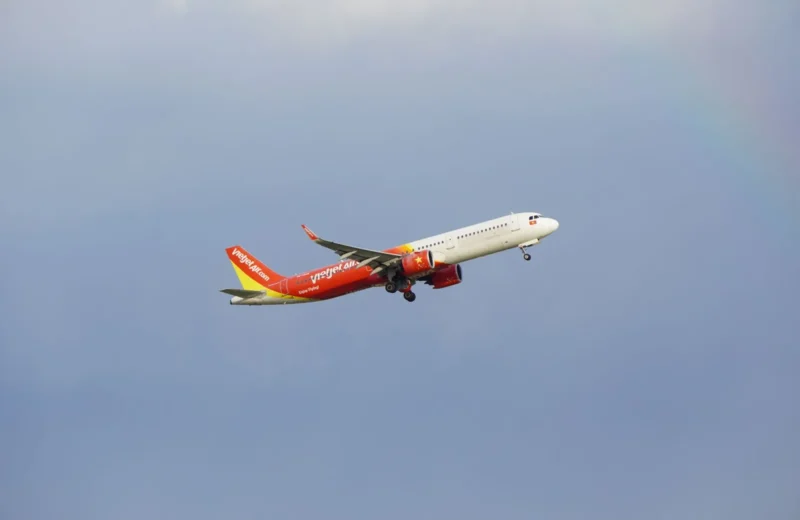
Japan sits on Malaysia's scheduled countries list in every DVS document we could find, including one dated 13 March 2026, and that regulation carries no quarantine clause. The widely repeated 14-day claim from December 2024 appears in none of them. So dog quarantine in Malaysia from Japan is probably none — conditional on a clean file, confirmed in writing.
Introduction: one question, two confident answers online
Search this and you get two answers, both stated with total confidence: no quarantine because Japan is scheduled, or 14 days because the rules changed. Both cannot be right. The documents settle most of it, and this guide reads them line by line.
Owners moving from Tokyo or Osaka to Kuala Lumpur ask about dog quarantine in Malaysia from Japan before anything else. It decides whether the dog sleeps at home on night one or in a government kennel.
The confident answers online rarely name their document. This piece names every source, quotes it, and marks the one claim we could not verify. It comes from the files we run at My Pet Mover as part of our Japan to Malaysia pet import and export service. Start with the video below for the shape of an international pet move.
The short answer: what Japan’s scheduled status actually buys you
Malaysia splits origin countries into scheduled and non-scheduled, and Japan is scheduled. The practical effect: the compulsory quarantine clause in the non-scheduled rules does not appear in the scheduled rules. There is no day count to serve, because none is written.
This is the detail every summary skips. People debate dog quarantine in Malaysia from Japan as zero days, seven or fourteen, as if the list shortens a period. It does not.
Malaysia’s non-scheduled countries regulation carries a clause headed “Quarantine in Malaysia” setting a compulsory period of not less than seven days, extendable to six months on risk assessment. The scheduled countries regulation has no such clause. It runs from import permit to description of animal to veterinary certification to landing place, then straight to banned breeds. Quarantine is never mentioned.
Two documents, one deliberate difference. The absence is the rule. For the logic, see our explainer on scheduled versus non-scheduled countries.
Not sure which list your origin country sits on?
We check the current DVS position before quoting a route, not after. See how pet import into Malaysia works →
What each official source actually says about Japan
Five sources speak to dog quarantine in Malaysia from Japan. Four are DVS documents, all placing Japan on the scheduled side. The fifth is the 14-day claim, repeated widely but absent from every DVS publication we could open.
Each source on dog quarantine in Malaysia from Japan sits against what it says, so you can weigh them yourself.
Quarantine From Japan: What Each Official Source Says
| Source | What it states | Status |
|---|---|---|
| DVS scheduled countries regulation | Japan named as a country of export. No quarantine clause of any kind | Verified on dvs.gov.my |
| DVS non-scheduled countries regulation | Clause 5: not less than seven days, extendable to six months. Japan expressly excluded | Verified on dvs.gov.my |
| DVS notice dated 13 March 2026 | Japan reconfirmed as scheduled among 22 named countries | Newest official document |
| DVS Animal Passport portal | “Without quarantine from certain countries and with a minimum seven day quarantine from other countries.” Japan grouped with the exempt origins | Live, undated page |
| The “14 days from 28 Dec 2024” claim | Not less than 14 days on arrival, applied broadly. Repeated by relocation and expat sites | Not located in any DVS document |
Source: My Pet Mover review of DVS publications, August 2026. Confirm the current position with MAQIS or DVS before travel.
Four to one is not a tie. It is also not a promise, hence our guide to the seven-versus-fourteen-day debate exists as a separate piece.
Where the 14-day figure comes from, and what it is not
The 14-day claim traces to a revised health certificate protocol said to take effect on 28 December 2024. It circulates on relocation and expat sites, each citing the others. We could not find it in any DVS regulation, notice or portal page, and DVS’s own pages still say seven.
We are not calling it false. A protocol can exist as an internal instruction or a per-country certificate condition without surfacing as a public PDF, and Malaysia has form for this: country-specific protocols sit outside the two main documents, which is why Australia, Canada and Indonesia are carved out of the 2026 notice.
What we can say is narrower and more useful:
- It is not in the scheduled countries regulation, which has no quarantine clause to amend.
- It contradicts the live DVS portal, still stating seven days for non-exempt origins and exemption for the rest.
- It is not specific to Japan. Quarantine applying broadly would leave the scheduled list meaningless — while DVS was still updating it in March 2026.
- Nobody repeating it has traced it to a document. That should give you pause.
Treat it as you would any unsourced number attached to a decision that costs money: plan so being wrong is survivable.
Malaysia’s scheduled list grew in March 2026 — Japan stayed on it
DVS issued a notice on 13 March 2026 widening the scheduled list from eight countries to 22, mostly across Europe. Japan appears on every version we traced, from the 2013 regulation to that notice. Its status is the most stable fact in this question.
The list has never been static, and the versions disagree in small ways. Australia appears on the portal grouping but is carved out of the March 2026 notice as a separate protocol. Sweden and Singapore appear in the regulations but not that grouping. Japan is on all three.
Malaysia’s Scheduled Countries List, by Document Version
| Document version | Countries named | What changed | Japan on it |
|---|---|---|---|
| Regulation revised 13 Dec 2013 | 8 | Baseline: UK, Eire, Northern Ireland, New Zealand, Japan, Sweden, Brunei, Singapore | Yes |
| Animal Passport portal grouping | 7 | Adds Australia, drops Sweden and Singapore — an inconsistency with the regulations | Yes |
| Notice dated 13 Mar 2026 | 22 | Adds 14 mostly European origins. Carves Australia, Canada and Indonesia into separate protocols | Yes |
Source: My Pet Mover comparison of DVS publications, 2013 to March 2026.
That notice matters for a second reason. A department that had quietly imposed blanket quarantine in 2024 would not spend March 2026 widening the exempt list that governs dog quarantine in Malaysia from Japan.
Scheduled is conditional, not automatic
Scheduled status is not a stamp your dog carries. It is the outcome of meeting every condition in the scheduled countries regulation. Miss one and the quarantine-free path closes, whatever the list says about Japan.
The regulation reads as a set of conditions, and the exemption is what you get for satisfying all of them. A Japanese government veterinary officer must certify:
- No rabies in Japan for six months before the certificate date — a country-level statement, not something a clinic can improvise.
- The dog was not itself imported into Japan in those same six months.
- Rabies vaccination with an approved vaccine before export, plus core vaccines within the prior twelve months.
- Examined healthy within seven days of export, with no clinical signs on shipment day.
- ISO 11784/11785 microchip, the number carried across every document.
- Direct carriage by aircraft to the prescribed landing place in Malaysia.
That last one rules out cheap routing: a stopover breaking “direct from the above countries” can cost the exemption. Our guide to pet flight layovers and transit rules covers where that line falls, and the document checklist for pets entering Malaysia lists what travels with the crate.
Want the conditions checked against your dog’s actual dates?
Send the vaccine record and target month, and we will name the condition closest to failing. See how our Japan route service works →
What actually gets a Japan dog held at KLIA
On the Japan-origin files we handle, holds trace to paperwork failures rather than the country’s status. Rabies cover expiring between departure and landing is the most common cause, and entirely avoidable at planning.
Why Scheduled-Country Dogs Still Get Held on Arrival
| Reason for the hold | Relative frequency | Created at |
|---|---|---|
| Rabies cover expiring before landing | Vet scheduling | |
| Microchip unreadable or mismatched | Identity records | |
| Health exam outside the seven-day window | Departure timing | |
| Restricted breed without prior approval | Eligibility check | |
| Permit details not matching the animal | Permit lodgement |
Source: My Pet Mover casework, scheduled-country arrivals, 2024 to 2026.
Japanese clinics run annual rabies cycles, so a booster that looked fine at planning can lapse mid-shipment and trigger the dog quarantine in Malaysia from Japan you counted on avoiding. The rules sit in our guide to rabies vaccination requirements for pets entering Malaysia, and what happens on the ground in pet quarantine at KLIA.
Two outcomes, one plan that survives both
Rather than betting on a day count for dog quarantine in Malaysia from Japan, build a plan that works whether your dog clears at KLIA or gets held. The differences are short: where the dog sleeps, what you reserve, and the buffer after the flight.
This is how we brief owners: it turns an argument about documents into a checklist about bookings.
Cleared at KLIA vs Held for a Stay: What Changes
| Planning dimension | If cleared at KLIA | If held for a stay |
|---|---|---|
| Arrival day | ||
| Where the dog sleeps | Your home, same day | Government quarantine station |
| Your time at the airport | Clearance, collection | Clearance, transfer, handover |
| What you must have arranged | ||
| Booked in advance | Permit, flight, crate, collection | All of that, plus a reserved slot |
| Cost exposure | Transport, permit and handling | Adds daily boarding and station charges |
| Calendar | ||
| Buffer after the flight | None | The stated stay, plus release processing |
Source: My Pet Mover planning framework, scheduled-country arrivals, 2026.
Only two rows cost anything to prepare for: the slot and the buffer. Both are cheap. Booking is in how to book a KLAQS quarantine slot, the charges in what pet quarantine in Malaysia costs, and the stay itself in our KLAQS quarantine walkthrough.
Budgeting for both outcomes?
Our quotes show the quarantine line separately so you can see exactly what it adds. See pet relocation pricing and inclusions →
The breed rule that outranks the quarantine question
Both DVS regulations carry the same banned breed list, and the Akita and Japanese Tosa are on it. For those two the quarantine question never arises, because no import permit is issued at all. Scheduled status creates no exception.
This catches Japan-based owners more than anyone else, because Akita ownership is common there. The ban sits in the scheduled countries regulation itself, not a separate document you might hope does not apply.
Restricted is different from banned. Rottweilers, Dobermans, Bull Terriers, Bull Mastiffs, the shepherd family and the Perro de Presa Canario can enter, but only with written approval from the MAQIS Director General, obtained before the permit application and involving a premises inspection. Shiba Inu, Japanese Spitz and Hokkaido are unaffected.
Check the breed first. The detail is in our piece on Japanese dog breeds banned in Malaysia and the wider list of banned and restricted breeds.
How to get a written answer for your own dog
The only answer that protects you is one issued against your animal, breed and arrival date. Five steps get you there, and the sequence sits inside a normal eight to twelve week Japan file.
- Confirm the breed is neither banned nor restricted. This decides whether there is a move at all, so it happens before any money is spent.
- Map the vaccine dates against the arrival date, not departure. Rabies cover must still be valid when the dog lands. If the cycle expires in between, re-vaccinate early and reset the plan around it.
- Ask MAQIS in writing how dog quarantine in Malaysia from Japan applies to your animal. A written reply against your file is worth more than any published list, including the ones cited here.
- Book Japan’s export inspection through NACCS at least 14 days ahead. The Animal Quarantine Service export procedure requires the application before a reservation can be made, and the inspection happens within 10 days of departure.
- Lodge the import permit and hold a quarantine slot anyway. Release it once MAQIS confirms your file. Our walkthrough of the MAQIS import permit for a pet from Japan covers lodgement, and the general permit guide the mechanics.
Step three is the one owners skip, and the only one that settles it.
Conclusion: probably none, planned as if fourteen
On the documents, dog quarantine in Malaysia from Japan should be none. Japan is scheduled in every DVS source we traced, and that regulation contains no quarantine clause. Plan for a stay anyway, because the cost of being wrong is asymmetric.
The evidence leans one way and leans clearly, but it cannot guarantee your file: scheduled status is conditional, and every condition can slip in the eight weeks before a flight. So hold both ideas at once. Expect no dog quarantine in Malaysia from Japan, prepare for fourteen days, and get it in writing before you book.
Frequently Asked Questions
1. Does a dog from Japan need quarantine in Malaysia?
On the published rules, no. Japan is named a scheduled country in every DVS document we could verify, including a notice dated 13 March 2026, and the scheduled countries regulation contains no quarantine clause. The exemption is conditional on meeting every certification requirement, so confirm your own file with MAQIS in writing before booking.
2. Is the 14-day quarantine rule from 28 December 2024 real?
We could not verify it. The claim is repeated widely across relocation and expat sites, but it does not appear in any DVS regulation, notice or portal page we could locate, and the live DVS Animal Passport page still states seven days as the minimum for non-exempt origins. Treat it as unconfirmed.
3. What is the difference between scheduled and non-scheduled countries?
Malaysia’s non-scheduled countries regulation carries a quarantine clause setting a compulsory period of not less than seven days, extendable to six months. The scheduled countries regulation has no equivalent clause. Japan is scheduled, so no day count for dog quarantine in Malaysia from Japan appears in the regulation itself.
4. Can my Akita come to Malaysia from Japan?
No. The Akita and the Japanese Tosa are both on the banned breed list inside the scheduled countries regulation, so no import permit is issued and dog quarantine in Malaysia from Japan never becomes the question. Shiba Inu, Japanese Spitz and Hokkaido are unaffected; restricted breeds need written approval from the MAQIS Director General first.
5. Should I still book a quarantine slot if Japan is exempt?
Yes, and release it once MAQIS confirms your file. A reserved slot costs little to hold and protects you against the one genuinely expensive outcome: landing at KLIA with a dog that needs a kennel and no space booked.
Bringing your dog from Japan to Malaysia?
Send us the breed, microchip number, rabies dates and target arrival month. We will confirm eligibility, put dog quarantine in Malaysia from Japan to MAQIS in writing, and quote with that line shown separately.