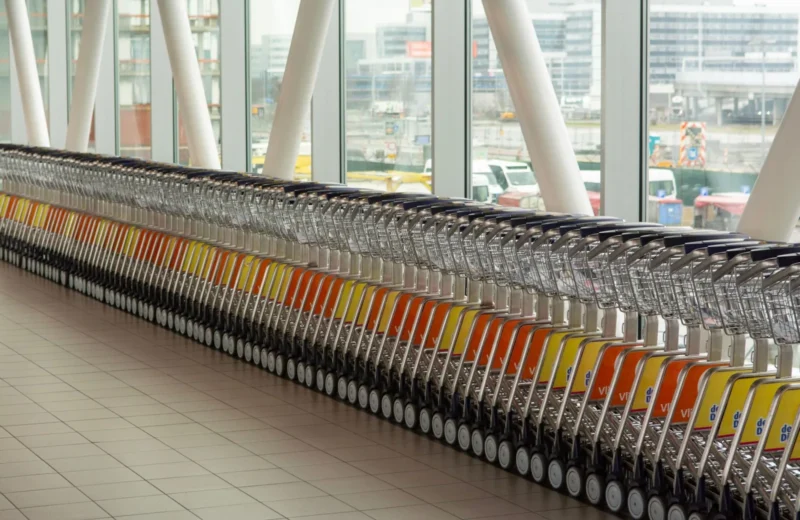
No airline flying out of Kuala Lumpur publishes a flat price for carrying a dog or a cat. Airline pet fees from KL are built from chargeable weight, the route rate and a short list of airport ground charges. This page sets out what each carrier charges on, and which numbers are published.
Introduction: the price list airlines never print
Owners searching for airline pet fees expect a table of flat prices, one row per carrier. That table does not exist for flights leaving Kuala Lumpur. What exists is a pricing method, and once you can read it you can price your own move closely.
Search the phrase and you get American numbers. A neat figure per airline, a decision made in a minute. None of it applies at KLIA, where the cabin is closed to pets and every carrier prices by weight.
So this page does the opposite. It lists what each carrier out of KL charges on, prints the ground charges that are genuinely published, and shows what four real routes cost. My Pet Mover books these flights from the Klang Valley every week, and the pattern is consistent enough to plan against.
First, what happens once the crate leaves your hands.
What do airline pet fees actually cover?
Airline pet fees cover carriage of the animal and its crate in the hold, nothing more. Ground handling, animal hotel time, crate cleaning, documentation and clearance are billed separately, usually by another company, often after the flight is booked.
The costliest assumption owners make is that one payment covers the journey. A pet move out of KL is priced by three parties:
- The airline. Lifting the crate from KL to the destination airport, priced on weight and route.
- The ground handler. Accepting, holding, loading and cleaning up at the airport itself.
- The agent. The air waybill, the booking, the paperwork and the vet coordination behind it.
Only the first line is an airline pet fee. Our note on hidden costs in pet relocation quotes covers the other two.
Cabin, checked baggage or cargo: three fee models, one airport
Out of Kuala Lumpur the cabin is closed to pets, so the choice is checked baggage on your own ticket or a cargo booking on an air waybill. Checked baggage is usually cheaper on short sectors; cargo is often the only option on long ones.
Mode decides the fee model before destination does. Checked baggage is priced against your ticket as extra baggage. Cargo is priced against a freight rate per kilogram, with a minimum charge light shipments rarely beat.
Singapore Airlines states the split plainly on its travelling with pets page: a pet travels as checked baggage, and once pet and container pass 32 kg the booking moves to a cargo agent. That threshold is where most medium dogs land.
Our comparison of cabin, cargo and excess baggage for pet travel sets out what changes for the animal, not just the bill.
Want the whole chain priced, not just the flight?
We publish what a move costs instead of quoting on request. See our pet relocation pricing →
Carrier price list: what each airline from KL charges on
Every carrier serving Kuala Lumpur prices a pet on the combined weight of animal and crate, then applies its own route rate and its own refusals. The refusals matter more, because a blocked breed or route removes the carrier entirely.
This is the closest thing to a carrier price list that exists for KL. Read the last column first, because it usually decides the booking.
Carrier Price List: How Airlines From KL Charge for a Pet
| Carrier out of KL | How a pet travels | What the fee is charged on | Restriction that rules it out |
|---|---|---|---|
| Malaysia Airlines | Checked baggage or cargo, via MASkargo | Chargeable weight of pet plus crate, at the route rate | Snub-nosed embargo, plus a banned-breed list |
| Singapore Airlines | Checked baggage; cargo above 32 kg combined | Total weight of pet and container, as extra baggage | No pets on B737s; several destinations closed |
| Emirates | Checked baggage or cargo shipment | Combined weight and size of the animal and its cage | Checked baggage only under 17 hours total journey |
| Qatar Airways | Checked baggage to 75 kg, cargo above | Combined weight of pet, container and food | Snub-nosed breeds refused; advance notice needed |
| Low-cost carriers | Not carried at all | No fee exists | Assistance dogs only, selected flights, with notice |
| Freighter and general cargo | Air waybill via an agent | Chargeable weight at the published freight rate | Minimum charges apply on light loads |
Source: carrier-published pet policies, August 2026, cross-checked against My Pet Mover bookings out of Kuala Lumpur, 2024 to 2026. Charging basis, not amounts.
Two carriers publish enough to plan around. Qatar Airways sets out its weight thresholds in its guide to travelling with pets, and Emirates confirms the 17-hour limit in its rules and charges for travelling with animals. Neither prints a ringgit figure.
Which carriers take your animal at all is a separate question, tracked in which airlines carry pets to and from Malaysia.
How chargeable weight turns a small dog into a big bill
Airlines charge on chargeable weight, the higher of what the crate weighs and what its volume implies. A light dog in a roomy crate is billed on the crate, which is why airline pet fees come back above the owner’s own arithmetic.
Volumetric weight is the whole game. Multiply the crate’s length, width and height in centimetres, divide by the airline’s volumetric divisor, then compare that to the real weight. The airline bills the larger number.
An 8 kg cat in a size 200 crate may bill as 12 kg. A 22 kg dog in a size 400 crate routinely bills above 40 kg. The box changed, not the animal.
So crate sizing is a pricing decision, not only a welfare one. The crate must meet the IATA Live Animals Regulations, the worldwide standard airlines apply at acceptance. Undersize it and the pet is refused; oversize it and your airline pet fees buy empty air. Our walkthrough on measuring your dog for an IATA crate shows where the line sits.
The published KLIA ground charges nobody quotes you
Ground charges at Kuala Lumpur are published, unlike airline pet fees themselves. Animal hotel handling, terminal charges, crate cleaning and daily accommodation all appear on the MASkargo schedule, and only one can run away with your budget.
These are published figures, not estimates. MASkargo lists them on its Animal Hotel charges page, and they apply to import and export alike.
Published KLIA Ground Charges on a 24 kg Consignment
| Published charge | Levied on | On one 24 kg pet (RM) | Relative size |
|---|---|---|---|
| Terminal charge | RM0.25 per kg chargeable weight | 6 | |
| Animal Hotel handling, domestic pets | RM30 per kennel | 30 | |
| Crate cleaning and disposal | RM50 per crate | 50 | |
| Accommodation after the free window | RM150 per day, first 8 hours free | 150 per day |
Source: MASkargo Animal Hotel published charge schedule, August 2026, applied to one 24 kg chargeable-weight pet. Bars scale to the largest line.
The first three lines come to under RM100. The fourth is open-ended, and starts eight hours after landing or cargo acceptance. Every delayed clearance, missing permit and after-hours arrival is billed at that rate.
The quarantine counter keeps daytime hours, so a badly timed landing becomes an overnight stay. Our account of what happens on flight day at KLIA pet cargo tracks the clock from acceptance to release.
Why the cheapest headline rate rarely wins
A low rate per kilogram usually buys a longer routing, a transit stop, or an aircraft that cannot take animals on every leg. The saving on airline pet fees is handed back in transit handling, extra permits and longer crate time.
Cheap routings out of KL share a shape. They connect through a hub where the pet is offloaded, held and re-accepted, and that transit is priced by someone else. Three costs appear:
- Transit handling. The hub’s ground agent charges to receive, hold and reload the animal.
- Transit permits. Some countries want documentation even for a pet that never clears immigration.
- A missed connection. If the animal misses the onward flight, board and rebooking are both billed.
Which stopovers trigger paperwork is set out in pet flight layovers, transit rules and permits. A direct flight at a higher rate is often the cheaper total.
Flying your pet out of Malaysia this year?
We book the routing, crate and clearance as one file. See how our pet export service works →
The same 22 kg dog, priced four ways out of KL
One dog, one crate, four destinations. The airline-charged portion swings roughly six times between the shortest and longest route while ground charges barely move. Distance and the mandated mode explain nearly all of it.
The same animal in every row: 22 kg, size 400 crate, leaving Kuala Lumpur as one consignment.
One 22 kg Dog, Four Routes Out of Kuala Lumpur
| Route from KL | Mode the pet must travel in | Airline-charged portion (RM) | Ground and handling (RM) | What drives it |
|---|---|---|---|---|
| Singapore | Checked baggage or road transfer | 900 – 1,600 | 400 – 800 | Short sector, road is a real option |
| Tokyo | Checked baggage or cargo | 2,800 – 4,500 | 600 – 1,100 | Long sector, crate height limits by aircraft |
| Frankfurt | Cargo | 4,500 – 7,000 | 700 – 1,300 | Cargo-only routing, higher rate per kg |
| Melbourne | Cargo only | 5,500 – 8,500 | 800 – 1,500 | Destination rules close the cheaper mode |
Source: My Pet Mover client files, one 22 kg dog in a size 400 crate departing Kuala Lumpur, 2024 to 2026. Ranges observed, not quotes. Quarantine and destination charges excluded.
Melbourne is the lesson here. Australia’s rules remove the baggage option, so airline pet fees are set by the destination, not the carrier. See what it costs to move a dog from Malaysia to Australia, and the European case in Malaysia to Germany pet relocation rules and timeline.
What breed and season do to the fee before you book
Breed and season do not raise airline pet fees directly. They remove carriers from your shortlist, and a shorter shortlist means a worse rate. Snub-nosed dogs and cats lose the cheapest operators first, which is how policy becomes price.
Malaysia Airlines publishes a snub-nosed embargo covering bulldogs, pugs, shih tzus and boxers. Singapore Airlines refuses a comparable list and adds flat-faced cats such as Persians and British Shorthairs.
Heat is the other filter. Embargoes come and go with the season and the destination, and can strand a booking confirmed weeks earlier. See airline heat embargoes and when pets cannot fly, and the breed side in flying snub-nosed breeds and airline restrictions.
Species matters too. A cat is lighter, needs a smaller crate and clears faster, which is why cats cost less to relocate than dogs on the same route.
What owners actually paid, 2024 to 2026
Across our own files, the airline-charged portion of a medium dog’s move out of Kuala Lumpur has risen every year since 2024 while ground charges stayed flat. The airline slice is now about half of a typical outbound move.
Figures below are medians from completed My Pet Mover files, not quotes and not an industry average.
Median Airline and Ground Charges Leaving KL, 2024 to 2026
| Period | Median airline charge (RM) | Median ground and handling (RM) | Airline share of total |
|---|---|---|---|
| 2024 | 3,200 | 780 | 46% |
| 2025 | 3,600 | 850 | 48% |
| 2026, first half | 3,950 | 910 | 49% |
Source: My Pet Mover client files, medium dogs (18 to 28 kg) departing Kuala Lumpur, 2024 to first half 2026. Medians across completed files. Quarantine and destination charges excluded.
The direction is steady. A quote built on 2024 airline pet fees now understates that line by about a fifth. Our view of what it costs to fly a dog overseas sets the trend against destination charges.
How to cut your airline pet fees without cutting corners
Most of the saving on airline pet fees is made before a booking exists: the crate you choose, the flight hour you pick, the routing you accept. None of it means squeezing the animal or skipping paperwork.
Work through these in order. Each removes a charge rather than negotiating it.
- Measure the pet before buying a crate. Take the four IATA measurements and buy the size that fits, not the one that looks roomy.
- Confirm acceptance before comparing rates. Check each carrier’s breed list and route restrictions first, so you are not pricing options that will be refused.
- Prefer a direct flight where one exists. One sector means one handler, no transit permit and no missed-connection board.
- Book a weekday departure inside working hours. That keeps the RM150 daily accommodation line off the invoice.
- Get the import permit and health certificate finished early. Clearance delays are billed by the day at the animal hotel, not by the airline.
- Ask for the quote split three ways. Airline, ground handling, agent. Two quotes only compare once both are broken out the same way.
Arrival charges follow their own rules. Our explainer on pet import tax in Malaysia, duty and SST settles the question owners most often get wrong.
Conclusion: price the chain, not the carrier
There is no single carrier price list for pets leaving Kuala Lumpur, and any page printing one is guessing. What you can pin down is the charging basis per airline, the published KLIA ground charges, and what comparable moves cost.
Owners lose money shopping for a number that does not exist, then accepting whatever appears once the crate is at the counter. Reverse it: fix the crate, the routing and the departure hour, then ask for prices. Airline pet fees then stop being a surprise and become one predictable line among four. Our pet relocation pricing shows where that line usually sits.
Frequently Asked Questions
1. How much are airline pet fees from KL?
There is no flat figure. On our own files, airline pet fees for a medium dog leaving Kuala Lumpur have ranged from roughly RM900 on a short regional sector to over RM8,000 on a cargo-only route to Australia. The number is set by chargeable weight and route.
2. Can my dog or cat fly in the cabin from Kuala Lumpur?
Effectively no. Carriers serving KL restrict the cabin to assistance dogs, so a pet travels in the hold, as checked baggage on your ticket or as cargo on an air waybill.
3. Why is my small dog being charged like a large one?
Because airlines bill on chargeable weight, the higher of actual and volumetric weight. A light animal in a large crate is billed on the crate’s volume, so crate choice moves the fee more than the animal does.
4. Which airline is cheapest for pets out of Malaysia?
It depends on the destination, the crate size and whether your pet’s breed is accepted. The cheapest rate per kilogram usually involves a transit, and transit handling and permits erase the saving. Compare total landed cost instead.
5. What ground charges will I pay at KLIA on top of the airline?
The animal hotel publishes its schedule: a terminal charge per kilogram, a per-kennel handling fee for domestic pets, a crate cleaning and disposal charge, and daily accommodation once the free window has passed. That last one is worth avoiding.
Get your pet’s flight priced properly, line by line
Send the destination, your pet’s breed and weight, and your target month. We come back with the airline charge, ground charges and agent fee shown separately.