No laboratory in Malaysia can run the rabies titre test Singapore accepts. AVS takes the result only from a WOAH rabies reference laboratory, or from a government-approved laboratory inside a Schedule I or II country. The blood has to leave the country. Draw it at least 28 days after the rabies vaccination, then wait 90 days before you fly.
Introduction: the question your vet cannot answer alone
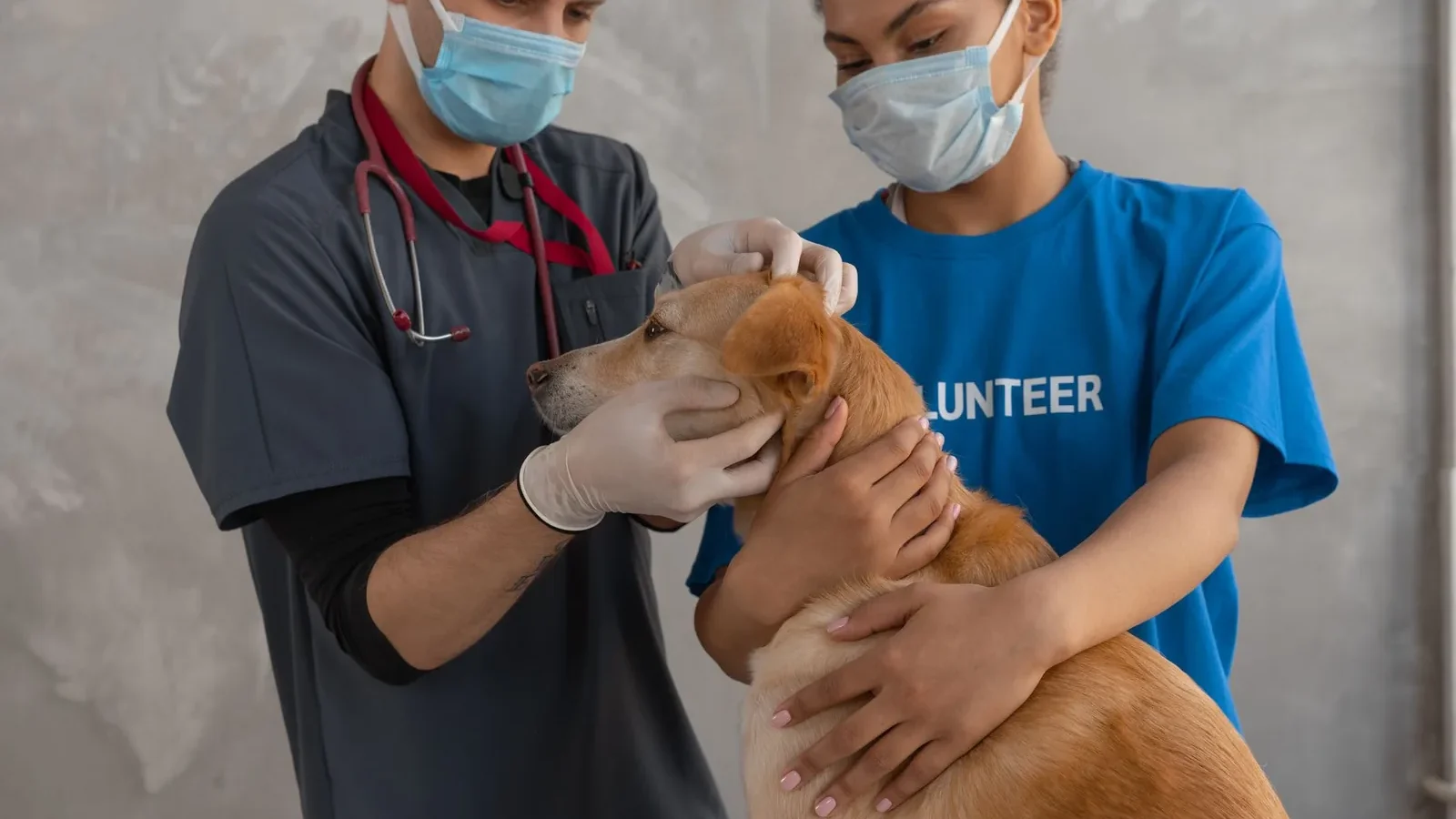
A rabies titre test for a Singapore pet is drawn in Malaysia and tested overseas. Your Malaysian vet takes the blood, spins the serum and signs the form. The laboratory that runs the test must sit outside Malaysia, because AVS accepts only two categories of laboratory and neither exists here.
Most owners find this out late. They ask a clinic in Klang Valley for a rabies titre test, the clinic says yes, and the blood is drawn. Only when the report comes back does someone notice that the laboratory’s name will not clear the counter at Changi.
This guide covers which laboratories Singapore accepts, what the draw date locks in, and where the waiting time actually goes. It also shows why the same test carries a very different consequence depending on your schedule. If you are still working out the destination side, start with our guide to Singapore’s 30-day quarantine for Malaysian pets. The video below walks through the report form, which is where a lot of paperwork goes wrong.
Why no Malaysian laboratory can run this test
AVS names exactly two acceptable laboratory types: a WOAH reference laboratory for rabies, or a laboratory in a Schedule I or II country approved by that country’s own competent authority. Malaysia holds no WOAH rabies reference laboratory, and Malaysia is a Schedule III country. Both doors are closed.
The rule is one sentence long and it is easy to skim past. Read it slowly and the exclusion becomes obvious.
- The rule itself. The Schedule III veterinary conditions, updated 1 April 2026, require the test at a WOAH reference laboratory or at a Schedule I or II country laboratory approved by that country’s competent authority.
- Malaysia is Schedule III. AVS defines Schedule III as any country or region not named in Schedule I or II, and Malaysia appears in neither list.
- No WOAH rabies reference laboratory here. The WOAH reference laboratory network holds no rabies laboratory in Malaysia.
- Competence is not the issue. A Malaysian laboratory may run the assay perfectly well. AVS is checking the laboratory’s status, not its skill.
This is the same pattern our guide to Singapore’s Schedule III rules describes across the whole protocol: the country you sit in decides what your paperwork is worth, before anyone looks at the pet.
Not sure which laboratory your clinic uses?
We name the laboratory in writing before the draw, so the report is accepted the first time. See how the Malaysia to Singapore route works →
Which laboratories Singapore actually accepts
Two families qualify. The first is the WOAH reference laboratory network, which has members in Europe, Canada and four locations across Asia. The second is any laboratory inside a Schedule I or II country that its own government has approved for export serology, such as the Kansas State laboratory in the United States.
Owners often ask for “the AVS approved list” of laboratories. There isn’t one. AVS points at two external systems instead, which is why a rabies titre test for Singapore feels harder to arrange than the AVS import licence sitting next to it on the same checklist.
The Two Doors Into a Valid Singapore Titre Report
| Qualifying basis | Named examples | Where it sits |
|---|---|---|
| WOAH reference laboratory, Europe and Canada | ANSES Nancy, Friedrich-Loeffler-Institut, IZSVe, CFIA Centre of Expertise for Rabies | France, Germany, Italy, Canada |
| WOAH reference laboratory, Asia | APQA, Changchun Veterinary Research Institute, Veterinary Research Institute, KVAFSU | Korea, China, Taiwan, India |
| Schedule II country laboratory, government-approved | Kansas State Veterinary Diagnostic Laboratory, recognised by USDA APHIS for export serology | United States |
| Schedule II country laboratory, government-approved | The laboratory designated by Japan’s Minister of Agriculture, Forestry and Fisheries | Japan |
| Any laboratory inside Malaysia | None qualify. Malaysia is Schedule III and holds no WOAH rabies reference laboratory | Malaysia |
Source: AVS Schedule III veterinary conditions (DOGCAT 83-3), updated 1 April 2026, read against the WOAH reference laboratory network and the Kansas State FAVN test page. Examples are illustrative, not an AVS-published list. Confirm current status with the laboratory before you draw.
Three practical notes. Taiwan’s Veterinary Research Institute joined the WOAH network in 2024, which makes it the nearest reference laboratory to Malaysia. Japan’s designated laboratory is already familiar to Malaysian clinics because of the Japan corridor, covered in our guide to Japan’s titer test and its long wait. And AVS asks for a WOAH-prescribed test rather than naming one assay, so the laboratory’s own standard method applies.
What the blood draw date locks in
The draw date, not the report date, drives the calendar. AVS requires blood taken at least 28 days after a valid rabies vaccination, then no less than 90 days and no more than 12 months before export. The earliest a Malaysian pet can fly is day 118 from the vaccination.
That single date fixes everything downstream, which is why we book the rabies titre test for Singapore against a target month rather than fitting it in later. It also sets when you can reserve a kennel, covered in our guide to booking Singapore pet quarantine in QMS. Here is the calendar it produces for a dog vaccinated on 1 September.
One Blood Draw, Six Dates Decided
| Day | Worked example | What can happen, and the rule behind it |
|---|---|---|
| Day 0 | 1 September | Valid rabies vaccination, microchip already readable and recorded |
| Day 28 | 29 September | Earliest blood draw. The 90-day export clock starts here |
| Day 30 to 45 | Early October | Courier transit, then laboratory turnaround. Report shows the titre in IU/ml |
| Result day | Mid October | Reserve the quarantine space in QMS. AVS asks for this once the result is ready |
| Day 118 | 28 December | Earliest export. 28 days plus the 90-day wait after the draw |
| Day 148 | Late January | Earliest release, after the minimum 30 days at the Animal Quarantine Centre |
| Draw + 12 months | 29 September, next year | Last day the same result is usable. After this, draw again |
Source: calculated from the AVS Schedule III veterinary conditions and Importing dogs and cats, page updated 5 August 2026. Day counts are minimums; the worked dates assume no delay.
The last row is the one people miss. A move postponed by a year needs a fresh draw and a fresh 90-day wait, which is why we set the vaccination date against a target month rather than the other way round. The quarantine booking that follows the result is covered in our guide to booking Singapore pet quarantine in QMS.
Where the waiting time actually goes
Courier transit and laboratory turnaround feel like the bottleneck, but they run inside the 90-day wait, not before it. Kansas State currently estimates 10 to 14 calendar days for a result. Against a 90-day statutory wait that already started at the draw, those two weeks cost you nothing.
This reframes the whole exercise. Owners rush the shipping and pay for express handling to save a week that was never on the critical path. The real money sits elsewhere, as our breakdown of the cost to move a pet between Singapore and Malaysia shows. Bars below are drawn to the longest bar.
Days in the Process, and Which Ones Overlap
| Stage | Relative length | Days |
|---|---|---|
| Wait after vaccination, before the draw | 28 | |
| Courier transit to the laboratory (inside the 90) | 2 to 4 | |
| Laboratory turnaround (inside the 90) | 10 to 14 | |
| Statutory wait after the draw, before export | 90 | |
| Quarantine in Singapore, after arrival | 30 |
Source: the 28-day, 90-day and 30-day figures are from the AVS Schedule III veterinary conditions, 1 April 2026. Turnaround is the estimate published on the Kansas State FAVN page. Courier transit is an indicative range for express air freight, not a published figure.
So paying for the fastest possible shipping buys peace of mind, not calendar. A failed or spoiled sample is the only event that really costs time, because a re-draw restarts the 90 days from the new date.
Have a target month already?
Send it to us and we will work backwards to the vaccination and draw dates that make it possible. Ask us to map your timeline →
Same blood test, very different consequence
The serology requirement is word for word identical for Schedule II and Schedule III. What differs is everything after landing. A Schedule II pet may skip quarantine entirely; a Schedule III pet is vaccinated against rabies on arrival and held at least 30 days.
Most write-ups treat Schedule III as “the hard test”. It isn’t. The test is the same one Japan and the United States face. The penalty sits at the other end, in the 30 days of quarantine every Malaysian pet serves.
Schedule I, II and III Compared, Test Against Consequence
| Requirement | What applies |
|---|---|
| Schedule I — Australia, New Zealand, Republic of Ireland, United Kingdom | |
| Rabies vaccination and titre test | Neither is required |
| Post-arrival quarantine | None, if the pet is fully compliant |
| Schedule II — 32 countries and regions, including Japan, Hong Kong SAR, USA, Canada | |
| Rabies vaccination and titre test | Required. 28-day wait, 0.5 IU/ml, 90 days to 12 months before export |
| Post-arrival quarantine | Waived on personal imports meeting AVS conditions, otherwise 10 days minimum |
| Schedule III — Malaysia and every country not named above | |
| Rabies vaccination and titre test | Identical wording to Schedule II |
| Post-arrival quarantine | Rabies vaccination on arrival, then not less than 30 days at the Animal Quarantine Centre |
Source: AVS Importing dogs and cats, updated 5 August 2026, and the Schedule I, II and III veterinary conditions dated 1 April 2026. Schedules change; check the current list before you plan.
Read that last block carefully if you are moving a pet back from Singapore later. The schedule is a property of the country the pet leaves, not of the pet itself. That is why the return leg on the Malaysia to Singapore corridor looks nothing like the outbound one.
How to run the test from Malaysia, step by step
Pick the laboratory before the vaccination, not after the draw. Everything else follows in order: microchip, vaccinate, wait 28 days, draw, spin the serum, courier it out, then check the returned report against the microchip number on the vaccination card.
Six steps, in this order. Doing them out of order is what forces a re-draw.
- Scan the microchip first. AVS requires an ISO 11784 or 11785 Annex A chip and the number must appear on every vaccination and treatment record. A chip that has migrated or stopped reading invalidates the paperwork built on it.
- Vaccinate against rabies and record it properly. The card needs the microchip number, date, vaccine brand and batch, and the vet’s endorsement. Our note on rabies vaccination rules for pets covers what a valid record looks like.
- Choose the laboratory now, not later. Confirm in writing that it is a WOAH reference laboratory or a government-approved laboratory in a Schedule I or II country. This is the step that decides whether the report is usable.
- Draw on day 28 or later. Earlier is not merely risky, it is invalid. Kansas State advises 21 to 30 days after vaccination for the best antibody response, so day 28 sits comfortably inside that window.
- Send serum, not whole blood. Laboratories ask for 1 to 2 ml of clear serum in an unbreakable tube labelled with the microchip number. An unlabelled tube gets the test cancelled outright.
- Check the returned report against the certificate. The microchip number, the sampling date and the titre in IU/ml must match what will be written on the health certificate. Our guide to the veterinary health certificate shows where each value lands.
Five mistakes that force a second blood draw
Testing at an unqualified laboratory, drawing before day 28, an unlabelled tube, a microchip number that does not match the vaccination card, and letting the result age past 12 months. Each one restarts the 90-day clock from a new draw date.
None of these are exotic. We see all five on this corridor, and four of them are decided before the blood is even drawn.
- Using a local laboratory because it was convenient. The result may be technically sound and still be refused, because AVS is checking the laboratory’s standing rather than the number on the page.
- Drawing at day 21 or 25. Vets sometimes work to a 21-day rule of thumb from other protocols. Singapore’s minimum is 28 days after the vaccination, full stop.
- Sending an unlabelled or poorly labelled tube. Laboratories cancel the test rather than guess. The microchip number goes on the tube itself, not only on the form.
- A mismatched microchip number. One transposed digit between the tube, the form and the vaccination card is enough to make the report unusable at the counter, as our guide to the AVS-recognised pet agent rule explains — the agent presenting your documents cannot correct it there.
- Letting the move slip past the 12-month mark. The result expires 12 months after the sampling date. A postponed relocation quietly needs a new draw and another 90 days.
Want the whole corridor costed before you start?
The blood test is one line in a bigger number that includes the flight, clearance and 30 days of quarantine. See our pet relocation pricing →
Conclusion
The rabies titre test for Singapore is drawn in Malaysia and read overseas, at a WOAH reference laboratory or a government-approved laboratory in a Schedule I or II country. Get that choice right, draw on day 28, and the remaining 90 days simply pass.
The test itself is routine. The decision that goes wrong is the one made in a clinic waiting room, when nobody thinks to ask where the sample is going.
Next, sort the licence order in our guide to the Singapore dog licence and import permit. Then see what replaced Sembawang at the Animal Quarantine Centre, and read the Malaysian half of the job on our pet export from Malaysia page. My Pet Mover runs this corridor both ways.
Frequently Asked Questions
1. Can a Malaysian laboratory do the rabies titre test for Singapore?
No. AVS accepts the test only from a WOAH reference laboratory for rabies, or from a laboratory in a Schedule I or II country approved by that country’s competent authority. Malaysia is Schedule III and holds no WOAH rabies reference laboratory, so the sample must be sent overseas.
2. How long after the rabies vaccination can the blood be drawn?
At least 28 days after a valid primary vaccination or booster. Kansas State advises waiting 21 to 30 days for the best antibody response, so day 28 works for both the rule and the biology. Drawing earlier makes the result invalid for Singapore, however good the titre looks.
3. What titre does Singapore require?
A WOAH-prescribed test showing a rabies neutralising antibody titre of at least 0.5 IU/ml. The blood must be sampled no less than 90 days and no more than 12 months before the date of export, and the report travels with the pet.
4. Does the 90-day wait start from the blood draw or the result?
From the date of blood sampling. That matters, because courier transit and laboratory turnaround both run inside the 90 days rather than after them. Paying for faster shipping does not bring the export date forward.
5. What happens if the titre comes back below 0.5 IU/ml?
The pet is revaccinated and retested. The new sampling date becomes the start of a fresh 90-day wait, so a failed result typically costs about three months rather than a few weeks. This is the main reason to draw on day 28 rather than leaving it late.
Planning a move to Singapore this year?
Tell us your target month. We will name the laboratory, set the vaccination and blood draw dates, hold the quarantine space, and send one written quote covering both sides of the border.