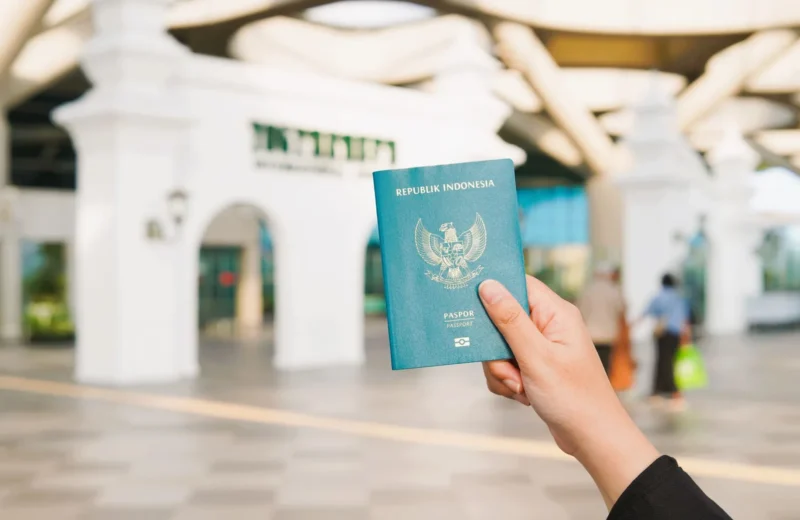
Yes, once the cat is three months of age or over. Canada's rabies certificate rule sits in Part III section 1 of the CFIA Import Reference Document, last amended 8 October 2025, and it accepts three alternatives: a current rabies vaccination, six months of residence in a rabies-free country, or a titre of at least 0.5 IU/ml. Cats under three months face no restrictions at all.
Introduction: a short rule that gets long in the retelling
Canada’s entire cat import rule runs to about 215 words. Most of the confusion Malaysian owners arrive with comes from guidance written for dogs, or written for Europe, and then applied to a cat flying to Canada where it was never meant to apply.
Owners come to My Pet Mover with a screenshot and a worry. The screenshot says their cat needs a microchip implanted before the rabies vaccination, a titre test, and a health certificate issued within ten days. The worry is that they have already missed a deadline.
Usually they have not. Almost none of that is in Canada’s cat rule.
Canada writes its cat conditions in one short section, separate from the dog section directly beneath it. Read that section on its own and the Malaysia to Canada pet corridor gets considerably simpler for cat owners than most people expect. One rabies certificate does most of the work.
The video below is a general primer on flying internationally with a cat, which is useful background before the Canadian wording is picked apart.
Do cats entering Canada need a rabies certificate?
Yes, for a cat three months of age or over. Section 1(2) asks for a veterinarian’s certificate, in English or French, that clearly identifies the cat and shows it is currently vaccinated against rabies, or satisfies one of two written alternatives. Below three months, no restrictions apply.
The wording lives in Part III, section 1 of the CFIA Import Reference Document, the instrument incorporated by reference into Canada’s Health of Animals Regulations. It was last amended on 8 October 2025.
First, cats get their own section. Section 1 is cats; section 2 is dogs. Conditions written into the dog section do not travel across, which is why the questions Canada asks about an arriving dog look so different.
Second, the rabies certificate is the requirement. Canada does not ask for a permit for a personal pet cat, and section 1 contains no quarantine condition of any kind. The rabies certificate for a cat entering Canada is close to the whole of the federal ask.
Moving a cat from KL to Canada this year?
We handle the vet timing, the export file and the flight as one job. See what a Canada move costs →
The Three Routes Canada Gives a Cat Three Months or Over
Section 1(2) lists three ways to satisfy Canada, joined by “or”: current rabies vaccination, six months of residence in a designated rabies-free country, or a rabies titre of at least 0.5 IU/ml. A cat leaving Malaysia can use the first and the third.
The Three Routes Canada Gives a Cat Three Months or Over
| Route | What the certificate must show | Open to a cat flying from Malaysia? | Written at |
|---|---|---|---|
| A. Current rabies vaccination | The cat is clearly identified and is currently vaccinated against rabies | Yes, and it is the normal route | s.1(2)(a) |
| B. Rabies-free country residence | The cat comes from a country designated rabies-free and lived there for the six months immediately before entry | No, Malaysia is not on the list | s.1(2)(b) |
| C. Rabies titre test | An RNATT result of at least 0.5 IU/ml, drawn at least 30 days after any prior rabies vaccination, with the cat identified on the lab report and the report travelling with it | Yes, but rarely necessary | s.1(2)(c) |
| No route met | An inspector may order vaccination within a stated time at the owner’s expense, and the certificate must then be presented | Applies at the border | s.1(3) |
Source: compiled by My Pet Mover from Part III section 1 of the CFIA Import Reference Document, last amended 8 October 2025, and the CFIA list of countries recognised as rabies free for domestic cats and dogs, modified 20 September 2024. The rabies-free list is stated by CFIA to be under review.
Route B is closed to Malaysian cats. Canada’s designated rabies-free list holds nine countries — Australia, Fiji, Finland, Iceland, Ireland, Japan, New Zealand, Sweden and the United Kingdom. Malaysia is not among them, and CFIA notes the list is under review.
That leaves two live options, and for almost every cat the first one is the answer. The rabies certificate your vet already issues after a routine vaccination is the document, and what Canada expects that certificate to say is set out in full for dogs and cats alike.
How Long Each Route Takes Before It Can Be Used
Section 1(2) builds a waiting period into two of its three routes. The vaccination route has none written into it. The titre route needs at least 30 days after the prior vaccination before blood may be drawn. The rabies-free route needs six months of residence.
Waiting Time Written Into Each Cat Route, in Days
| Route | Relative waiting time | Minimum days |
|---|---|---|
| B. Rabies-free country residence | 180 | |
| C. Titre test, blood draw after vaccination | 30 | |
| A. Current rabies vaccination | 0 |
Source: compiled by My Pet Mover from subsection 1(2) of Part III of the CFIA Import Reference Document, last amended 8 October 2025. Six months is shown as 180 days. Days counted are those written into the Canadian rule only; laboratory turnaround on a titre test, airline booking lead time and Malaysian export processing sit on top and are not shown.
The comparison matters because the titre route is often described online as the safer choice. On this corridor it is the slower one, and Canada asks for it as an alternative to the rabies certificate rather than as an addition to it.
Countries that do require a titre alongside vaccination write that requirement into their own rules. China is the clearest example on our routes. Canada did not.
What the certificate has to say, and what it does not
Section 1(2) asks for four things: a veterinarian’s certificate, written in English or French, clear identification of the cat, and a statement that it is currently vaccinated against rabies. Everything beyond those four is your vet’s practice or your airline’s policy, not Canadian law.
Read the subsection slowly:
- A veterinarian’s certificate. The document does not name a form number, a template, or a government endorsement stamp on the Canadian side.
- In English or French. A Malaysian vaccination record in English already meets this. A record in Bahasa Malaysia alone does not.
- Clearly identifies the animal. Description, breed, colour, sex and age do this work. A microchip number does it better, but section 1 does not require one.
- Currently vaccinated against rabies. The rule says “currently” and sets no validity period of its own, so in practice the vaccine product’s labelled duration decides whether the cat is still covered on the arrival date.
That last point needs care. If a one-year product lapses mid-journey because a connection slipped a day, the cat is no longer currently vaccinated when it matters.
What Circulating Guides Add That Section 1 Never Wrote
Four conditions turn up repeatedly in cat-to-Canada guidance and appear nowhere in section 1: microchip before vaccination, a stated duration of immunity, a ten-day health certificate window, and a waiting period after vaccination. Each is real somewhere else.
Common Claims About Canada’s Cat Rule, Traced Back
| Claim in circulation | What section 1 says | Where the condition is genuinely real |
|---|---|---|
| Group A — identity and sequencing | ||
| The cat must be microchipped before the rabies vaccination | Nothing. Section 1 asks only that the certificate clearly identifies the animal | EU and UK pet travel rules, where implant order is enforced |
| The certificate must state the vaccine’s duration of immunity | Nothing. The wording is “currently vaccinated against rabies” | Certificate templates used by several other importing countries |
| Group B — timing | ||
| A health certificate must be issued within ten days of travel | Nothing. No general health certificate is required of a pet cat at all | Airline acceptance policies and several other destinations |
| A waiting period applies after the rabies vaccination | Nothing for the vaccination route. Thirty days applies only before a titre blood draw | Rabies-controlled destinations that pair a titre with a waiting period |
Source: compiled by My Pet Mover in August 2026 by comparing commonly published cat-to-Canada guidance against Part III section 1 of the CFIA Import Reference Document, last amended 8 October 2025. The right-hand column identifies the rule set each condition belongs to and is our attribution, not a CFIA statement. Requirements change; confirm on the CFIA site before you book.
None of these additions is harmful in itself. A microchipped, recently examined cat travelling on a fresh rabies certificate will clear the border comfortably.
The harm is the delay. Owners postpone a move by weeks chasing a titre Canada never asked for, then miss the flight window they actually had.
Not sure which requirements are actually yours?
Send us the destination and your cat’s vaccination dates and we will separate the real conditions from the imported ones. See how our export service works →
Kittens under three months face no restrictions at all
Subsection 1(1) says domestic cats less than three months of age are not subject to any restrictions for importation. No rabies certificate, no alternative. That is a wider exemption than the equivalent puppy rule, which removes the rabies documents but leaves other dog conditions standing.
The kitten wording is unusually generous, and it is worth reading against the dog section directly beneath it. Canada’s puppy rabies exemption for dogs under three months lifts the rabies documents only; the unaccompanied certificate package and the age bands survive it.
For a kitten, section 1 lifts everything on the Canadian side.
That does not make flying a young kitten sensible. Airlines set their own minimum ages, a cat that young is poorly suited to a long sector, and the Malaysian export file still has to be built. We usually recommend waiting, as we do when owners ask about moving very young puppies and kittens across borders.
Same flight, different rulebooks: cat versus dog
A cat and a dog leaving Kuala Lumpur on the same aircraft face different Canadian conditions. The dog rules carry age bands, an unaccompanied certificate package and a commercial-import ban tied to rabies risk. None of that appears in the cat section.
Canada’s high-risk dog rabies classification is the sharpest divide. Malaysia sits on that list, which is why Malaysian dogs face a commercial-import restriction that owners find alarming. The list governs dogs. Cats are outside it entirely, and a cat’s rabies certificate carries no extra conditions because of where it was issued.
The differences that matter in practice:
- Age bands. Dogs have three, split at three months and eight months. Cats have one split, at three months.
- Unaccompanied travel. A dog under eight months flying alone needs a further examination certificate. A cat flying alone needs nothing extra under section 1.
- Commercial purpose. Dogs for resale or adoption from high-risk countries face a standing restriction. Cats for sale or adoption may need an import permit, which is a different and lighter hurdle.
- Breed rules. Provincial and municipal breed legislation, including the pit bull restrictions in Ontario and Winnipeg, applies to dogs. Cats are not caught by it.
Malaysia, incidentally, runs the same species split in the other direction, which we cover in our comparison of how Malaysia’s import rules treat cats and dogs differently.
What happens if a cat lands without a valid certificate
Subsection 1(3) gives an inspector the power to order the cat vaccinated within a stated time at the owner’s expense, with the certificate then presented. The owner must comply. It is a remedy, not an automatic refusal, but it is not a guarantee of entry either.
A missing rabies certificate for a cat entering Canada does not read as a straight ban in the wording. Two limits are worth stating plainly.
The word used is “may”. The subsection permits an inspector to issue the order; it does not oblige one. And Part IV of the same document still says an animal that does not qualify for import must be removed from Canada under the Health of Animals Act.
CFIA also warns separately that any animal can be refused entry if it appears to be in poor health or if proper documentation is not provided. Landing on subsection 1(3) is a fallback, not a plan.
Some destinations answer a paperwork gap with confinement instead. Singapore’s 30-day quarantine for Malaysian pets is the closest example to home, and against that, Canada’s remedy is mild. That is not a reason to test it.
A Malaysian Cat’s Document Sequence to Canada
The Canadian half of a cat’s file is one rabies certificate. The Malaysian half, meaning the export health certificate, the government endorsement and the airline’s own acceptance paperwork, is where the sequencing and the deadlines actually live.
A Malaysian Cat’s Document Sequence to Canada, by Stage
| Relative timing | Stage | Who issues or decides | Why it sits here |
|---|---|---|---|
| Day −90 or earlier | Confirm the cat’s age band and choose the route | Owner and agent | Route C is the only one that adds a fixed 30-day wait |
| Day −90 to −60 | Rabies vaccination, or confirmation the existing one still runs past the arrival date | Malaysian veterinarian | Canada asks for current cover on arrival, not on departure |
| Day −60 to −30 | Flight and crate booking, cabin or manifest cargo decided | Airline | Pet capacity on Canada-bound routings is limited and books out early |
| Final weeks | Malaysian export health certificate and government endorsement | Malaysian veterinarian, DVS and MAQIS | Malaysian export windows are short and set on the Malaysian side |
| Final days | Fit-to-fly examination for the carrier | Veterinarian, to the airline’s window | This is a carrier condition, not a Canadian one |
| Arrival day | Declare the cat and present the rabies certificate | Border officer, CFIA inspector if referred | Age and current vaccination are assessed at importation |
Illustrative sequence modelled by My Pet Mover in August 2026 on the conditions in Part III section 1 of the CFIA Import Reference Document, last amended 8 October 2025. Timings are modelled planning windows, not regulated deadlines. Malaysian export windows are set by DVS and MAQIS and airline windows by the carrier; confirm both for your own departure date.
Read down the “who issues” column: only the last row belongs to Canada.
The Malaysian export side Canada never mentions
Canada’s import rule says nothing about leaving Malaysia. DVS and MAQIS run their own export process for pets flying out of KLIA, and those requirements apply whatever the destination asks for.
A file that satisfies section 1 perfectly will still be stopped at the Malaysian end if the export documents are missing. Different governments administer the two halves, and neither checks the other’s work.
On the Malaysian side, expect a veterinary examination, an export health certificate and the endorsement process handled through the Department of Veterinary Services and MAQIS. Our pet export service from Malaysia runs this half.
Airline conditions add a third layer. Which carriers accept live animals to Canada changes with the season, and we track it in our guide to airlines that carry pets to and from Malaysia.
Transit: what the United States asks of a cat
Cats are not required to have proof of rabies vaccination to enter the United States, per CDC guidance last updated 22 August 2025. They must appear healthy and are subject to inspection. That keeps American routings open to cats in a way they are not open to young dogs.
With no direct service from Kuala Lumpur to Canada, most cats connect through a third country, often a North American hub.
The CDC’s animal importation guidance is short on cats. No rabies proof is demanded, no general health certificate is required by CDC, and the test at the port is that the cat appears healthy and shows no evidence of a zoonotic disease. Hawaii and Guam impose their own quarantine, which does not affect a mainland connection.
Contrast that with the dog position, where the CDC’s rules for dogs from Malaysia close off routings that a cat can use freely.
Transit still has to be booked as transit, and the rabies certificate should travel in the same document wallet rather than in checked baggage. Airline and airport conditions on a live-animal connection are their own subject, covered in our guide to pet flight layovers and transit rules.
Conclusion: a one-document answer
Yes, a cat entering Canada needs a rabies certificate once it is three months of age or over. That certificate, issued by your own vet in English or French, is very close to the entire Canadian requirement.
No import permit for a personal pet. No quarantine in the cat section. No microchip sequencing, no titre unless you choose that route, and no health certificate window.
Confirm the wording yourself before you book, because it does move. The reference document was last amended on 8 October 2025 and the rabies-free country list was last modified on 20 September 2024, with CFIA stating that the list is under review. For the file mapped against real departure dates, see the Malaysia to Canada corridor.
Flying your cat to Canada this year?
Send us your cat’s age, its vaccination dates and the city you are moving to. We will confirm which route applies, build the Malaysian export file and book the flight around it.
Frequently Asked Questions
1. Do cats entering Canada need a rabies certificate?
Yes, once the cat is three months of age or over. Part III section 1(2) of the CFIA Import Reference Document asks for a veterinarian’s certificate in English or French. It must clearly identify the cat and show that it is currently vaccinated against rabies, or that it meets one of two written alternatives.
2. Does my cat need a microchip to enter Canada?
Section 1 does not require one. It asks that the certificate clearly identifies the animal, which a full description can do. We still recommend a microchip because it removes any argument about identity and because other authorities on the journey may want it.
3. Is there a waiting period after the rabies vaccination before my cat can fly?
Not for the vaccination route. The only 30-day period in section 1 applies to the titre alternative, where blood must be drawn at least 30 days after any prior rabies vaccination. Airlines and the Malaysian export process set their own timings.
4. My cat has never been vaccinated against rabies. What happens?
Vaccinate before you travel. If a cat arrives without meeting section 1(2), subsection 1(3) allows an inspector to order vaccination within a stated time at the owner’s expense, and the owner must comply. That is a discretionary remedy, not a right of entry.
5. Will my cat be quarantined when it arrives in Canada?
Section 1 imposes no quarantine on an imported cat. The explicit no-quarantine note in Part III is written for dogs, but the cat section sets no confinement condition of its own.
6. Do I need a CFIA import permit for a pet cat?
Not for a personal pet arriving under section 1. CFIA notes that some imports of animals for adoption, sale or other commercial purposes require an import permit, requested through a My CFIA account, so a cat being sold or rehomed is a different case.
7. Does the rabies certificate have to be written in English?
English or French. Malaysian vaccination records are usually issued in English already, which satisfies the wording. A record in Bahasa Malaysia alone would need to be reissued or accompanied by an acceptable English version.