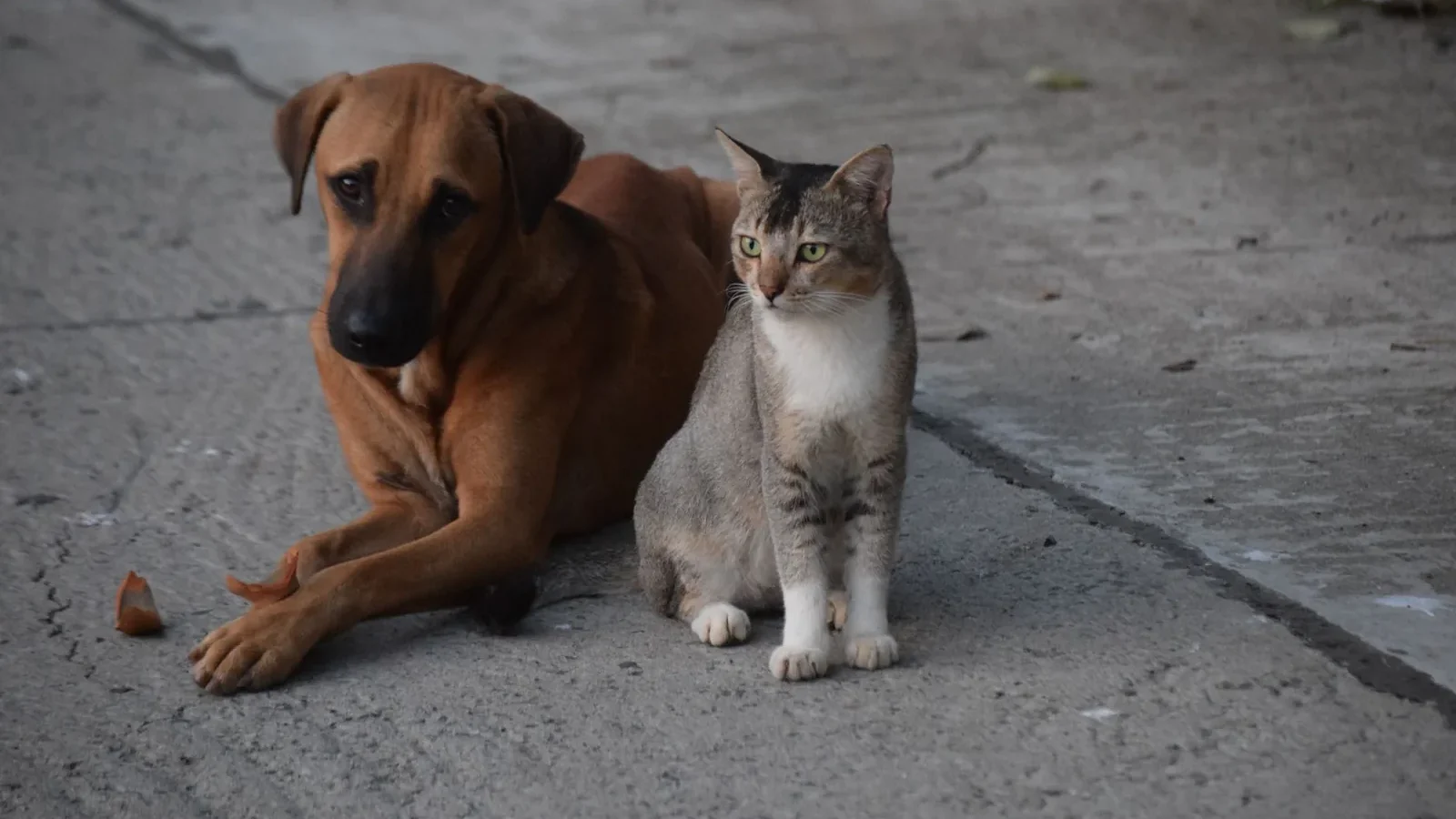
Malaysia governs both species under one document, and the health file is identical: an ISO microchip, rabies vaccination, a government health certificate, a MAQIS import permit and quarantine from non-scheduled countries. The divergence is a breed schedule before the permit and a council licence after arrival, both of which apply only to dogs.
Introduction: one rulebook, one extra layer
The cat import rules Malaysia applies are not a separate set of rules. Cats and dogs sit inside the same published regulation and meet the same health conditions. Dogs then carry a second layer that cats do not: a breed schedule before the permit, and a council licence after arrival.
Households moving both animals expect two processes. They find one. The permit, the microchip, the vaccination record and the quarantine decision behave the same for a Persian as for a Labrador.
What changes is what sits on top. Malaysia publishes a list of dog breeds it will not admit, and a second it admits only after separate written approval. There is also an ending most owners never plan for, because keeping a dog in Kuala Lumpur requires a city licence. A cat needs neither.
This guide sets the species side by side, clause by clause, using the regulations as published. It reflects how we sequence inbound files at My Pet Mover and the conditions behind every pet import into Malaysia we handle. The video below walks through the process both animals share.
Cat import rules Malaysia publishes: what the regulation actually says
There is no cat-only regulation. Malaysia’s Department of Veterinary Services publishes one document titled Regulations for the Importation of Dogs and Cats, and almost every clause refers to “the animal” rather than to a species. Cats sit under the same text as dogs.
This surprises people expecting a cat-specific checklist. The regulation is written by risk, not species, and the risk being managed is rabies. A cat carries it the way a dog does, so the conditions match.
In the non-scheduled country regulation published by the Department of Veterinary Services, the shared conditions are set out plainly:
- A valid MAQIS import permit. Applied for the same way for either animal. See our guide to getting a MAQIS import permit for your pet.
- An ISO-compliant microchip. Meeting ISO standards 11784 and 11785, and tied to every later document. See our note on microchip rules for pets entering Malaysia.
- A pet passport or description document. Carrying a full description or identification of the animal.
- Rabies vaccination before export. With an approved vaccine, alongside the other rabies conditions Malaysia sets.
- Core vaccines inside twelve months. As recommended by a licensed veterinarian.
- A government veterinary health certificate. Covering an examination within seven days of export. Our guide to the veterinary health certificate for Malaysia entry sets out what must be certified.
- Quarantine where the origin is non-scheduled. Not less than seven days, extendable up to six months on a case-by-case risk assessment.
Every line applies identically to both species. Moving a cat and a dog means one process run twice.
Moving a cat and a dog on the same flight?
Send us both animals’ details and country of export and we will map the two files to one arrival date. See how our Malaysia pet import service works →
Cat import requirements Malaysia sets, against the dog list clause by clause
Laid side by side, the cat import requirements Malaysia publishes match the dog list on every health and documentation clause. The lists separate on exactly three points, and all three are breed clauses with no cat equivalent.
The comparison below is drawn from both published regulations, the non-scheduled text and the scheduled-country regulation, not from a summary.
Cat and Dog Conditions, Clause by Clause
| Condition | Cat | Dog |
|---|---|---|
| MAQIS import permit | Required | Required |
| ISO 11784 / 11785 microchip | Required | Required |
| Pet passport or description document | Required | Required |
| Rabies vaccination before export | Required | Required |
| Core vaccines within 12 months | Required | Required |
| Government vet health certificate, 7 days | Required | Required |
| Quarantine, non-scheduled origin | Not less than 7 days | Not less than 7 days |
| Permit approval subject to breed | No breed schedule | Yes, banned and restricted lists |
| Written approval before permit application | Not applicable | Restricted breeds only |
| Premises inspection before approval | Not applicable | Restricted breeds only |
Source: Department of Veterinary Services Malaysia, scheduled and non-scheduled country import regulations for dogs and cats.
Seven shared conditions, three dog-only ones. That ratio is the whole story, and worth remembering when a dog quote comes back longer than a cat quote.
The breed schedule that exists only for dogs
Malaysia’s regulation states that for dogs, approval to get the import permit is also subject to the breed. It names seven breeds it will not admit and six it admits only after separate written approval. No comparable schedule exists for cats.
This is the clause that changes the shape of a move. For a cat owner, breed is a description. For a dog owner, it is a gate.
Breed Schedules by Species
| Grouping | Named in the regulation | What it triggers |
|---|---|---|
| Dogs | ||
| Banned breeds, 7 | Akita; American Bulldog; Dogo Argentino; Fila Braziliero; Japanese Tosa; Neapolitan Mastiff; Pit Bull Terrier and its named variants | Import not permitted |
| Restricted breeds, 6 | Bull Mastiff; Bull Terrier; Doberman; German Shepherd or Alsatian including Belgian and East European Shepherd; Perro de Presa Canario; Rottweiler | Written approval required before the permit application |
| All other dogs | Not named | Standard permit route |
| Cats | ||
| All cats | No breed schedule in the import regulation | Standard permit route |
Source: Department of Veterinary Services Malaysia, import regulations for dogs and cats, banned and restricted breed clauses.
Two details catch families out. The banned list captures breeds kept as household pets elsewhere, and the restricted list captures the German Shepherd, a commonly relocated working breed. We cover both in our guide to dog breeds banned or restricted in Malaysia.
Thirteen dog breeds are named in the regulation. Zero cat breeds are.
What a restricted-breed dog adds before you can even apply
A restricted-breed dog must satisfy six published conditions and obtain written approval from the MAQIS Director General before an import permit is applied for. A cat, and any unrestricted dog, starts at the application itself.
These are not paperwork in the usual sense. One requires a physical inspection of the home the dog will live in, so the route cannot be compressed into the final weeks before a flight.
- Minimum age. Not less than three months old at import.
- Pedigree certificate. From an approved organisation in the country of export, named and addressed in the application.
- Microchip recorded on the pedigree. The ISO code on the pedigree certificate, not only the vaccination record.
- Named responsible importer. The person answerable for the dog’s care and handling.
- Premises inspection. Verifying the kennel, compound size, and safety and control arrangements.
- Written declaration. That the dog is a personal pet not for sale, kept secured within the compound, and leashed and muzzled in public.
The fee moves with the same distinction. Malaysia’s notified licensing procedure prices the permit for a dog or a cat at RM 40 per animal, rising to RM 100 for a restricted-breed dog.
Pre-Permit Conditions and Fee by Animal Profile
| Animal profile | Conditions before applying | Count | Permit fee |
|---|---|---|---|
| Restricted-breed dog | 6 | RM 100 | |
| Unrestricted dog | 0 | RM 40 | |
| Cat | 0 | RM 40 | |
| Banned-breed dog | Not admissible | Not applicable |
Source: Department of Veterinary Services restricted-breed approval conditions; permit fees as notified by Malaysia to the WTO Committee on Import Licensing.
Note what the fee gap does not tell you. RM 60 is a rounding error against a relocation, so the real difference is time. Our pet relocation pricing page sets out where the costs sit.
Not sure whether your dog’s breed is on either list?
Tell us the breed as written on the pedigree and we will confirm the route before you book. Read why permits need an authorised agent →
Import cat vs dog Malaysia: where the extra work actually lands
Compare import cat vs dog Malaysia across the stages of a move and the extra dog work sits at the two ends, before the permit and after arrival. At the border, in quarantine and at inspection, both animals are treated the same.
Most owners assume the cat import rules Malaysia applies diverge at the airport. They do not. The airport is the one stage where both animals are handled identically.
Obligations by Stage of the Move
| Stage | Cat | Dog |
|---|---|---|
| Before the permit | ||
| Breed clearance | Nothing to clear | Breed check, then written approval and a premises inspection if restricted |
| Preparing to fly | ||
| Health file | Microchip, rabies, core vaccines, certificate | Microchip, rabies, core vaccines, certificate |
| At the border | ||
| Inspection and quarantine | Same conditions, same minimum period | Same conditions, same minimum period |
| After arrival | ||
| Keeping the animal | No licence under the Kuala Lumpur dog by-laws | Annual council licence, plus conditions on housing and control |
Source: Department of Veterinary Services import regulations; Kuala Lumpur dog licensing by-laws.
Read down the middle column and a cat’s move is one continuous process. Read down the right and a dog’s has a gate at the front and an obligation at the back.
The dog file does not end at KLIA
Clearing quarantine finishes the import, not the dog’s paperwork. Under Kuala Lumpur’s by-laws no person may keep a dog unless it is licensed, and the licence carries conditions on housing and control. Cats are not licensed under them.
Almost no relocation checklist mentions this, and it creates problems weeks after the family moves in. The rules come from the city, not the border, so nothing at the airport flags them. The dog licensing by-laws published by Kuala Lumpur City Hall set out conditions with no cat equivalent:
- A licence is compulsory. No person may keep a dog unless it is licensed, on application to the Mayor with a fee of ten ringgit.
- Flats are restricted. The Mayor may permit one small dog in a flat, from a schedule of nine breeds, with a consent letter from the building’s joint management body or management corporation.
- Prohibited dogs are seized. The same seven breeds banned at import are prohibited in the city, and one found on any premises is seized and disposed of with no compensation.
- Controlled breeds add training. For the six controlled breeds, the owner must have passed a handling course and the dog an approved Canine Good Citizen programme.
- Ongoing control obligations. Supervision, leash and muzzle outside the premises, maintained fencing, and a warning sign front and rear.
Two things follow. A family moving a Rottweiler into a landed home has a training requirement no import agent can complete for them. A family moving a Chihuahua into a condominium needs their management body’s written consent, while their cat needs nothing. Councils outside Kuala Lumpur run their own by-laws, so the detail changes with the address, but the principle does not.
Where a cat can still pick up an extra approval
One category of cat does attract an extra layer, and it does not come from the import regulation. Cats bred from wild ancestry, such as Bengals and Savannahs, can fall under wildlife law rather than ordinary pet rules, adding a clearance before the permit.
This is not a breed schedule in the sense the dog lists are. The veterinary regulation still says nothing about cat breeds. What changes is which authority has an interest in the animal. Where a cat has documented wild ancestry within recent generations, the question shifts from animal health to wildlife protection, and requirements turn on the individual pedigree rather than on the breed name.
If your cat is a recognised hybrid breed, raise it in the first conversation rather than at the permit stage, with the pedigree ready. Treated early it is manageable. Discovered late it stalls an otherwise straightforward file.
What this changes about how you plan the move
A dog file starts with a breed question and a destination address. A cat file starts with a calendar. Getting the first question right for each species keeps both animals on the same flight when a household is moving both.
Plan a dog around the breed and the address, because both can change the answer before any vet is involved. Plan the calendar first when you bring a cat to Malaysia, because timing is what usually goes wrong.
The documents are the same for both, and our checklist of documents your pet needs for Malaysia works unchanged for either animal. So does the permit’s expiry behaviour, covered in our guide to how long a MAQIS import permit lasts.
Two other variables often matter more than species. Age has its own conditions for very young animals, set out in our guide to importing a puppy or kitten to Malaysia. Route is the other, since a land crossing follows different mechanics to a flight, as we explain in our guide to driving a dog to Singapore via the Causeway. From a non-scheduled country both animals go to the same facility on the same terms, covered on our page on pet quarantine at KLIA.
Conclusion: same file, different second layer
Cats and dogs meet the same Malaysian import conditions on health, documentation and quarantine. Dogs carry a breed schedule before the permit and a council licence after arrival. Neither layer exists for an ordinary cat.
If you take one thing from this comparison, make it this. The cat import rules Malaysia applies differ from the dog rules not in difficulty, but in where the difficulty sits.
A cat’s file is linear. A dog’s has a question at the start that can stop it, and an obligation at the end that outlives the move. Plan for both and the animals travel together without drama.
Frequently Asked Questions
1. Are Malaysia’s import rules different for cats and dogs?
Only in part. One published regulation covers both species, with identical conditions on microchipping, rabies vaccination, core vaccines, the health certificate, the import permit and quarantine. Dogs additionally face a breed schedule before the permit and a council licence after arrival. Neither applies to an ordinary cat.
2. Do cats face breed restrictions when entering Malaysia?
The import regulation names no cat breeds, so no cat breed is banned or restricted under it. The exception sits outside that regulation: cats with recent wild ancestry, such as Bengals and Savannahs, can fall under wildlife rules and may need separate clearance before a permit is issued.
3. Does a cat have to go into quarantine in Malaysia?
That depends on the country of export, not the species. From a non-scheduled country, the animal is detained on arrival for not less than seven days, extendable up to six months if a risk assessment requires it. A cat and a dog from the same country face the same period.
4. What do I need to bring a cat to Malaysia?
You need an ISO 11784 or 11785 microchip, a rabies vaccination given before export, and core vaccines within the previous twelve months. You also need a pet passport or description document, a government health certificate covering an examination within seven days of export, and a valid MAQIS import permit.
5. Does a dog need a licence after arriving in Malaysia?
Yes, in Kuala Lumpur. The city’s by-laws state that no person may keep a dog unless it is licensed, on application to the Mayor with a fee of ten ringgit. Controlled breeds add a handler course and an approved good citizen programme first. Other councils apply their own by-laws.
Moving a cat, a dog, or both to Malaysia?
Send us the species, breed and country of export and we will confirm the route, the quarantine position and a realistic timeline before you book a flight.