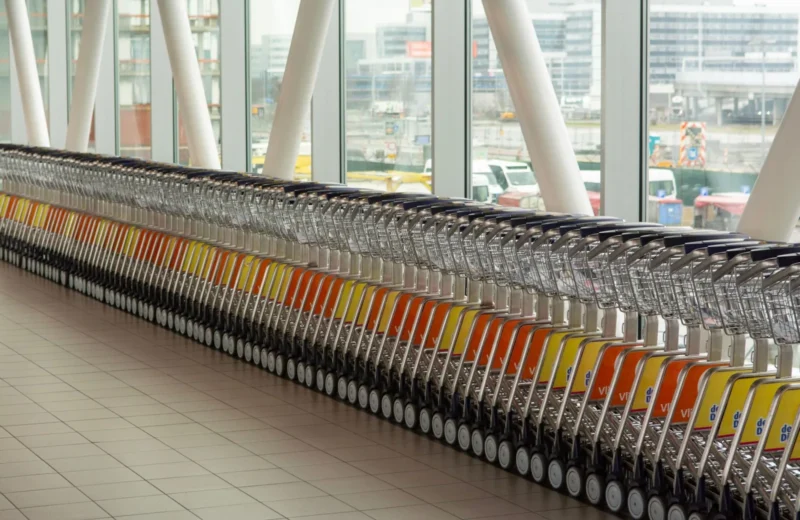
An IATA approved pet crate in Malaysia costs RM 180 for a cat box and up to RM 4,500 for a custom wooden crate built for a giant breed. Most dogs land between RM 400 and RM 1,400. The crate is a small line on its own, but the size you buy sets the volumetric weight that drives the largest line in the whole file.
Introduction: the cheapest box is rarely the cheapest decision
Owners shop for a travel crate the way they shop for luggage, comparing prices between two models that look the same. The crate that costs RM 300 less is often two sizes bigger than the pet needs, and that extra volume can add RM 800 to the airline invoice.
Crate shopping here is confusing for a reason. Every listing says “IATA approved”, the model numbers look official, and the label dimensions are rarely the ones that matter. Owners choose on price, then find out at acceptance that the box was wrong.
This page does the opposite. It starts with the sizes actually sold here, what each costs in ringgit, then follows the same crate through to the freight invoice where the real money sits. Our pet relocation cost breakdown shows where the crate falls against every other line. The team at My Pet Mover can also size a pet over a phone call.
Before the price list, a short demonstration of how the animal itself sets the box.
How much does an IATA approved pet crate cost in Malaysia?
An IATA approved pet crate in Malaysia costs RM 180 to RM 320 for a cat or toy breed, RM 400 to RM 950 for most medium and large dogs, and RM 1,600 to RM 2,800 for the giant plastic sizes. A custom wooden crate runs RM 2,500 to RM 4,500.
The ladder below is what Klang Valley suppliers actually stock. Prices move with the exchange rate because nearly every plastic crate here is imported, and the two largest sizes are often ordered in.
Crate Size Ladder and Ringgit Prices
| Common size label | Typical outside L × W × H (cm) | Suits a pet up to | Retail price (RM) |
|---|---|---|---|
| 100 / XS | 53 × 40 × 38 | Cats and toy breeds, 5 kg | 180 – 320 |
| 200 / S | 68 × 51 × 47 | Small dogs, 10 kg | 280 – 450 |
| 300 / M | 81 × 57 × 60 | Beagle, corgi, 15 kg | 400 – 650 |
| 400 / L | 100 × 62 × 73 | Labrador, husky, 25 kg | 650 – 950 |
| 500 / XL | 115 × 67 × 80 | German shepherd, 35 kg | 900 – 1,400 |
| 600 / XXL | 115 × 66 × 89 | Tall 35 kg dogs, 45 kg | 1,200 – 1,800 |
| 700 / giant | 131 × 80 × 82 | Rottweiler, mastiff, 55 kg | 1,600 – 2,400 |
| Extra-tall giant | 131 × 80 × 97 | Tall giant breeds | 1,900 – 2,800 |
| Custom wooden crate | Built to measure | Anything the plastic range cannot hold | 2,500 – 4,500 |
Source: My Pet Mover supplier quotes, Klang Valley, 2024 to 2026. Dimensions vary by about 3 cm between brands.
Two things surprise owners here. The step from a 400 to a 500 is 15 cm of length but roughly RM 350 of crate. The wooden build is not a luxury either. For giant breeds it is often the only compliant option, covered in our guide to oversize pet cargo for giant breeds.
Not sure which size your dog measures into?
Send us four measurements and we will name the size and the price before you buy anything. See what the whole relocation costs →
The number on the box is not an IATA size
IATA does not publish a numbered size range. Those 100 to 700 labels are manufacturer model numbers, and two crates sold as size 500 can differ by 9 cm in height. IATA publishes a formula based on your animal, and the airline checks the animal against the box, not the label.
This is the single most useful correction we make in first conversations. Owners arrive believing there is an official catalogue of IATA sizes, because almost every product listing is written that way. There isn’t one.
What exists is the IATA Live Animals Regulations, and inside it a set of construction and space rules. Container Requirement 1 covers dogs and cats. It describes what the box must do, then leaves manufacturers to build models that satisfy it.
The space rule is arithmetic on your own animal.
- Length. Your pet’s nose-to-tail-base measurement plus half the height from ground to elbow.
- Width. The shoulder width, doubled.
- Height. The pet standing naturally, ears or head clear of the roof.
Our walkthrough of IATA crate sizing and how to measure your dog correctly works those numbers through real body shapes.
So the practical order is: measure, calculate, then find whichever model number happens to fit. Doing it in reverse, picking a size label and hoping the dog agrees, is how most rejected crates start.
What Container Requirement 1 demands of the box itself
Beyond size, the crate must be rigid plastic, wood, metal or fibreglass, with a solid roof, ventilation on all four sides, metal fasteners joining the halves, a leak-proof floor and two bowls that can be filled from outside. Soft-sided carriers are never accepted in the hold.
These are the checks a cargo acceptance officer runs at the counter, and they take about ninety seconds. IATA sets them out in its published pet container requirements.
- Ventilation openings on all four sides. Openings are capped at 25 mm by 25 mm for dogs and 19 mm by 19 mm for cats, and must be nose and paw proof.
- Metal nuts and bolts, not plastic clips. The two shell halves must be joined with hardware that cannot pop under pressure. This is the most common upgrade a retail crate needs.
- A solid roof. No top-opening doors and no ventilation grille on the very top, because crates get stacked.
- A leak-proof floor with absorbent bedding. No wire mesh floor, no loose towels that can bunch and block ventilation.
- Two bowls fixed inside the door. Both must be refillable from outside without opening the crate.
- No soft-sided or fabric carriers. Those are cabin-only items, a distinction covered in our comparison of cabin, cargo and excess baggage pet travel.
One rule catches multi-pet households by surprise. IATA’s container requirements let two adult animals share a container only if each weighs 14 kg or less, they are of comparable size, and they already live together. Anything heavier travels alone, which we unpack in whether two pets can share one flight crate.
Why crates get turned away at KLIA acceptance
Roughly a third of crate problems we see at acceptance are height, where the pet’s ears brush the roof. The next largest is plastic clip fasteners. Neither is expensive to fix in advance, and both are almost impossible to fix on flight day.
The chart below comes from our own acceptance records, not a survey. It counts why a crate was queried, not the outcome, because most are resolved on the spot when the owner arrives early.
Why Crates Get Queried at Acceptance
| Reason recorded | Share of all queries | Cost to fix in advance (RM) |
|---|---|---|
| Crate too short, ears touch the roof |
31% |
250 – 700 |
| Plastic clips instead of metal bolts |
22% |
30 – 60 |
| Ventilation on three sides only |
14% |
80 – 150 |
| Bowls loose or not fillable from outside |
12% |
25 – 50 |
| Door lock does not extend above and below |
9% |
Replace crate |
| Missing live animal labels or shipper details |
7% |
0 – 20 |
| Wheels still attached |
5% |
0 |
Bars scaled to the largest share. Source: My Pet Mover acceptance records, Kuala Lumpur departures, 2024 to 2026.
Read the right-hand column. Six of the seven cost under RM 150 to fix a week early. Only the height problem forces a new crate, and it is the one that happens most. Flight day itself is covered in our account of pet cargo at KLIA on flight day.
What the crate size does to the freight bill
Airlines charge the greater of actual weight and volumetric weight, calculated as length times width times height in centimetres divided by 6,000. A size 400 crate bills at about 75 kg no matter what the dog weighs. Going one size up adds roughly 27 chargeable kilos.
Here the crate stops being a RM 700 purchase and becomes the multiplier on the largest line in the file. The maths is dull but it explains almost every quote gap owners ask us about.
Chargeable Weight and Freight by Crate Size
| Crate size | Volumetric weight (kg) | Europe route (RM) | Australia route (RM) |
|---|---|---|---|
| 200 / S | 27 | 870 | 1,090 |
| 300 / M | 46 | 1,480 | 1,850 |
| 400 / L | 75 | 2,410 | 3,020 |
| 500 / XL | 103 | 3,290 | 4,110 |
| 600 / XXL | 113 | 3,600 | 4,500 |
| 700 / giant | 143 | 4,580 | 5,730 |
Modelled scenario. Volumetric weight from the dimensions in section 2 divided by 6,000; freight modelled at RM 32 and RM 40 per chargeable kilo. Actual rates vary by airline and season.
Compare the 400 and the 500 rows. The crate costs about RM 350 more; the freight costs about RM 880 more to Europe. That is why we measure before we quote, and the per-kilo maths sits in our explainer on how air cargo pet rates work. Long routes punish the error hardest, as our breakdown of the cost to move a dog from Malaysia to Australia shows.
Want the freight number before you buy the crate?
We size the crate first, then quote the flight, so the two numbers never fight each other. See how a full export file is built →
Buy, rent or build: which one fits your move
Buy if your pet is under 35 kg and you want it acclimatised at home. Rent only for a one-way move with a short lead time, since rental runs RM 200 to RM 500 and the crate flies away with the pet. Build when no plastic model is tall enough.
Renting sounds thrifty until you notice what it costs your pet. The crate leaves Malaysia with the animal inside it. So a rental is really a hire fee for a box your dog met on flight day.
- Buy, for almost everyone. The crate arrives weeks early, becomes a familiar bed, and travels with a pet that already sleeps in it. Preparing a cat this way is covered in our guide to crate training your cat before an overseas move.
- Rent, only under time pressure. RM 200 to RM 500 for a crate you cannot acclimatise. It solves a stock problem, not a welfare one.
- Build, when the plastic range runs out. Above roughly 55 kg, or for a very tall dog, a carpenter-built wooden crate at RM 2,500 to RM 4,500 is the only compliant option.
Breed shape decides this more often than breed weight. A husky and a labrador can weigh the same and still need different boxes. That is why our pages on moving a labrador overseas and flying a husky from Malaysia land on different sizes.
The crate calendar, and what late buying costs
Buy the crate eight weeks before departure. At four weeks the large sizes often need ordering in, at two weeks a custom build carries a rush premium of a quarter to a third, and inside one week your only options are renting or moving the flight.
Crate prices here are not fixed. Stock for the big sizes is thin, because few sell each month. The table tracks what the same crate effectively costs as departure closes in.
Crate Options as Departure Approaches
| Weeks before departure | What is still possible | Price premium |
|---|---|---|
| 8 weeks | Every size, custom builds, full acclimatisation | None |
| 6 weeks | Stock sizes in hand, custom build comfortable | 0 – 5% |
| 4 weeks | Large sizes may need ordering in from a supplier | 10 – 15% |
| 2 weeks | Rush custom build, limited acclimatisation | 25 – 40% |
| 1 week | Rental only, or whatever size is on the shelf | 40 – 60% |
| Flight week | No acclimatisation, real risk of a rebooked flight | Rebooking cost |
Source: My Pet Mover booking records and supplier lead times, Klang Valley, 2024 to 2026.
The premium is only half the cost of buying late. The other half is a pet meeting its travel crate on the day it flies. Eight weeks gives the animal time to sleep in it, which matters more than any discount.
Conclusion: measure first, then shop
An IATA approved pet crate in Malaysia is a RM 180 to RM 4,500 purchase that decides a RM 900 to RM 5,700 freight bill. Measure the animal, calculate the box, buy the smallest compliant size, and buy it eight weeks out.
Done in that order, the crate stops being a guess. Done in reverse, it becomes the most expensive RM 700 in the file, because the wrong box either fails at acceptance or bills a third more than it needed to.
The crate sits alongside vaccinations, paperwork and clearance. Our relocation pricing guide and our note on the rabies titer test cost in Malaysia put all of it on one page.
Frequently Asked Questions
1. How much does an IATA approved pet crate cost in Malaysia?
Between RM 180 and RM 320 for a cat or toy breed, RM 400 to RM 950 for most medium and large dogs, and RM 1,600 to RM 2,800 for the giant plastic sizes. A custom wooden crate for a dog the plastic range cannot hold runs RM 2,500 to RM 4,500. Add RM 60 to RM 120 for bolts, bowls and labels.
2. Is there an official IATA crate size chart?
No. IATA publishes construction and space rules in its Live Animals Regulations, not a numbered catalogue. The 100 to 700 labels are manufacturer model numbers, and two crates sold under the same number can differ by several centimetres. Measure your pet, apply the formula, then find the model that fits.
3. How do I know if a crate is big enough for my dog?
Length is your dog’s nose-to-tail-base measurement plus half the height from ground to elbow. Width is the shoulder width doubled. Height is your dog standing naturally with ears or head clear of the roof. If any of the three is short, the crate will be queried at acceptance.
4. Can I use a soft carrier or a wire crate in the cargo hold?
No. Cargo requires rigid plastic, wood, metal or fibreglass with a solid roof, ventilation on all four sides and a leak-proof floor. Soft-sided carriers are cabin items only, and wire crates fail the solid-roof and leak-proof-floor rules.
5. Does a bigger crate cost more to fly?
Yes, and this is usually the largest cost difference in the whole file. Airlines charge the greater of actual and volumetric weight, where volumetric weight is length times width times height in centimetres divided by 6,000. Moving from a size 400 to a size 500 adds around 27 chargeable kilos before the pet is even weighed.
Get the right crate size before you spend anything
Send us your pet’s four measurements and your destination. We will name the crate size, the ringgit price, the chargeable weight it creates and what the whole flight costs, before you buy a box.